



The Bank of Ghana has unveiled the new GH¢1 banknote as part of the Cedi Heritage Series, with its thematic foundation anchored in commerce, specifically honouring the distinctive contribution of Ghana's indigenous market women to the nation's economic development.
The front of the note features the intaglio portrait of Agnes Oforiwa Tagoe-Quarcoopome (1913–1997), a resourceful market woman and textile trader remembered for the material support she gave to Ghana's struggle for independence.
Affectionately known as "Auntie Oforiwa," she started trading between 1921 and 1929 and, by the 1940s, had become one of the country's most respected traders, operating shops at Makola and Okaishie.
She is credited as the first Makola woman to open a bank account with Standard Bank of West Africa, now Standard Chartered Bank Ghana, at a time when many market women kept their earnings at home. Her example is reputed to have encouraged other traders to trust formal banking. A committed activist, she mobilised Makola market women to finance and support the campaign for independence.
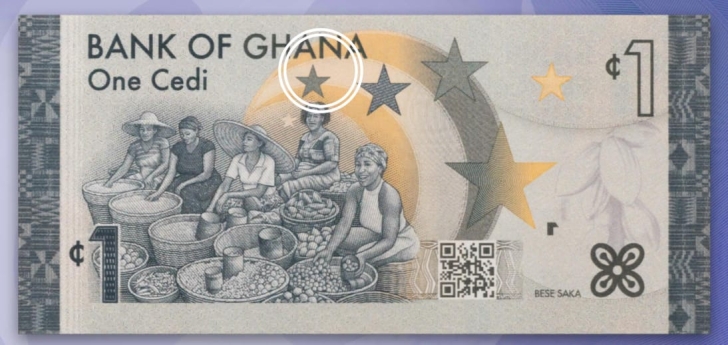
The back of the note features Makola Market, the historic commercial heart of Accra and the pre-eminent setting of Ghana's market-women tradition.
Constructed in 1924, Makola developed into a principal wholesale and retail marketplace in the capital and became one of the nation's significant socio-cultural and economic institutions. Historically dominated by women traders from Accra's indigenous Ga community, the market has long epitomised economic life and bears testimony to the enterprise, organisation and resilience of Ghanaian women.
The pairing of Agnes Oforiwa Tagoe-Quarcoopome with Makola Market carries a direct and intimate connection, as it was at Makola that she built her enterprise and exercised her influence.
The individual trader personifies the wider community of indigenous market women whose commercial activity sustained the marketplace and the economy, while the market represents the institution within which that enterprise took shape. Taken together, the two celebrate the vitality of commerce in Ghana and affirm the enduring but under-acknowledged contribution of indigenous market women to the nation's economic development.
Furthermore, Ghana's traditions of trade and communal prosperity are woven into the note through the Adinkra symbol "Bese Saka," the sack of cola nuts.
The symbol denotes affluence, power, abundance, plenty, togetherness and unity. As a widely used cash crop, the cola nut occupies a pride of place in the economic life of Ghana. The symbol speaks to the role of agriculture and trade in bringing people together, appearing at the back of the banknote and among the background graphical elements at the front.
Like the other denominations, the new GH¢1 note is made of reinforced cotton paper, designed to last longer, and is smaller and easier to handle. It will circulate alongside the old notes, which will be gradually withdrawn by banks.