

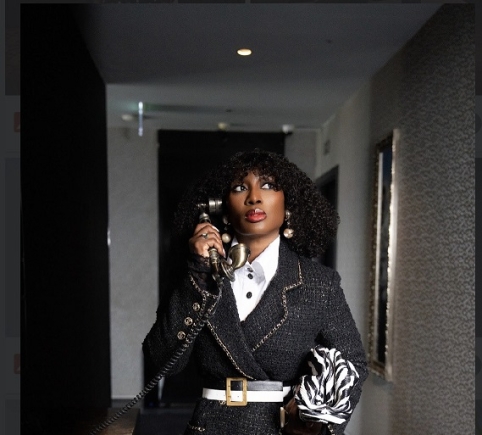
Ghanaian designers must draw on the country’s rich cultural heritage while creating fashion that appeals to international consumers if they are to make a lasting impression on the global fashion industry, media personality and fashion enthusiast Dede Chancelor has said.
She believes fashion offers Ghana an opportunity to tell its cultural stories to the world, but stressed that designers must find innovative ways to blend traditional elements with contemporary styles while building commercially viable brands.
In an interview with Daily Graphic after attending this year’s Milan Fashion Week, she said Ghanaian fashion had the potential to reach wider audiences without losing the cultural identity that made it distinctive.
“Being a Ghanaian designer doesn’t mean everything you create must be entirely traditional. There’s so much beauty in blending our heritage with contemporary fashion,” she said.
According to her, designers must look beyond the cultural significance of their creations and consider whether their pieces are attractive, wearable and desirable to consumers in different markets.
“Our designs should be wearable, marketable, desirable, and even collectable. We should be creating pieces that people from different cultures would be excited to own and wear,” she added.
Dede cited the work of Ghanaian designers Aisha Ayensu of Christie Brown and Nelly Hagan of Duaba Serwa as examples of local creativity gaining international recognition.
While describing their achievements as encouraging, Chancelor said there was still considerable room for growth, urging designers to pursue international collaborations and build brands capable of competing globally.
“Ghanaian designers must continue looking beyond our borders, embracing collaborations, and building brands that can compete internationally without losing what makes them uniquely Ghanaian,” she said.
“After all, our culture is part of our identity, but our creativity should have no borders.”
Fashion as a cultural bridge
Chancelor said her experience at Milan Fashion Week reinforced her belief that fashion could help people appreciate cultures beyond their own.
As a Ghanaian-American, she said she had come to appreciate fashion not only for its aesthetic appeal but also for its ability to introduce people to traditions and histories with which they might be unfamiliar.
She recalled watching models showcase designs inspired by Ghanaian royal heritage, complemented by traditional sandals and cultural accessories, describing the experience as particularly meaningful.
“What fascinated me even more was the audience’s reaction. You could see the excitement, the phones coming out, the cameras flashing and people genuinely captivated by what they were seeing,” she said.
She explained that elements of Ghanaian culture that might be familiar to Ghanaians could become fascinating discoveries for international audiences when presented creatively on global platforms.
“Fashion doesn’t just showcase beautiful clothes; it creates curiosity, encourages appreciation and opens the door to understanding cultures beyond our own,” she said.
She also acknowledged that the representation of different cultures on international runways was encouraging, although she believed more could be done to promote diversity, challenging African creatives to take greater initiative in seeking opportunities beyond their home markets.
“For me, diversity isn’t simply about waiting to be included. It’s about showing up, supporting one another, collaborating, and creating opportunities to be seen on the world stage,” she said.
She cited Ghanaian designer Victor Hart’s invitation to fellow designer Kenneth Tetteh to exhibit his work during Milan Fashion Week as an example of how collaboration could create opportunities for other creatives.
“Sometimes collaborating with someone whose creativity complements your own is exactly what helps you reach a bigger platform,” she said.
Embracing individuality
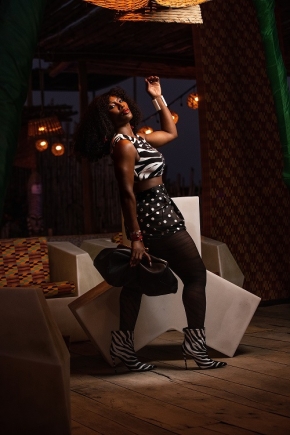
Chancelor said Milan Fashion Week had also strengthened her appreciation for individuality and personal style.
A passionate collector of rare and archival designer pieces, including creations from Chanel and vintage Dolce & Gabbana, she said the experience allowed her to connect with people who shared her interest in fashion history, craftsmanship and collecting.
“For me, fashion isn’t simply about owning beautiful things. It’s about the joy of collecting, curating and bringing these pieces to life through my own interpretation of style, often finished with my signature hats,” she said.
She said the appreciation her personal style received was rewarding, adding that she encountered exceptional pieces that deepened her admiration for fashion craftsmanship.
“My biggest takeaway was to embrace individuality even more boldly. Milan reminded me that personal style is a beautiful form of self-expression, and there’s no reason to settle for ordinary when you can be extraordinary,” she said.
From broadcasting to creative enterprise
Chancelor’s interest in fashion and the creative industries builds on a career spanning broadcasting, live entertainment, commercial voice work and business.
She began her radio career at Vibe FM under the guidance of Michael Cooke and Kojo Mensah before moving into television. She hosted Trackhouse on GTV, co-hosted Smash TV on Metro TV with Jon Germain and later presented Buzz Hit Video on TV3.
She also established herself as a commercial voice talent, working on campaigns for brands including Coca-Cola, Lux, Sunsilk, Lipton, Maggi and Standard Chartered.
After relocating to the United States, she spent nearly two decades building business interests, including Authentic Fab, a luxury resale and sourcing venture specialising in authenticated designer goods and rare collector pieces.
She is now turning her attention to media ownership and content development through Chancelor Productions, a planned creative studio focused on film, television, digital content, podcasts, fashion and branded lifestyle productions.
The venture aims to support African creative talent through production, investment and strategic partnerships, with an emphasis on developing intellectual property that can compete internationally while retaining value for its creators.
