
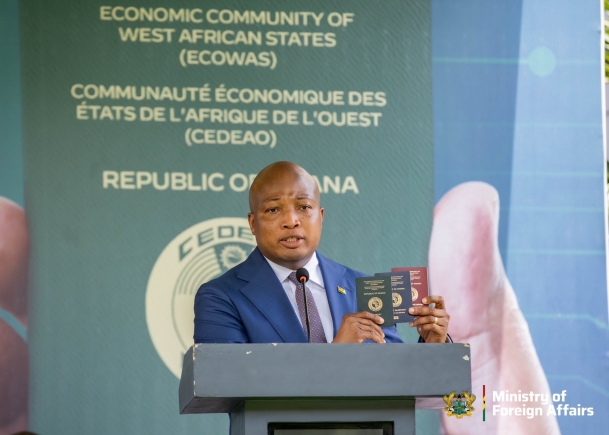
Recent administrative petitions submitted to the Ministry of Foreign Affairs regarding the procurement of diplomatic passports have thrust a glaring spotlight on deep-seated administrative corruption.
At the heart of these petitions lies a disturbing narrative: individuals allegedly paying off state officials to secure high-level sovereign travel documents to which they have no lawful right.
When a petitioner attempts to utilize administrative channels to complain that a corrupt arrangement failed, a dangerous legal and moral fiction is exposed. The petitioner often attempts to cast themselves as an aggrieved customer cheated out of a service, but in reality, they are an active, willing participant in a corrupt enterprise.
Under domestic anti-corruption frameworks, both the citizen who offers the bribe and the public official who accepts it are equally culpable. True institutional accountability demands that law enforcement agencies, including the Criminal Investigation Department, look past the self-serving framing of these petitions and arrest both parties.
A cornerstone defense often floated in administrative corruption scandals is the claim of exploitation under the premise that state actors took their money. However, this argument collapses the moment legal eligibility is examined. A diplomatic passport is not a commercial commodity or a luxury item available to the highest bidder; it is a high-security instrument of state representing sovereign trust, international immunity, and official representation.
By law, such credentials are strictly reserved for accredited diplomats, qualifying government officials, heads of state delegations, and designated high public officials under established administrative guidelines. If a petitioner is fundamentally ineligible for a diplomatic passport, every unit of currency handed to an official is an intentional inducement designed to subvert the law.
The petitioner is not paying for a legitimate service, but rather for illegal state-sanctioned misrepresentation. By willingly participating in a scheme to bypass statutory vetting, the petitioner commits active bribery—an offense that treats the corrupt inducer with the exact same severity as the corrupt receiver.
Conversely, the public officer who accepts money to issue or facilitate an unmerited passport commits a profound betrayal of public trust. Public servants take an oath to uphold the laws and constitution of the state, serving as custodians of national integrity. When an official monetizes administrative bottlenecks, creates artificial barriers, or sells sovereign travel credentials to unqualified applicants, they act as economic mercenaries within the civil service. This behavior violates service regulations and degrades the international standing of the nation's travel documents. When foreign border authorities realize that diplomatic credentials can be purchased through backchannels, the security value and diplomatic courtesy extended to every legitimate passport issued by the state are severely compromised.
This systemic threat requires rigorous enforcement of statutory instruments, notably the Criminal Offences Act, 1960 (Act 29), and the Criminal Offences (Amendment) Act, 2020 (Act 1034). Section 239 of Act 29 penalizes official corruption, wilful oppression, and extortion by public officers, while Section 252 strictly prohibits active participation in corrupting public officers through unlawful gratification.
Furthermore, the legislative reforms introduced under Act 1034 reclassified corruption offenses to carry severe custodial sentences ranging from 12 to 25 years imprisonment. These stringent penalties reflect the legislative intent to eradicate corruption across both public and private sectors, ensuring that neither the bribe-giver nor the bribe-taker escapes judicial scrutiny.
A half-baked anti-corruption campaign that targets only the bribe-taker while shielding the bribe-giver creates a dangerous moral hazard. It encourages citizens to treat state bribery as a viable transactional cost, operating under the assumption that if an application is rejected, they can simply pay their way through, and if caught, claim victimhood. To dismantle this cycle, the law must be applied uniformly. Without citizens willing to subvert rules with cash, corrupt networks within public offices would starve.
A petition complaining that an illegal payment did not deliver the desired outcome is nothing less than a criminal confession wrapped in a grievance. When an ineligible applicant attempts to buy a diplomatic passport, both the hand that gives the bribe and the hand that takes it are tearing down the rule of law. The Criminal Investigation Department and relevant investigative bodies must treat these petitions not as civil disputes over service delivery, but as direct evidence of a criminal conspiracy. Interdicting compromised officials is a necessary administrative first step, but true justice requires the immediate arrest and prosecution of both the corrupt officers and the ineligible petitioners who sought to buy what they never deserved.

Email:
