
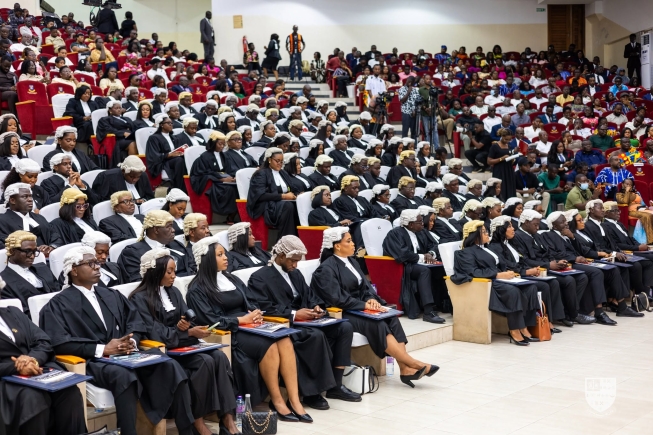
The call to the Bar of a record 1,500 lawyers is a remarkable milestone for Ghana’s legal profession.
Yet, the numbers have provoked an important question: are lawyers making the difference society expects of them?
The true measure of a legal profession cannot be the number of certificates issued or wigs and gowns worn, but the extent to which the law protects the vulnerable, restrains abuses of power and improves the lives of ordinary citizens.
Human rights law offers lawyers an extraordinary opportunity to make that difference. It is not an abstract academic discipline reserved for international conferences.
Properly deployed, it can protect the market woman from arbitrary arrest, the farmer from environmental destruction, the family from unlawful eviction and the ordinary citizen from conditions that threaten life, health and dignity.
Consider the person arrested by the police and detained for days without being brought before a court, or the suspect whose liberty is curtailed while the prosecution seeks adjournments.
Such experiences are not merely unfortunate inconveniences; they raise fundamental human rights questions.
Article 14 of the 1992 Constitution protects personal liberty, while Article 19 guarantees a fair hearing within a reasonable time.
Article 15 protects human dignity.
These safeguards must mean something beyond their appearance in constitutional textbooks.
Lawyers can enforce them through habeas corpus applications, bail applications, constitutional actions and claims for compensation where unlawful conduct is established.
They can challenge arbitrary arrests, prolonged detention, excessive bail conditions and unreasonable delays in criminal trials.
They can also insist that accused persons are treated as human beings entitled to the presumption of innocence, rather than being subjected to punishment before conviction.
When lawyers hold law enforcement agencies accountable, they do not undermine the fight against crime.
They strengthen it by ensuring that criminal justice is administered lawfully and fairly.
A society in which the powerful can disregard constitutional safeguards is a society in which nobody’s freedom is secure.
The destruction caused by illegal mining, popularly known as galamsey, demonstrates why human rights advocacy must extend beyond traditional courtroom disputes.
Polluted rivers, destroyed farmlands, contaminated water sources and damaged ecosystems affect the daily lives of communities, particularly those whose livelihoods depend on agriculture and fishing.
When citizens cannot obtain safe drinking water or are exposed to serious health risks because of environmental destruction, the consequences go far beyond an environmental offence.
Article 36(9) of the Constitution directs the state to take appropriate measures to protect and safeguard the national environment for posterity.
Article 41(k) also places a duty on citizens to protect and safeguard the environment.
Article 13 protects the right to life, while Article 15 safeguards human dignity.
These provisions offer important foundations for demanding responsible environmental governance.
Lawyers can bring public interest litigation, seek injunctions against unlawful activities where the legal requirements are satisfied, challenge regulatory failures and demand enforcement of environmental laws.
They can represent affected communities seeking redress and press public authorities to discharge their statutory responsibilities.
Lawyers must therefore help translate environmental harm into enforceable legal claims.
The destruction of a river should not be treated merely as a technical breach of mining regulations when it threatens the health, livelihood and survival of an entire community.
Human rights are not confined to civil and political freedoms.
Economic and social rights are equally important to human dignity.
The right to life is not meaningful if preventable environmental pollution, unsafe living conditions or failures to address serious public health threats place citizens at risk.
The right to health cannot be realised if communities lack access to safe water, adequate sanitation and essential healthcare. Housing is not merely a roof over one’s head; it is closely connected to security, dignity and personal wellbeing.
Legal aid and pro bono services are especially important.
Human rights should not become the exclusive privilege of citizens who can afford expensive legal representation.
The Ghana Bar Association, law faculties and civil society organisations should encourage young lawyers to undertake public interest work and provide practical opportunities for them to serve underserved communities.
Ultimately, the question is not whether Ghana needs 1,500 additional lawyers.
A growing population and expanding economy can justify an expanding profession.
The more important question is whether these lawyers will use their training to make the law accessible and meaningful to ordinary people.
A lawyer’s success should not be measured solely by fees earned, cases won or professional status attained.
It should also be measured by the person released from unlawful detention, the community protected from environmental destruction, the family defended against unlawful eviction and the citizen whose dignity is restored.
Ghana does not merely need more lawyers.
It needs lawyers who understand that the law is an instrument of justice and that human rights are not privileges granted by the powerful, but protections inherent in every human being.
