
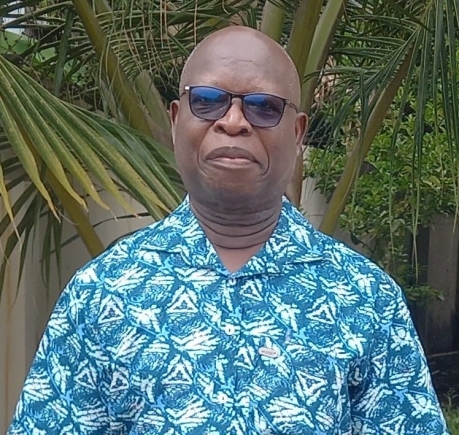
On Monday, October 19, 2026, Ghana’s foremost playwright, Uncle Ebo Whyte, stated in his weekly series on Joy FM, “Food for Thought”, that at age 72 years, he has lived long enough to conclude that life is cyclical/repetitive.
While some cyclicality may be attributed to Nature, others are human-made.
Climate seasons are not markedly different in Ghana as a tropical country. In the temperate zone, however, the four seasons of summer, autumn, winter and spring come with very distinct characteristics.
The seasons recur regularly at the same time every year.
What came to my mind on the human-instituted cyclical nature of life is the annual award of Nobel Prizes every October.
The 2026 Nobel Prize winners in all six categories of Medicine/Physiology, Physics, Chemistry, Literature, Peace and Economics have been announced.
My article on Nobel Prizes for October 2023 titled “Nobel Prize Month of October” is partly quoted below.
QUOTE
October is the month of Nobel Prizes! On October 6, 2023, the Nobel Foundation announced the winner of the 2023 Nobel Peace Prize. It was not without controversy!
While the recipient, Iranian engineer/Human Rights Activist Narges Mohammadi, remains in an Iranian prison for her activism, the Iranian government expressed its dismay/unhappiness with the Nobel Foundation for the award.
The Nobel Prize is the world’s most prestigious award given annually to individuals/organisations in recognition of excellence in six fields. Immediate questions that come up include:
Who is Nobel? What is a Nobel Prize?
What is the significance of a Nobel Prize?
Has a Ghanaian ever won the Nobel Prize?
What lessons can Ghana learn from the Nobel Prize awards?
Alfred Bernhard Nobel (1833 – 1896) was a Swedish chemist, engineer, inventor and armaments manufacturer.
He created the Bofors Steel Company, which he later converted into an Armaments manufacturing company.
He was also a writer/author.
His most enduring invention, however, was the DYNAMITE.
In 1888, Alfred’s younger brother Ludwig Nobel died.
Mistaking the dead Nobel to be Alfred, several newspapers published obituaries about the living Alfred Nobel.
None was positive. Indeed, a French obituary stated “Le marchand de la mort est mort” (The merchant of death is dead)
He was condemned for inventing weapons of destruction like the cannon and dynamite.
One publication said, “Dr Alfred Nobel who became rich by finding ways to kill more people faster than ever, died yesterday.”
Alfred was sad/disappointed with what he read.
The effect of these publications on him was profound!
Alfred Nobel’s conscience pricked him about what legacy he was leaving behind and how negatively humanity would remember him in spite of all his inventions.
He, therefore, decided to bequeath his fortune to humanity for the promotion of peace and development through a Nobel Foundation.
Nobel Prizes
In his will in 1895, a year before he died, Alfred Nobel established five prizes in Physics, Chemistry, Physiology/Medicine, Literature and Peace.
These awards were to be made to individuals or a group of individuals not exceeding three, or an organisation, for making a positive contribution to humanity after Nobel’s death.
The first awards were made in 1901. In 1968, a new prize for Economics was added by the Swedish Central Bank, bringing the Nobel Prizes to six disciplines.
The Peace Prize is awarded in Oslo, Norway, while the others are awarded in Stockholm, Sweden, annually.
For 2023, each winner won 11 million Swedish crowns (US$986,000). Additionally, winners also receive a gold-plated green-gold medal, symbolising their remarkable contribution to their respective fields, and a diploma.
In 2001, Ghanaian UN Secretary-General Mr Kofi Annan won the Nobel Peace Prize jointly with the United Nations.
South African winners of the Nobel Peace Prize include Albert Lithuli, President of the African National Congress in 1960, Archbishop Desmond Tutu in 1984 and Nelson Mandela in 1994 for their fight against apartheid (“apart-ness”).
Apartheid in the Afrikaans language of the minority Boers meant apart-ness/separation. Blacks were legally segregated and discriminated against. They were second-rate humans! Apartheid was finally banned in South Africa in 1994, having begun in 1948.
In 2008, given a choice by American billionaire Warren Buffett to pick any car of his choice for a gift, Archbishop Tutu picked a modest Toyota Corolla with manual transmission over the luxury BMWs and Mercedes-Benz. He gave the cash left over from Warren Buffett’s present to the poor.
The “Desmond Tutu Intellectual Property Trust”, which manages his legacy, has put the old car on show along with his books and possessions in honour of Tutu's 92nd birthday, which he would have celebrated on Saturday, October 7, 2023.
For the first time in the history of Nobel awards, the Nigerian poet Wole Soyinka won the Prize in Literature in 1986, making him the first African to win a prize other than for Peace.
In 2004, the Kenyan Environmentalist, Professor Wangari Maathai, won the Peace Prize for her contribution to greening the environment in Kenya through tree planting.
She led her Green Belt Movement, an NGO she founded in 1977, to plant over fifty million trees all over Kenya.
Discussion
The only Ghanaian winner of the Nobel Prize is Mr Kofi Annan, a prize he won jointly with the UN.
The challenge to Ghanaian youth is to work hard and follow the example of Kofi Annan. With discipline, strong leadership skills, hard work and integrity, the youth can win future individual Nobel Prizes for Ghana.
Kenya’s Wangari Maathai’s award should encourage Ghanaians about the virtue of ensuring a green environment.
The tendency of real estate agents razing every tree in sight down before they start building is wrong and must stop! Elsewhere, no damage is allowed to vegetation! “Galamsey” will not be mentioned!
Nigeria’s Wole Soyinka’s Literature award again emphasises the importance of hard work, determination, resilience and tenacity.
In correcting the unintended negative consequences of his inventions, Nobel bequeathed to humanity his huge fortune. Starting in 1901, five prizes in Physics, Chemistry, Physiology/Medicine, Literature and Peace have been awarded. In 1968, Economics was added.
Archbishop Tutu’s choice of a Toyota Corolla over BMW and Mercedes must be a lesson in modesty and humility to Ghanaian politicians. Trust chairperson Mamphela Ramphele told Reuters, referring to Tutu by his nickname, said:
"We hope this lesson ... by the Arch (Tutu’s nickname) about us not being tempted by opulence, by being sensitive to the least amongst us is the takeaway people (who have) seen that car will make."
Finally, Ghanaian leaders must realise that, unlike Alfred Nobel whose brother’s death made him aware how much he was hated, and therefore redeemed himself through philanthropy, such second chances do not happen often. Therefore, do the right thing!
UNQUOTE
In his attempt to erase the negative reputation he had carved for himself as “the merchant of death” through his invention of dynamite and the Bofors guns, AB Nobel’s donation of his wealth to humanity through the Nobel Foundation was his way of sanitising his image, thereby leaving a positive legacy.
Apart from HE Kofi Annan, who won the Nobel Peace Prize jointly with the UN in 2001, no Ghanaian has won any Prize.
This must challenge Ghanaians.
Ghanaian leaders must think big and positively and learn from Nobel, to turn “defeat into victory” by sanitising their negative image of acquiring all the luxuries of the world.
Leaders must let go of their pertinacious greed/corruption/self-aggrandisement, which is fuelling galamsey and poisoning our water with heavy metals like cadmium, cyanide, lead, arsenic and mercury fast.
Leaders, remember the saying “a good name is better than gold”.
Also, remember even Methuselah died, despite living for 969 years.
Leadership, lead by Example/Integrity/Humility! Fellow Ghanaians, WAKE UP!
The writer is a Former CEO, African Peace Support Trainers Association
Nairobi, Kenya
Council Chairman
Family Health University
Accra
Email:
