
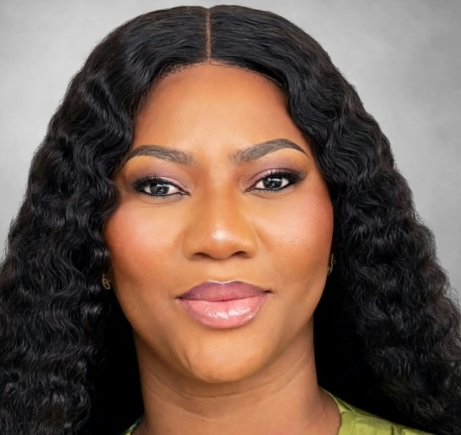
There is something unsettling about the way we talk to one another in Ghana’s political space. A disagreement begins with a policy, an appointment, or a leader’s record. Almost immediately, it shifts. Appearance, family, gender, accent, personal history. The sharper the insult, the faster it travels. Cruelty begins to look like political currency.
We should pause before asking who insulted whom. The deeper question is this: what kind of political culture are we cultivating?
Political culture is not created only in Parliament or at party conferences. It is shaped daily in homes, schools, newsrooms, churches, mosques, traditional institutions, and on the screens our children watch. If we are not careful, we may teach a generation that political participation is less about ideas, service, and responsibility, and more about who can command the most attention.
Democracy needs disagreement. Citizens must challenge governments. Opposition parties must criticise. Journalists must investigate. Freedom of expression would mean little if we could speak only when our words pleased those in power. But freedom is not the absence of responsibility. right to criticize the government. The government, in turn, has the right and, where necessary, the responsibility to respond. Democracy cannot mean that one side speaks and the other is expected simply to absorb the accusation. Where a claim is inaccurate, misleading, exaggerated or presented without its necessary context, the governing party must be able to place the facts before the public and defend its record.
The National Commission for Civic Education has rightly noted the rise of insults, degrading descriptions, and personal attacks in our digital public space, even as it recognises that digital platforms have widened citizens’ ability to question power. We should be able to challenge without degrading, and disagree fiercely without making cruelty the language of politics. Respect must never become a euphemism for obedience, but neither should aggression become a euphemism for courage.
One of the most troubling shifts is the movement from challenging an argument to destroying the person making it. Instead of asking whether a policy works, we question intelligence. Instead of examining a record, we attack character, appearance, family, gender, or accent. Once the person becomes the argument, evidence loses importance and humiliation becomes the shortcut to relevance.
Let us be candid about the incentives. In an attention economy, outrage travels. A sharp insult, a confrontation, or a personal attack can put an unknown voice into thousands of timelines. Visibility is scarce. Provocation can feel like a ladder. The quieter person who chooses competence, policy knowledge, community service, and long-term trust is often left behind. If outrage becomes the fastest route to relevance, the problem is larger than individual bad behaviour. We have built an environment that rewards it.
Political ambition is not the problem. Democracy needs people who want to serve and lead. The problem is what we understand power to be for. An Ewe expression captures it well: “Ame ko fia.” It is the people who carry the chief. Authority is sustained by the people whose trust gives it meaning. The methods we use to pursue power often become the habits with which we exercise it. If we normalise humiliation and mistake personal attack for strength, we should ask whether we are preparing to exercise power differently, or simply to reproduce the same culture from another seat.
Must every political disagreement become a cycle of insult and counter-insult? Government has a responsibility to deliver on its agenda: jobs, infrastructure, education, healthcare, and social protection. It must be held accountable. But nation-building cannot belong to government alone. Many Ghanaians already contribute quietly, without cameras or hashtags. Redirecting more of our collective energy toward that kind of work is also civic participation.
Gender makes this urgent. When political disagreement becomes personalised, women often face attacks that move beyond policy into appearance, family, sexuality, and expectations of how they should speak or behave. A young girl watching may conclude that this is the price of being heard. Boys are watching too. In a culture where aggression is presented as strength and the ability to silence an opponent as power, what are we teaching them about leadership? That masculinity requires domination? That the person who humiliates another has somehow won?
Men occupy significant spaces of influence. They can model a different strength: the strength to disagree without degrading, to challenge without humiliating, to apologise when wrong, and to understand that dignity is not weakness. Women, young people, journalists, traditional and religious leaders, and ordinary citizens share the same responsibility.
When parents are publicly insulted, ridiculed or subjected to personal attacks, their children can become unintended casualties. They may face teasing, stigma, embarrassment or isolation at school and within their communities. What adults dismiss as “politics” can become a child’s lived experience and sometimes a lasting emotional burden.
The responsibility therefore extends beyond politicians. The Ministry responsible for Gender, Children and Social Protection, the education sector, child-protection agencies, the Cyber Security Authority, media organisations, schools, political parties and civil society all have a role in recognising the social and psychological consequences of public political attacks.
UNESCO’s Recommendation on Education for Peace, Human Rights and Sustainable Development recognises that education in all its forms and settings shapes how people understand the world and treat one another. It emphasises critical thinking, empathy, intercultural understanding, gender equality and responsible engagement with digital technologies and information. That means culture.
The more consequential question is whether we are allowing aggression to become part of our political inheritance.,
Political culture is absorbed long before it is taught in classrooms. Children learn citizenship from what adults do. A teenager repeatedly exposed to ridicule and personal attacks may mistake aggression for confidence. Democracy is not only an institution we inherit. It is a culture we teach. Every generation is both its student and its teacher.
What kind of political culture are we cultivating, and what kind will we leave behind?
