

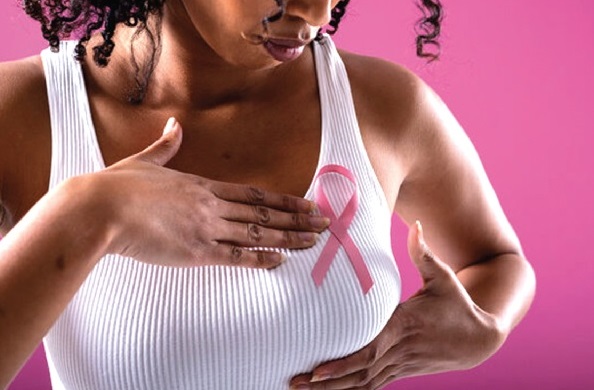
Pink ribbons continue to herald the month of October as World Breast Cancer Awareness Month to remind all of us that breast cancer is still with us.
Perhaps the need to draw attention to breast examinations is ever more pressing, as increasingly, younger people are being diagnosed with this condition.
This year's theme is "Every story is unique, every journey matters." Worldwide, over 2.3 million new cases of breast cancer are diagnosed each year.
Breast cancer affects mostly women and some men; hence the need to examine the breast for breast cancer. In addition, National No Bra Day, observed on October 13 and created in 2011 by breast cancer advocates, adds to October's observance as Breast Cancer Awareness Month.
The World Health Organisation in 2021 launched the Global Breast Cancer Initiative to reduce deaths from breast cancer by 2.55 million per year by 2040.
This initiative is estimated to save at least 2.5 million lives through three key pillars: promotion of early detection, timely diagnosis and comprehensive breast cancer management.
Various descriptive terms are used for the breasts such as “blessed”, “colossal”, “adorable”, “miniature”, “full”, jiggly, “fancy”, “sensitive”, “glistening”, “bouncy”, “smooth”, “tender”, “still” “blossoming”, ‘rosy’, “plump”, “fun”, “silky”, “Jello-like”, “fierce”, “jolly”, “nice”, “naughty” and “cuddly” just to mention a few. The breasts certainly need special attention because of cancer.
Leaving them to hang freely is the reason for the "no bra" accolade. So far, no scientific research has linked wearing bras to the development of breast cancer.
Worldwide, breast cancer is the most frequently diagnosed life-threatening cancer in women. In developing countries, it is the leading cause of cancer death in women, surpassed only by lung cancer in advanced countries.
Many people with early breast cancer have no signs and symptoms of the disease. Pain or discomfort which brings attention to early disease or injury is not usually a symptom in breast cancer. It is often first detected as an abnormality on a mammogram before it is felt by the patient or healthcare provider.
The exact cause of breast cancer remains unknown; however, studies have identified several risk factors associated with an increased risk of a woman developing breast cancer enumerated below.
1. Age and gender- Increasing age and female sex are established risk factors for breast cancer. Although breast cancer is increasingly being diagnosed in women younger than 40 years, the risk increases significantly in women after 40 years.
2. Family history of breast cancer: A positive family history of breast cancer is the most widely recognised risk factor for breast cancer. The lifetime risk is up to four times higher if a mother or a sister is affected by breast cancer, and it is about five times greater in women who have two or more first-degree relatives with breast cancer.
3. Reproductive factors and steroid hormones: Late age at first pregnancy, inability to conceive, early onset of menses, and late age of menopause have all been consistently associated with an increased risk of breast cancer. Prolonged exposure to elevated levels of sex hormones explains the association between breast cancer and reproductive behaviours. High estrogen levels have been associated with an increased risk of developing breast cancer.
4. Oral contraceptives and hormone replacement therapy carry approximately a 25 per cent risk of breast cancer among users. The risk appears to decrease with age and time after oral contraceptives were stopped, returning to that of the general population 10 years after cessation of oral contraceptive use.
5. Prior breast health history: A history of breast cancer is associated with a 3- to 4-fold increased risk of a second primary cancer in the other breast.
6. Lifestyle risk factors: The wide variability of breast cancer incidence around the world has long been attributed to differences in dietary intake and reproductive patterns. In general, breast cancer rates differ according to the level of industrialisation, increasing as the developmental status increases. Diets rich in grains, fruits, and vegetables; low in saturated fats; low in calories; and low in alcohol are thought to be protective against breast cancer.
7. Obesity is associated with an increased risk of breast cancer development. This stems from the fact that most of the causes of obesity, such as Western dietary patterns, sedentary lifestyle, and regular use of alcohol, are all linked to an increased incidence of many cancers, including breast cancer.
Epidemiologic studies have consistently found a positive relation between breast cancer risk and early-life exposure to such diet, obesity, and body size, although the mechanism of this relation is poorly understood. I will continue next week.
The writer is a member of the Paediatric Society of Ghana and the Director of Medical Affairs, Korle Bu Teaching Hospital.
