

Scrap dealers and plastic recyclers at Old Fadama in Accra have expressed concern about falling prices offered by recycling companies in both the South Industrial area in Accra and Tema, saying the situation is eroding their earnings and threatening their livelihoods.
The dealers said iron, which previously sold for GH¢7 per kilogramme, was now being bought for GH¢3, while steel had fallen from GH¢8 to GH¢2 per kilogramme.
Aluminium prices had also declined from GH¢20 to GH¢15 per kilogramme, while copper had dropped from GH¢100 to GH¢65 and brass from GH¢45 to GH¢40 per kilogramme.
In an interview with The Mirror in Accra last Thursday, a scrap dealer, Baba Alhassan, said the reductions, which had occurred since February, were affecting their ability to sustain their businesses.
He said that companies in Tema bought scrap at about GH¢5 per kilogramme lower than those offered by their counterparts in Accra’s South Industrial Area, making it even more difficult for dealers who transported their materials to Tema to secure better returns.
He also questioned the pricing differences and called for greater transparency, warning that continued reductions could force some dealers out of business.
“The price keeps going down, and nobody is telling us anything,” he said.

Another scrap dealer, Jacob Anambli, who has been in the trade for 15 years said low returns were compounded by a lack of storage space.
He explained that dealers needed land to accumulate large quantities of scrap before transporting them to factories in Tema, where the materials were weighed and purchased.
Without adequate storage, he said, dealers were often compelled to sell their materials quickly instead of gathering larger volumes that could attract better returns.
Mr Anambil also complained about disruptions to their operations by the Accra Metropolitan Assembly (AMA), saying an unannounced operation in 2021 had caused him substantial losses after he invested heavily in scrap materials.
He appealed to the government to provide a designated space where scrap dealers could operate and store their materials.
Another scrap dealer who has been in the business for 10 years, Musah Abdlu-Barry said he made about GH¢100 in profit on an ordinary day, although his earnings depended on the materials purchased and the prices offered by buyers.
He said he gave GH¢30 to his assistant and spent GH¢5 each on transportation and bathing, leaving GH¢60 for his household’s daily upkeep.
Musah, who has a wife and three children, said he had left motor mechanic training because the earnings were insufficient to support his family.
He later entered the scrap business, spending five years learning the trade under an experienced dealer before establishing his own operations in 2019.
Plastic recyclers face similar challenges
The difficulties also affect plastic collectors and processors.
Abdul Kudus, who has worked in the plastics recycling sector for 17 years, said companies were maintaining low buying prices despite continuous demand for recycled materials.
He collects and processes polypropylene plastics, including gallons and other materials used to manufacture products such as bowls and alternative takeaway packs.
Kudus said the industry lacked reliable agents to connect processors to buyers and negotiate favourable prices, forcing them to approach manufacturing companies themselves to sell their products.
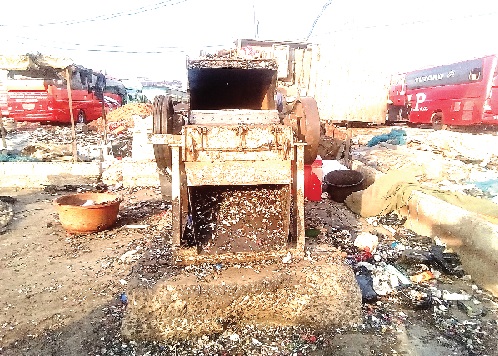
He also called for modern recycling machinery and protective equipment, explaining that the locally assembled grinding machine used by his team frequently broke down.
A plastic bottle collector, Tanam Azu, said he earned about GH¢18 a day from collecting bottles from gutters, bins and homes.
He appealed to companies to increase their buying prices, saying the low returns had discouraged some people from collecting plastic bottles.
Kudus said the recovery and processing of plastics helped reduce the amount of waste entering gutters, where stagnant water could create breeding grounds for mosquitoes.
He, therefore, called for fairer prices, improved operating spaces and investment in recycling equipment, saying greater support for the industry could protect livelihoods while strengthening waste recovery and environmental sanitation in the country.
Writer’s email address:
