

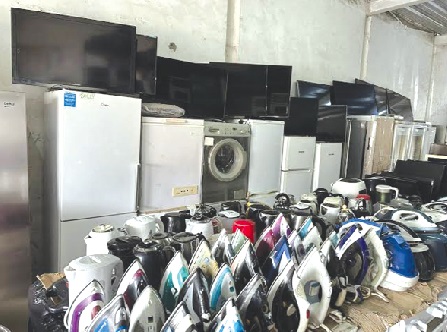
A Fire Service Officer, DOIII Isaac Tengfaa, has cautioned that the use of second-hand electronic gadgets could increase the risk of fire outbreaks.
He said that contrary to the general public perception that such appliances were more durable, they were more likely to consume excessive electricity or generate too much heat.
“When electrical appliances age, prolonged use and wear can cause their wiring and insulation to deteriorate, while internal components may become faulty. In second-hand appliances, such defects can lead to electrical faults and overheating, potentially causing a fire,” he explained.
The fire officer gave the caution during a fire-safety education session at the headquarters of Graphic Communications Group Ltd in Accra last Wednesday.
He said that individuals should prioritise their safety and not just buy second-hand appliances because they were cheaper and seen as more “durable”.
Fire safety habits
He advised households against placing sofas and other furniture in front of electrical sockets, explaining that covering sockets with furniture could make them difficult to access and prevent people from noticing problems around them.
He drew attention to decorative materials such as strip lights, used on ceilings, warning that some could allow fire to spread quickly when ignited.
He likened the spread of fire through such materials to the way fire can travel along a curtain, stressing the need for households to consider fire safety when choosing decorative materials for their homes.
Know the right extinguisher to use
Beyond preventing fires, DOIII Tengfaa educated participants on the different types of fire extinguishers and the importance of using the appropriate one for each type of fire.
He explained that water extinguishers could be used on ordinary combustible materials such as paper, wood and furniture but should never be used on electrical equipment still connected to a power source.
Using water on a live electrical fire could expose the person attempting to put it out to electric shock.
“Dry chemical powder and carbon dioxide (CO2) extinguishers are among the options used for certain electrical fires; the choice of extinguisher must depend on the material burning and the circumstances of the fire,” he noted.
He said fires involving flammable liquids required appropriate extinguishing agents, while fires involving metals needed specialised extinguishing materials.
He advised households, offices and other institutions to declutter their surroundings and regularly remove cobwebs and accumulated dust, particularly from ceilings, corners and areas around electrical installations.
He explained that keeping spaces clean and free from unnecessary materials could help reduce fire hazards, as accumulated combustible materials could contribute to the spread of fire.
Proper handling of LPG cylinders
On the proper and safe handling of Liquefied Petroleum Gas (LPG) cylinders, he advised that gas cylinders should be kept upright and handled carefully, with users avoiding exposure to excessive heat.
He stressed the need to avoid overfilling cylinders, explaining that cylinders should not be filled beyond their recommended capacity, adding that cylinders were also best filled in the mornings and used in a properly ventilated place, especially the small cylinders with burners attached.
Proper care and maintenance of cylinders are important, as damaged or poorly maintained equipment could create safety risks. Consumers should, therefore, use approved LPG facilities and have cylinders checked by qualified personnel where necessary.
He appealed to drivers to watch out for warning signs such as fuel leaks, unusual burning smells, smoke from the engine and damaged electrical wiring.
