
The spillage of excess water from the Bagré Dam in Burkina Faso has begun, with the volume of water released more than doubling in a day.
The Société Nationale d'Électricité du Burkina Faso (SONABEL), the authority responsible for the dam, commenced the spillage last Friday as the water level in the reservoir continued to rise.
As of 8 a.m. on Monday, August 31, 2026, the water level upstream of the dam stood at 234.95 metres, just 0.05 metres below the Normal Operating Water Level of 235.00 metres.
The reservoir was 99.33 per cent full, while the average discharge had risen to 240.40 cubic metres per second, according to the latest hydrological update.
Meanwhile, the Kompienga Dam recorded an upstream water level of 178.26 metres, with its reservoir 82.65 per cent full.
The water level at Kompienga was 1.74 metres below its Normal Operating Water Level of 180.00 metres, while its average discharge stood at 19.08 cubic metres per second.
Checks by Graphic online indicate that the water levels in the White Volta and Black Volta rivers are steadily rising.
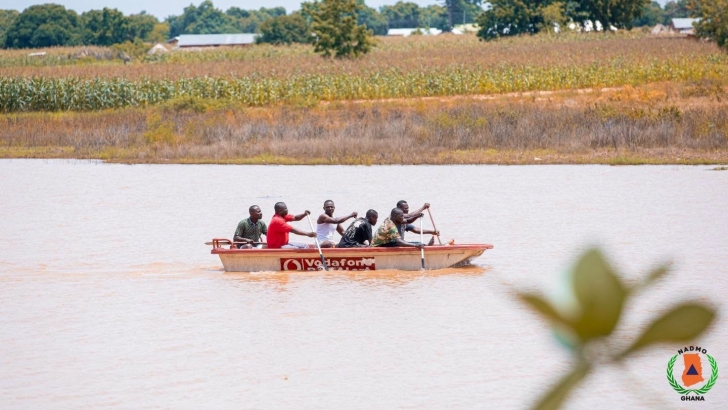
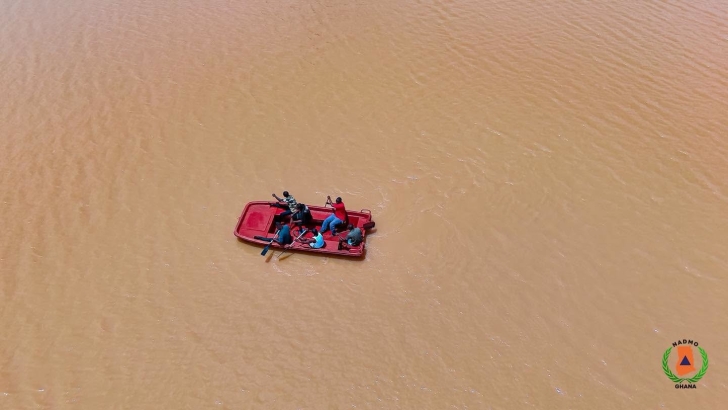
Already, the National Disaster Management Organisation (NADMO) has initiated an emergency response strategy to mitigate the impact of floods and safeguard communities that could be affected by the spillage of excess water from the dams.
The strategy includes the deployment of Operation Thunder Bolt and the establishment of safe havens across flood-prone areas to accommodate displaced persons.
NADMO has also conducted water-level assessments across rivers and streams likely to be affected by the spillage.
In an earlier statement, the Regional Director of NADMO, Alhaji Tahiru Rafiu, said the organisation was adequately prepared to respond to the flood and minimise the potential impact.
“We are well prepared. The negative impact we experience will be drastically reduced. We cannot eliminate it completely because it is both a natural and man-made disaster,” he said.
He, however, advised communities the downstream to take safety precautions in the event of flood in order to prevent casualties.
