
Businesses across the country are looking forward to bold and ambitious policies and programmes in today's Budget Statement to put the economy on a sustained path of transformational growth and ensure shared prosperity for all.
It follows nearly two years of efforts by the government to restore economic stability after a period of difficulties characterised by high inflation, mounting public debt and a rising cost of living, which affected business operations and growth.
With the economy showing signs of stability, three groups that represent the larger segment of the business community insist that the government must shift its focus towards accelerating economic growth through increased domestic production under the proposed $10 billion New Economy Programme.
The Association of Ghana Industries (AGI), the Ghana National Chamber of Commerce and Industry (GNCCI) and the Ghana Union of Traders Association (GUTA) in separate interviews argued that it would require deliberate policy measures to incentivise local industries and address unfair trade practices.
That would also be necessary to reduce excessive imports and create an enabling environment for businesses to expand production and contribute more to economic growth.
Context
The Minister of Finance, Dr Cassiel Ato Forson, is expected to present the 2027 Budget Statement and Economic Policy to Parliament this evening, marking the third budget of the President John Dramani Mahama-led administration since it assumed office in January 2025.
Titled The New Economy, the budget is expected to outline how the government intends to translate recent macroeconomic stabilisation into productive investments, decent jobs, improved incomes and business growth.
A major focus is expected to be the implementation of the government's $10 billion New Economy Programme, covering 2027 to 2030, which seeks to drive private sector-led domestic production, promote local processing and value addition, strengthen Ghanaian businesses and create employment opportunities.
The Finance Minister, who has been on a roadshow in the last three months to explain the new focus to stakeholders, maintains that the New Economy would create and spur the creation of jobs, leveraging the private sector.
Dr Forson said the 2027 Budget would set out how the government planned to turn the economic recovery into decent jobs for young people, better incomes for farmers and more opportunities for Ghanaian businesses to expand and hire.
“Ghanaians made sacrifices to get our economy back on its feet. Now, that recovery must mean decent jobs for our young people, better incomes for our farmers and room for Ghanaian businesses to grow and hire,” the Finance Minister said.
Other anticipated measures include a GH¢1 billion government contribution to a proposed GH¢3 billion National Housing Fund and an allocation of GH¢10 million as seed funding for the Media Development Fund to support journalists' welfare, training and professional development.
The budget is also expected to usher in the construction of the Accra-Kumasi Expressway, a virgin road to improve transportation between the two largest cities, announce a bigger pouch for the Big Push infrastructure programme and allocate resources to more flagship initiatives, all in a bid to spur growth.
The government is also expected to spend huge resources on remuneration and emoluments, with labour unions having bared their teeth this year, as the last three months have seen the most industrial actions.
AGI position
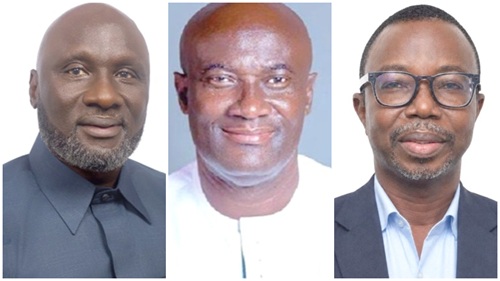
The Director of Policy and Research at AGI, John Defor, said the government must back its proposed New Economy Programme with deliberate incentives to increase local production, reduce imports and expand the capacity of domestic industries.
He said although the macroeconomic stability achieved through lower inflation and relative exchange rate stability was commendable, the next phase of the government's economic agenda must focus on stimulating growth in the real sector.
Mr Defor said the government must also strengthen regulatory oversight at the ports to tackle unfair trade practices and the influx of imported goods that compete unfairly with locally manufactured products.
“We are expecting policies that will support a lot more of local production and, at the same time, scale down imports. If I have excess capacity in my factory, yet I am operating at about 40 per cent of my installed capacity, there is room to scale up,” he stated.
Mr Defor called for lower electricity tariffs for industries, consistency in government policies and the passage of regulations to give legal backing to the incentives under the 24-hour Economy programme.
He urged the government to direct a greater proportion of its proposed Big Push infrastructure investments towards productive sectors, particularly agriculture and manufacturing, to improve the movement of raw materials from farms to factories and markets.
Chamber’s expectations
The President of GNCCI, Nana Kwame Agyenim Boateng, said the government must introduce targeted incentives to make manufacturing more attractive and encourage businesses currently engaged in trading to invest in local production.
Commending the government for the gains in foreign exchange stability and lower lending rates, he maintained that it was important to sustain those gains while addressing the high cost of doing business.
He expressed concern about the withdrawal of discounted electricity tariffs for manufacturers, the five per cent import duty on machinery and the slow implementation of the 24-hour Economy programme, which he said had yet to make a significant impact on businesses.
“We have to deliberately put in manufacturing incentives to encourage people to backward integrate and that will create the needed jobs which our nation needs because the unemployment rate is too high,” he stated.
Mr Boateng called for access to affordable, long-term financing and targeted reductions in the cost of essential utilities, particularly electricity and water, to support industrial expansion.
He said intensified local manufacturing would diversify the country's export base beyond gold and oil, strengthen trade within the sub-region, making the economy more resilient.
GUTA concerns
The President of GUTA, Clement Boateng, said the government must increase public spending to inject money into the economy to stimulate consumer demand to support businesses.
He said although the country had achieved macroeconomic stability, the gains were yet to translate into improved purchasing power for ordinary Ghanaians, resulting in weak sales for traders.
Attributing the situation partly to delayed payments to government contractors, Mr Boateng said that this had affected cash flow in the economy and the purchase of goods from the markets.
“It is true that we have achieved stability, but when we go to the market, we don't sell.
The stability is yet to be felt in the pockets of ordinary Ghanaians because people cannot make purchases; they don't have the money,” he stated.
The GUTA president raised concerns about the proliferation of foreign-owned shopping malls, which were becoming outlets for dumped goods and intensifying competition for local traders.
Mr Boateng urged the government to use the proposed $10 billion New Economy Programme to prioritise industrialisation and technology to create jobs and position the country as an export hub for West Africa.
