
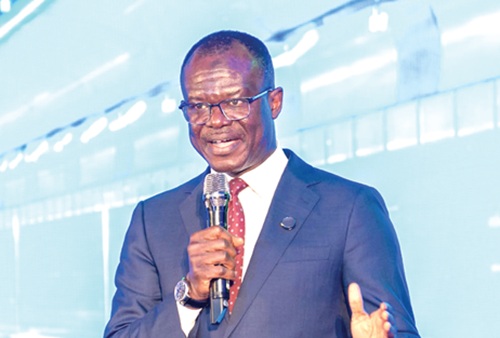
The Bank of Ghana (BoG) has asked Asian investors to take advantage of Ghana’s improved economic gains and competitive environment by partnering their Ghanaian counterparts to establish multinational companies that can profit from Africa’s over 1.5 billion consumers.
It said the partnerships could offer Asian investors an opportunity to access a wider regional market through the African Continental Free Trade Area (AfCFTA).
Speaking at a high-level West Africa-Asia capital dialogue on the sidelines of the ongoing International Monetary Fund (IMF)/World Bank Annual Meetings in Bangkok, Thailand, on October 15, 2026, the First Deputy Governor of the BoG, Dr Zakari Mumuni, stated that Ghana offered significant investment opportunities in agro-processing, manufacturing, energy, transport and logistics, digital services and financial technology.
He said stronger partnerships between Asian investors and African businesses would help mobilise capital, transfer expertise and build productive capacity across the continent.
Dr Mumuni said investors needed greater confidence in the region’s economic prospects, supported by predictable policies, credible institutions, effective risk-sharing arrangements and well-prepared projects.
“Ghana offers significant opportunities in agro-processing, manufacturing, energy, transport and logistics, digital services, and financial technology.
Beyond Ghana, the African Continental Free Trade Area presents opportunities to serve a much larger regional market,” he added.
Stability
The deputy governor explained that Ghana’s recent economic experience demonstrated the importance of sound macroeconomic management in restoring investor confidence.
He said inflation had eased considerably, debt sustainability had improved and the country’s sovereign credit ratings had been upgraded following policy adjustments and reforms.
Dr Mumuni stated that macroeconomic instability increased investment risks, raised financing costs and discouraged long-term investments, while price stability, sustainable public finances and credible institutions created the foundation for private sector growth.
He stressed that economic stability alone was not enough to attract foreign capital; rather, countries also needed competitive businesses and a strong pipeline of productive investment opportunities.
Investment barriers
Dr Mumuni identified exchange rate and financing risks, regulatory and policy uncertainty, contract enforcement challenges, infrastructure constraints and difficulties associated with project exit and risk management as some of the concerns affecting investment flows into West Africa.
He explained that development needs did not automatically translate into bankable investment opportunities, stressing that projects had to be commercially viable, properly structured and supported by credible feasibility studies.
He said West African institutions needed to improve project preparation, transparency and regulatory predictability to attract long-term capital.
The deputy governor added that investors should assess opportunities in individual countries on their merits rather than rely on broad perceptions about the region.
Dr Mumuni called for stronger collaboration among development finance institutions, export credit agencies, governments and private investors to ensure that investment risks were allocated to parties best positioned to manage them.
He said greater use of local-currency financing, where feasible, could reduce currency mismatches and strengthen the viability of long-term projects.
He called for improved cross-border payment systems and trade finance arrangements to facilitate transactions between African and Asian businesses.
The deputy governor proposed identifying priority sectors and commercially attractive projects, establishing structured engagement channels between investors and project sponsors, and tracking progress against clear deliverables and timelines.
He added that the ECOWAS Bank for Investment and Development and other regional development finance institutions could play a coordinating role in advancing the agenda.
