
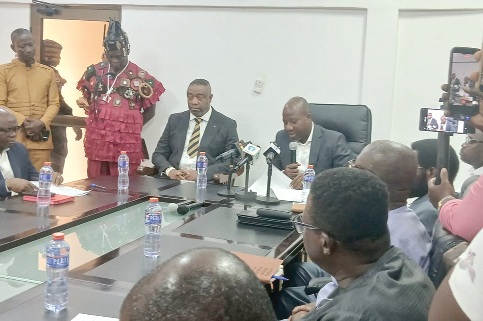
A steering committee that is expected to transform Accra into a cleaner, greener, healthier and more attractive city has been inaugurated.
Chaired by the Ga Mantse, King Tackie Teiko Tsuru II, the main work of the Accra Green and Clean City Initiative Committee will be to promote the adoption of streets and corridors for greening and beautification towards making Accra cleaner and greener.
Known as the Adopt a Street or Corridor Programme, the committee is expected to identify and encourage corporate organisations in the Accra metropolis to partner the ministry and relevant district assemblies to adopt designated streets, road medians, roundabouts and public spaces for regular cleaning, landscaping, tree planting and maintenance as part of their corporate social responsibility.
The programme is designed to provide corporate entities with an opportunity to incorporate street maintenance and greening into their sustainability commitments.
The Minister of Local Government, Chieftaincy and Religious Affairs, Mahama Ayariga, inaugurated the committee, which has as its members, the Chief Executive Officers of the Ghana Chamber of Commerce and Industry; Private Enterprises Foundation; National Road Safety Authority; Environmental Protection Authority; Ghana Bankers Association; Ghana Insurance Association; Ghana Highway Authority; Ghana Chamber of Telecommunications; all the Metropolitan, Municipal and District Assemblies (MMDAs); acting Director, Department of Parks and Gardens, the Director, Department of Urban Roads; the acting Managing Director of the Electricity Company of Ghana and the Managing Director of the Ghana Water Company Limited.
The minister said the steering committee’s mandate included developing clear guidelines for the Adopt a Street or Corridor Programme and identifying and documenting priority streets, city entry routes, roundabouts and public spaces suitable for adoption, including their condition and maintenance needs.
They are also expected to come out with a corporate partnership and resource mobilisation plan; identify prospective corporate partners; prepare a targeted engagement strategy and develop a standard invitation package outlining the benefits, expectations and responsibilities associated with adopting a street or a corridor.
Accra
Mr Ayariga said Accra is the administrative capital and the face of Ghana through which majority of people enter Ghana; yet, challenges related to littering, poor maintenance of public spaces and inadequate greening continue to undermine its appearance and livability.
“Government recognises that these challenges cannot be addressed by public institutions alone.
We must mobilise the full force of our traditional authorities, corporate Ghana, communities and citizens to complement government efforts through sustainable partnerships,” he said.
He cautioned the assemblies and agencies that, as regulators, they were expected to guide the corporate entities on how to brand the streets, but the decision as to which contractor to execute the work lay in the hands of the entities, adding that the assemblies were not to impose a service provider on the corporates.
Clean street initiative
In his response to chair the committee, King Tackie Teiko Tsuru II said Accra was nearly overwhelmed by sanitation problems and that the threat was imminent.
He pointed out that single-use plastics had become a menace because out of the 40 companies that manufactured single-use plastics, only 20 per cent of them were recycled.
He said a clean street initiative was long overdue, adding that the country could not afford to let its waste management and sanitation challenges overwhelm it.
