
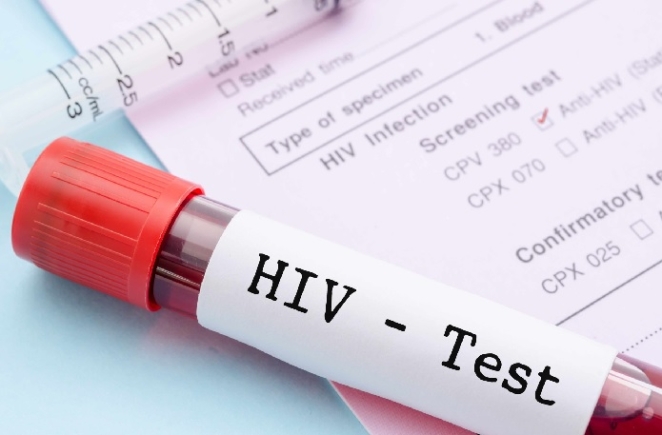
The Ghana AIDS Commission (GAC) has cautioned that no Ghanaian should be denied a job, school admission or healthcare due to their HIV status.
The Governing Board Chairperson of the Commission, Kakra Essamuah, who sounded the caution, therefore warned institutions that insist on having prospective employees undergo HIV tests that they risk facing the full rigours of the law, as the country’s laws do not permit that.
Describing the practice as shameful and regrettable, he said it amounted to discrimination and stigmatisation, which the GAC had constantly been fighting against, adding that HIV was not a disability that prevented people from working in any environment.
He said stigmatisation and discrimination had no place in a nation that prided itself on compassion and dignity, pointing out that ending that practice was a responsibility all must share.
AIDS Partnership Forum
Mr Essamuah said this at the 15th National HIV and AIDS Partnership Forum organised by the GAC yesterday.
The partnership forum is the Commission's principal platform for coordination and mutual accountability.
Its purpose is threefold — to take stock of progress against national targets, report back on what was agreed on at the last forum, and to agree together on priority actions for the year ahead.
This year’s forum, which coincided with 40 years of Ghana's HIV response, was on the theme: “40 years of HIV Response in Ghana: Celebrating Partnerships, Transforming Lives, Sustaining the Future."
The forum was attended by communities in the HIV response, development partners, faith-based organisations, academia and representatives of Society for AIDS in Africa (SAA).
Touching on the 40-year HIV journey in Ghana, Mr Essamuah said when the disease first arrived in the country four decades ago, it was surrounded by fear, silence and very few options.
However, today, he said, the story was different as People Living With HIV (PLWHIV) could access life-saving treatment, raise families, build careers and contribute fully to national development.
Transformation
“That transformation did not happen by chance.
It is the result of political will, the courage of PLWHIV, the dedication of health workers and communities, and the solidarity of our international partners.
It is a story that every Ghanaian can be proud of,” he said.
He said for much of the period, a large share of the country’s response had been financed through solidarity between the government and its international partners, adding that the sudden reduction in external support that was experienced last year was a stark reminder that sustaining the response to HIV was no longer a technical question but rather a question of national ownership of sovereignty and leadership.
The Director General of GAC, Dr Kharmacelle Prosper Akanbong, mentioned some of the things the commission had done after the 14th Partnership Forum, to include the establishment of a youth desk at the commission; the development and validation of the National HIV and TB Human Rights Strategic Plan 2026 to 2030; the design of new interventions for people who use drugs and the development of a community-level data system as a repository for community HIV data which had been integrated into the routine health information systems.
Dr Akanbong said progress had been slower in some areas, notably on advancing local production of HIV commodities and on government funding for the local HIV response, adding that those areas remained priorities for the coming year.
He said despite the country having declined in new HIV infections, the Commission was seeing increasing new infections in the 15-24 years age group, which accounted for about 30 per cent of new infections.
“This is very worrisome, and we need to take specific actions on that,” he said.
The United Nations Resident Coordinator, Zia Choudhury, said the UN family remained a firm partner for Ghana in its quest to maintain full sovereignty when it comes to financing its own healthcare.
The Chief Director, Office of the President, Dr Alhaji Abubakari Wayo, recounted the 40 years of Ghana’s HIV journey and the role played by successive governments, pointing out that no government, institution or development partner could end HIV and AIDS while working in isolation.
Paying tribute to PLWHIV and their networks, he said their courage, advocacy and experiences had helped shift policies, challenged stigma and reminded all that affected communities must be participants in decision-making and not merely recipients of services.
Other speakers at the forum included the Programme Manager of the National AIDS and STIs Control Programme, Dr Emmanuel Teviu; ICASA Director and SAA Coordinator, Luc Armand Bodea; and the President of NAP+ Ghana, Torgbe Paul Alossode.
