
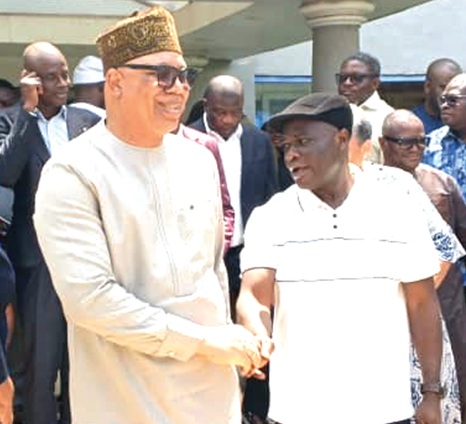
The Minister for Works, Housing and Water Resources, Ahmed Ibrahim, has warned the management and staff of Ghana Water Limited (GWL) against acts of sabotage, urging them to protect the company’s operations and work collectively to improve its performance.
Mr Ibrahim gave the warning during a familiarisation visit to the Head Office of GWL last Tuesday to assess its operations, engage management and staff, and identify challenges requiring government intervention.
“Sabotaging Ghana Water is like sitting on a tree and cutting the branch of the tree.
It will fall with you,” he said, and urged management members to take responsibility for the challenges confronting the company, and stressed that their appointments were intended to help resolve problems rather than merely occupy positions.
The Works and Housing Minister said Ghana had highly qualified engineers and technical professionals whose expertise could improve public institutions, but technical competence needed to be matched with discipline and effective management.
He also urged officials to prioritise national interests over partisan political considerations, noting that reliable water supply was essential to public health, human rights and national development.
Revenue challenges
The Chief Manager in charge of Corporate Planning, Monitoring and Evaluation at GWL, Michael Tawiah Klutse, disclosed that government institutions owed the company about GH¢459 million in unpaid water bills as of the end of September 2026.
He said the arrears were worsening the company’s financial challenges and putting pressure on its ability to sustain operations.
Mr Klutse said GWL had begun processes to install meters at government institutions to monitor consumption and improve revenue collection.
He identified water theft and illegal connections as other major concerns, noting that some vendors allegedly obtained water illegally and resold it to consumers. He also cited cases of alleged collusion between some consumers and staff to manipulate consumption estimates in unmetered areas, undermining revenue collection.
Mr Klutse identified illegal mining, popularly known as galamsey, as another major challenge affecting water treatment and supply, particularly in the Western, Central, Ashanti, Upper East and Upper West regions, and stressed that pollution of water bodies complicated the treatment of raw water and the provision of safe drinking water.
Improving service delivery
The Managing Director of GWL, Adam Mutawakilu, said the company was working to address operational difficulties and improve service delivery.
He said GWL supplied potable water to approximately 18.5 million people, representing about 55 per cent of Ghana’s population, and had a customer base of approximately 1.03 million.
He explained that the figures differed because a single connection could serve several people in a household.
Mr Mutawakilu acknowledged that some operational challenges were beyond the company’s control, while others could be addressed internally.
He expressed confidence that the minister’s engagement with management and staff would help strengthen the company’s capacity to fulfil its mandate, particularly in improving water supply to urban communities.
The Chief Director of the ministry, Irene Odokai Messiba, said the visit formed part of the Minister’s familiarisation engagements with agencies under the ministry.
She said the engagements were intended to deepen his understanding of their operations and challenges and help identify practical solutions to improve service delivery.
Writer's email:
