
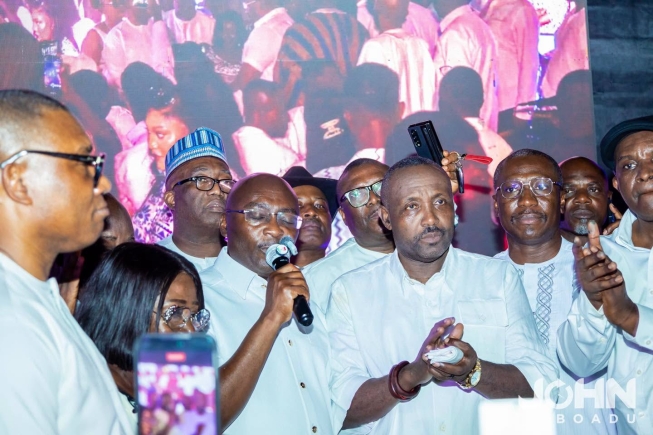
The New Patriotic Party (NPP) is facing a crucial rebuilding test after its 2024 electoral defeat, with a renewed focus on candidate selection, internal democracy and broader voter appeal emerging as key elements of its drive to secure parliamentary majority in the 2028 general election.
From the humbling fall from parliamentary majority of 169 seats in 2017 to the current paltry 87 seats, the party has begun the hard work towards recovery of lost grounds.
Respected elections research outfit, Global InfoAnalytics, gives a glimpse of the positive outlook ahead for the NPP as it reveals in its latest polls that the party could win at least a 100 seats, 13 more than it currently has, in the 2028 elections, two years into life in opposition.
The party’s proposed reforms in the selection of parliamentary candidates are expected to play a central role in that effort, as it seeks not only to reclaim seats lost in 2024 but also to increase its share of votes in constituencies where winning parliamentary seats may prove difficult.
The emerging direction places a premium on candidates who can command the confidence of party delegates while attracting floating voters, young people and other sections of the electorate beyond the NPP’s traditional support base.
It also raises a fundamental question about the party’s rebuilding exercise as to whether it can move away from candidate selection practices perceived to favour financial influence, factional loyalties and personal connections towards a system that rewards competence, integrity and electoral appeal.
The party’s preparations for the 2028 parliamentary primaries, including proposals for an independent candidate assessment process and stricter enforcement of campaign rules, will provide an early indication of whether the leadership is prepared to translate its reform agenda into practice.
Beyond winning seats
For the NPP, the 2028 parliamentary contest will require a strategy that goes beyond defending its traditional strongholds.
While retaining safe seats remains essential, the party will also need to identify constituencies where relatively small increases in its vote share could improve its chances of winning, as well as areas where a stronger showing could lay the foundation for future gains.
In constituencies where victory may remain elusive, the objective would be to narrow its gap against rival parties, strengthen the party’s grassroots presence and attract voters who may not be ready to support it outright.
Such an approach would require candidates capable of connecting with local concerns, maintaining a visible presence in their constituencies and presenting credible responses to issues affecting households, businesses, farmers, young people and other voters.
It would also require the party to assess electoral performance at the constituency level, identify the reasons for its losses and develop strategies suited to the political and social conditions in each area.
The selection of parliamentary candidates, therefore, is increasingly important to the party’s prospects of rebuilding its parliamentary strength.
Merit over money
The January 2024 parliamentary primaries exposed some of the difficulties confronting the party as it seeks to establish a more credible candidate selection process going forward.
Twenty-eight incumbent MPs lost their bids to contest the general election, while disputes, court cases and allegations of inducements accompanied the process in some constituencies.
The defeat of an incumbent or the loss of an internal contest does not, by itself, establish that a primary was unfair. However, credible allegations of vote buying, delegate manipulation or candidate imposition can undermine confidence in the process and deepen divisions within the party.
The NPP now confronts a selection arrangement that rewards competence, integrity, constituency service and the ability to win public support, rather than allowing financial strength or factional influence to become decisive advantages.
The proposal by the party’s flag bearer, Dr Mahamudu Bawumia, for multiple independent assessments of prospective candidates could form part of that effort.
Same rules for all
The enforcement of campaign regulations will be another important test of the party’s commitment to internal fairness.
The party’s General Secretary, Justin Kodua Frimpong, has stated that incumbent MPs will not be exempt from the selection process, and that prospective candidates must comply with the applicable requirements.
He has also warned that the expression of interest in contesting a primary does not amount to authorisation to begin campaigning, with the existing suspension of campaign activities remaining in force.
“Expression of interest does not constitute authorisation to begin campaigning,” he said.
The warning comes against the background of concerns that sitting MPs may enjoy advantages over challengers because of their public visibility, established constituency networks and access to party structures.
The announced GH¢5,000 application fee also places a premium on clear communication of the requirements, eligibility criteria, screening procedures and timelines governing the process.
Rebuild public trust
The party’s internal reforms will also be judged by how it handles disputes arising from the primaries.
A transparent complaints and appeals process would help to ensure that aggrieved aspirants have a fair opportunity to challenge decisions without allowing disagreements to escalate into prolonged factional conflicts.
Successful candidates, in turn, would need to reach out to defeated opponents and their supporters to rebuild relationships ahead of the general election.
For a party seeking to recover lost parliamentary seats, unresolved internal divisions could weaken grassroots mobilisation, discourage supporters and reduce its ability to compete effectively against rival parties.
Accountability at the top
The NPP’s rebuilding agenda must also address the wider reasons behind its 2024 electoral defeat.
Reforming parliamentary primaries alone will not guarantee a return to power or secure a parliamentary majority.
The party must examine its record in government, its responsiveness to public concerns, the conduct of its officials and the extent to which it listened to warnings from its grassroots.
The intervention by the National Chairman, John Boadu, in the debate over the party’s future provides an additional point of reference in considering how the NPP intends to reorganise itself and restore confidence among its members and the wider electorate.
The broader issue is whether the party’s leadership is prepared to extend the principles of transparency and accountability to its own conduct, rather than placing the entire burden of electoral recovery on parliamentary aspirants and grassroots members.
The party’s ability to confront difficult questions about its past performance could be as important to its recovery as the calibre of candidates it eventually selects.
The 2028 test
The coming parliamentary primaries will offer an early test of the NPP’s determination to change its approach to candidate selection.
