
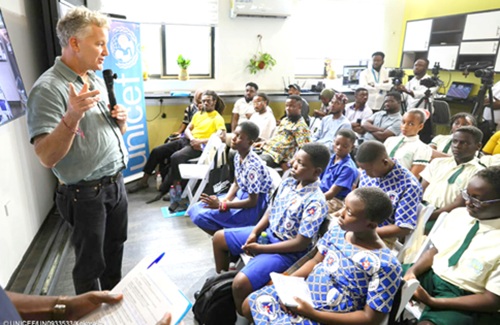
Ten young film makers have been selected by UNICEF Ghana to amplify children's voices and rights through storytelling.
The 10, who were showcased and oriented at the Children's Film Festival held in Accra, recently, will make short films about issues affecting children as part of activities to commemorate this year’s World Children's Day in November.
The programme was organised in collaboration with the National Film Authority (NFA) and the Ministry of Gender, Children and Social Protection.
Speaking at the ceremony, the Chief of Advocacy and Communications at UNICEF Ghana, Ms Fatma Naib, said this year, her outfit would use short films to educate people about children’s rights during the World Children's Day because storytelling was a non-traditional way to talk about children's rights and it connected effectively with audiences.
She said the films were expected to explore children's rights and experiences, creating an opportunity for the young creatives to use storytelling to address issues that matter to their generation.
“The film is expected to spark conversation about issues affecting children,” Ms Naib added.
On how the 10 finalists were selected, she said her office received more than 300 submissions of films about children, from which the 10 young filmmakers and animators were shortlisted.
The 10 selected filmmakers, she indicated, would receive financial support, mentorship and access to industry resources to develop their projects ahead of the programme in November.
Ms Naib said children who attended this year's festival would also be trained to become filmmakers themselves — writing, filming and telling their own stories with support from the adult professionals.
The UNICEF Ghana Country Representative, Mr Andrew Brooks, in his closing remarks, also said the maiden Children's Film Festival would be guided by strict ethical principles to ensure that the films were well understood, well communicated and protective of children.
He said while the festival did not prevent filmmakers from using the true stories of children in their films, the protection of those victims would be paramount.
Mr Brooks assured that UNICEF would not just leave the filmmakers to figure out the ethical issues on their own but would guide them adding, "we will be giving you clear principles and ethical guidelines on how to go about your work.”
A Child Protection Specialist, Ms Hilda Mensah, who spoke about the concepts of sexual exploitation and sexual abuse within the creative industry, urged the young filmmakers to use their creativity to change the narrative about sexual exploitation, abuse and teenage pregnancy in the country, and also ensure that they maintained professional boundaries in their work.
Ms Mensah said UNICEF had put in place safeguarding measures for the festival, including a designated person of trust to receive complaints, absolute confidentiality for persons who report, and an independent investigation process to establish the truth.
She urged the filmmakers to protect everyone they worked with during the production of their films.
Another Child Protection Specialist at UNICEF Ghana, Mrs Christiana Gbedema, told young filmmakers to tell stories that preserved the dignity of children while linking them to available social protection support.
She also tasked them to go beyond just showing a problem to asking what caused that problem.
“For instance, when a girl becomes pregnant, you have to ask yourself, what is causing this?
Why is this girl facing this challenge? Then you must have knowledge about the available support programmes to assist her so that those who watch the films will know what to do when they are faced with similar challenges," she said.
Mrs Gbedema said as storytellers, they should treat children with dignity and respect when they told their stories.
"How you portray the person matters.
You must be careful how you refer to the person — not 'this poor person, this vulnerable person'.
Listen to their experiences, let them tell you their aspirations and expectations," she advised.
For her part, a representative of the National Film Authority, Ms Zuweira Abdul Wahab, pledged her outfit's support for the festival and said films created with and for children represented an investment in both the country's creative sector and its next generation.
