
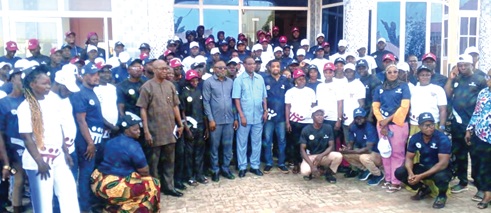
The Gulf of Guinea Northern Regions Social Cohesion (SOCO) Project has created 382 employment opportunities for community facilitators, with the Upper East Region receiving the largest share of 120 positions this year.
Project
The SOCO Project is a US$450 million regional World Bank International Development Association (IDA) initiative designed to prevent conflict spillovers from the Sahel, build climate resilience and strengthen local institutions.
The project, a five-year intervention expected to run until December 2027, focuses on strengthening community resilience, promoting social cohesion and supporting development in vulnerable communities.
The new community facilitators, who are undergoing a three-day training in Bolgatanga, will support the implementation of the project in beneficiary communities in the 15 districts of the region.
The training is aimed at equipping the facilitators with the knowledge and skills needed to undertake community mobilisation and sensitisation, as well as supervise and monitor development projects under the SOCO initiative.
Addressing the facilitators at the training, the Community-Driven Development and Capacity Building Specialist at the SOCO Project, Alhassan Osman, said the creation of employment opportunities was one of the major benefits of the project.
Mr Osman said the Upper East Region had been allocated 120 of the 382 positions created this year, with eight facilitators assigned to each of the region’s 15 districts.
Beneficiaries
He said the other beneficiaries were the Upper West Region, with 88 facilitators; the Northern Region, 62; the North East Region, 48; the Savannah Region, 32 and the Oti Region, 32.
“These facilitators, who have a contract tenure of two years, will serve as an important link between the project and beneficiary communities by supporting mobilisation, sensitisation, supervision and monitoring of project activities,” he stated.
Mr Osman said the community-driven development approach adopted by the project required well-trained facilitators to enable communities to understand the process and participate effectively in identifying, designing and implementing projects.
“For the communities to be aware of these rules and execute them properly, they need community facilitators well-trained to sensitise and train them, so that they can participate effectively in project implementation,” he said.
Livelihoods
Mr Osman urged the beneficiaries to use their earnings to improve their livelihoods, saying the opportunity could enable them to invest in businesses, education and other productive activities.
According to him, providing livelihood opportunities for young people could also reduce their vulnerability to recruitment by violent extremist organisations.
“If we reduce the vulnerabilities of our communities, chances are that they will not fall prey to the activities of these violent extremists,” he said.
Beyond facilitators’ recruitment
The Upper East and North East Zonal Coordinator of the SOCO Project, Samuel Larbi Agyarko, said the project had so far implemented 582 sub-projects in the Upper East Region, out of which 410 had been completed and handed over to beneficiary communities.
He said more than 5,000 skilled and unskilled workers had also been engaged at various construction sites, while more than 434 community participants had earlier been employed during the initial stages of implementation.
In all, Mr Agyarko said the implementation of SOCO projects had created more than 7,000 direct and indirect employment opportunities in the region.
He added that 255 Community Implementation Groups (CIGs) had received grants to support their livelihood activities, benefiting more than 20,000 people through revolving funds.
Commitment
The Upper East Regional Minister, Donatus Akamugri Atanga, urged the newly recruited facilitators to take the opportunity seriously and commit to contributing meaningfully to development in their communities.
He said the facilitators would work closely with traditional authorities, women, young people, persons who are challenged and other community members, and urged them to carry out their responsibilities with patience, respect and commitment.
He urged the facilitators to listen to community members, encourage the participation of women and young people and pay particular attention to vulnerable groups.
