
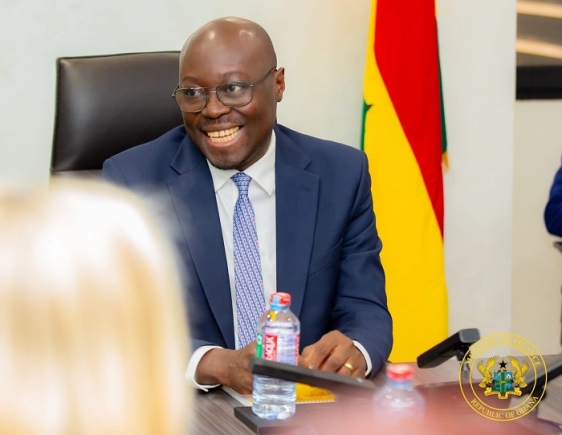
The government has secured a €323 million financing package to help end persistent water shortages in three cities in northern Ghana.
The package will support the Northern Ghana Water and Sanitation Project, which seeks to improve water supply and sanitation services in Tamale and Yendi in the Northern Region and Damongo in the Savannah Region.
It comprises €98 million in grants and a €225 million highly concessional financing facility from the European Investment Bank.
The project will cover water supply, sewerage, waste management and remediation activities to improve access to essential services in the three cities and their surrounding communities.
The Minister of Finance, Dr Cassiel Ato Forson, announced the financing package after a meeting with the Vice-President of the European Investment Bank, Mr Ambroise Fayolle, on the sidelines of the ongoing International Monetary Fund and World Bank Annual Meetings in Bangkok, Thailand, on October 16, 2026.
Minister's discussions
The minister stated that discussions with the European Investment Bank on the financing package for the Northern Ghana Water and Sanitation Project had been productive.
"I have just concluded a productive meeting with European Investment Bank Vice-President Ambroise Fayolle on the financing package for the Northern Ghana Water and Sanitation Project," he said.
He explained that the European Commission would provide a €68 million grant, while Invest International, the Dutch government initiative, was also expected to contribute a further €30 million grant. Dr Forson stressed that the bank's highly concessional facility accounts for the remaining €225 million.
The minister added that the project would address recurring water shortages and improve sanitation across the three communities and their environs.
Infrastructure expansion
The European Investment Bank said the project will finance the upgrading of water supply infrastructure in Tamale and Damongo and neighbouring settlements, alongside the construction of three faecal sludge treatment facilities in Wa, Bolgatanga and Yendi.
According to information published on the bank's website, the project will be co-financed by a European Union grant mobilised by the bank under Phases Two and Three of its Sustainable Cities Initiative.
The infrastructure investments are expected to improve access to reliable water supply and sanitation services in the beneficiary communities, while strengthening the capacity of local authorities to manage waste safely.
The bank said the project would improve access to safely managed drinking water services for approximately 1,349,000 people in the Greater Tamale area and 105,000 people in Damongo, covering both urban and peri-urban populations.
Health and environmental benefits
The bank said the project was expected to deliver positive environmental and public health outcomes by expanding access to safe drinking water and improved sanitation services.
It explained that the construction of faecal sludge treatment plants in Wa, Bolgatanga and Yendi would help improve waste management, reduce environmental pollution and strengthen public health protection in the three cities.
The project is also expected to help communities adapt to climate change by promoting the use of a sustainable and resilient water source in an area increasingly affected by climate-related challenges.
Improved access to safe water and sanitation is expected to reduce health risks associated with unsafe drinking water and inadequate waste disposal, while improving living conditions for residents.
