
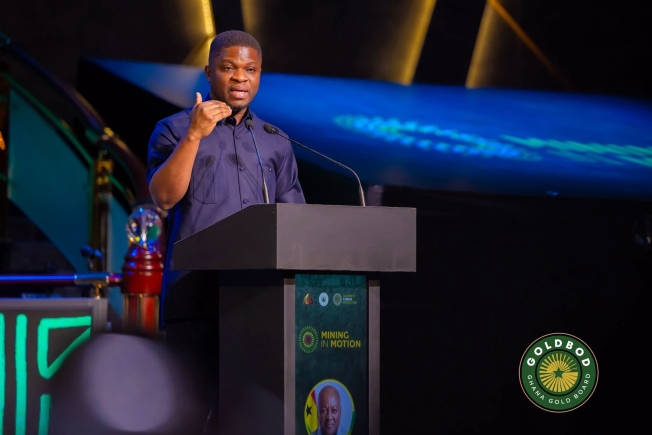
The Chief Executive Officer of the Ghana Gold Board, Mr Sammy Gyamfi, has clarified the government's approach to formalising unlicensed small-scale miners, stating that mining operations outside forest reserves, water bodies and prohibited public areas can be declared fit for cooperative mining.
In a statement posted on Facebook on Friday, October 23, 2026, Mr Gyamfi said three forms of artisanal and small-scale mining are "irredeemably wrong and can neither be tolerated nor reformed." These include mining that impacts water bodies, mining in forest reserves, and mining in obscene places in communities such as roadsides, school lands and bedrooms, which pose dangers to society and public health.
"Once artisanal and small-scale miners are not mining in a forest reserve, a water body or an obscene place that negatively impacts the environment, that mineralised area, even if unlicensed, meets the eligibility requirement of formalisation and can be declared as fit for cooperative mining under the government's Responsible Cooperative Mining and Skills Development Programme," he said.
He maintained that formalising such unlicensed miners is a better approach than chasing them with soldiers. The programme, he explained, is an initiative aimed at transforming unlicensed miners into licensed and responsible operators to promote sustainability in the sector.
Video misrepresented
Mr Gyamfi said a short portion of a video that had been mischievously cut and circulated left out important details of his explanation of what the government was willing to do to support the formalisation of such miners, including providing appropriate legal documentation, certifications, permits and training for sustainable small-scale mining.
He said formalisation and traceability represent a new paradigm shift in Ghana's quest for sustainability in the small-scale mining sector, adding that providing training and financing support to miners whose activities do not negatively impact water bodies, forest reserves or prohibited public areas is crucial to the fight against irresponsible mining.
Formalisation and financing support
Mr Gyamfi quoted his keynote address at the recently ended Mining in Motion summit, where he said regulation must be firm but also practical, inclusive and commercially sound.
"Reform will endure only when compliance becomes a pathway to opportunity rather than hardships. Mining regulations must therefore do more than police miners; it must formalise, build capacities and create opportunities for young Africans in the mining and trading ecosystem," he said.
He said the board would next year roll out an ASM Formalisation and Financing Support Programme in close collaboration with the Ministry of Lands and Natural Resources, the University of Mines and Technology and Rand Refinery, with the aim of sustainably ramping up gold production, mineral revenue and job creation while reducing operational costs and environmental risks.
Background
The clarification follows controversy after a video circulating on social media showed Mr Gyamfi saying the government permits mining outside water bodies, forest reserves and other prohibited areas, even without a licence.
The remarks appeared to conflict with the government's stated commitment to combating illegal mining through stricter regulation and enforcement. President John Dramani Mahama has repeatedly pledged to tackle illegal mining, which has polluted rivers, damaged forests and degraded farmland across Ghana.
