
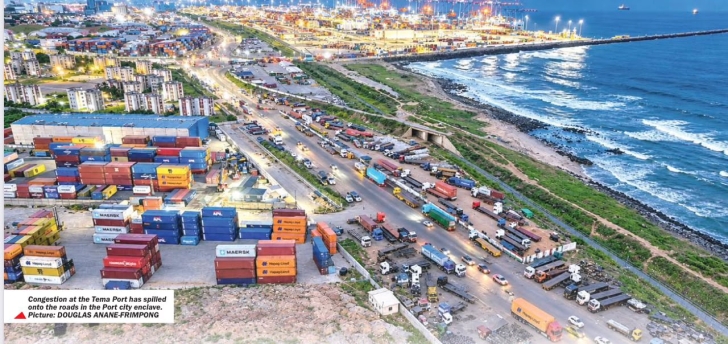
The government has directed the Customs Division of the Ghana Revenue Authority (GRA) and terminal operators to separate shipping line release procedures from the cargo clearance process at the ports, in a move to reduce congestion and facilitate international trade.
Under the new arrangement, importers who have paid the required duties and completed all customs clearance procedures will be allowed to take delivery of their cargo without waiting for separate release approvals from shipping lines.
The measure is expected to eliminate procedural delays, improve the movement of goods and reduce the cost of doing business at the ports.

Victor Kofi Baidoo, Head Revenue Assurance Department, Ministry of Finance speaking at the meeting with GIFF members
The Head of the Revenue Assurance Department at the Ministry of Finance, Victor Kofi Baidoo, disclosed this at a meeting with members of the Ghana Institute of Freight Forwarders (GIFF) at Tema on Friday, November 20, 2026. The meeting formed part of the ministry's engagements with freight forwarding stakeholders to discuss measures to improve port operations, address bottlenecks and facilitate trade.
Mr Baidoo explained that the directive was part of the government's efforts to streamline port operations by removing shipping line release procedures from the customs clearance chain. He noted that under the previous arrangement, importers who had paid their duties and completed the necessary customs procedures were still required to obtain separate release approvals from shipping lines before their goods could be evacuated.
Under the new system, customs clearance and shipping line transactions will be treated as separate processes. Once Customs has confirmed that the cargo has been duly cleared and the appropriate duties paid, importers can proceed to evacuate their goods while resolving any outstanding transactions with the shipping lines separately. Mr Baidoo said the government had communicated the directive to Customs and terminal operators for implementation.
Port Congestion
The separation of the two processes is expected to ease pressure on limited storage space at the ports by reducing the time cleared containers remain in the terminals awaiting shipping line approvals.
Faster evacuation of cargo could improve container turnaround, create room for incoming consignments and reduce the accumulation of containers within the port. It could also lower demurrage and other avoidable charges incurred by importers, while improving the overall efficiency of the supply chain.
A freight forwarder and leading member of GIFF, Johnny Mantey, welcomed the decision, describing it as a significant step towards addressing congestion at the Tema Port.
He said freight forwarders had, over the years, engaged various stakeholders on the need to separate shipping line release procedures from customs clearance, adding that the new arrangement addressed a longstanding concern within the industry.
However, Mr Mantey noted that delays in obtaining container releases from some shipping lines remained a major challenge, with importers sometimes having to wait between four and five days to secure the necessary documentation.
He expressed concern about the increasing number of containers accumulating at the port, particularly empty containers awaiting return to shipping lines.
He said the situation was putting pressure on available storage space and could worsen congestion if urgent measures were not taken. Mr Mantey called for greater cooperation from shipping lines to ensure the timely evacuation and return of containers, adding that further engagements would be held with them to address the concerns and prevent the situation from escalating.
