
From the kindergarten level to junior high school, pupils and students in Ghanaian schools are to start subjects in coding, artificial intelligence (AI), and electronics in a revised curriculum being introduced by the National Council for Curriculum and Assessment (NaCCA) under the Ministry of Education.
The sector minister, Haruna Iddrisu, who announced this at a press briefing in Accra on Monday (July 20, 2026), said the government was set to introduce these three subjects in addition to civic ethics in Ghana's basic school curriculum.
He said the revised curriculum would be presented to the Ministry of Education by NaCCA before being submitted to President John Dramani Mahama, Cabinet and Parliament for approval.
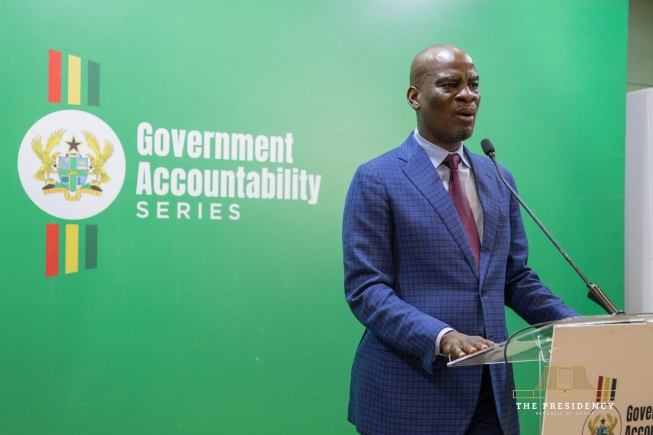
Speaking at the press briefing dubbed Government Accountability Series, Mr Iddrisu described the NaCCA document as a "smart start curriculum" intended to strengthen the teaching of science, technology, engineering and mathematics at the basic school level.
"We have promised to introduce coding, electronics, artificial intelligence and pivot into the basic education curriculum," the minister said.
He added that the revised curriculum would also place greater attention on ethical values, civic responsibility and the responsible use of public resources.
Mr Iddrisu said the review forms part of the government's plan to give greater attention to basic education, which he said had received less investment than secondary education over the years.
He said literacy, numeracy and critical thinking are developed at the basic level and remain the foundation for learning throughout a child's education.
The minister said the curriculum review was not a new initiative, explaining that he first announced plans to introduce AI, robotics, coding and electronics into basic education during a digital education conference in Accra in June this year.
He said the National Curriculum Review Committee had since completed its work, with the revised curriculum now entering the approval process.
Once approved by Cabinet, the document will be laid before Parliament before it is implemented.
Mr Iddrisu did not indicate when the new curriculum would take effect in schools or explain how teachers would be trained to teach subjects such as coding, AI and electronics.
Mr Iddrisu also spoke about capitation grant payments and measures to promote inclusive education during the briefing but described the curriculum reform as the ministry's biggest achievement over the past 16 months.
The Ministry of Education is yet to publish the full curriculum document or an implementation roadmap.
