
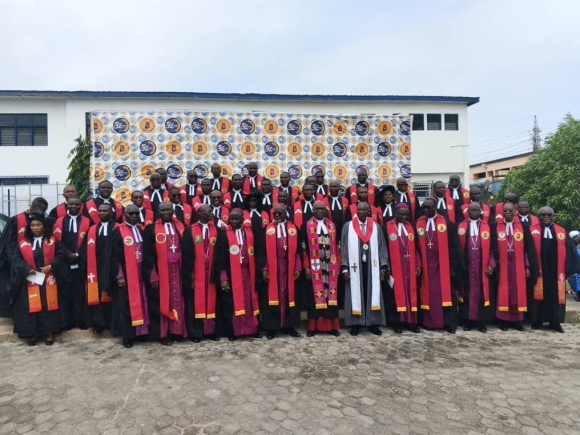
The Methodist Church Ghana has ordained 83 ministers into the ordained ministry of the Church, marking a significant milestone in their service to God and the Church.
The ordination, held on Sunday, August 23, 2026, as part of the 52nd Conference of the church was conducted concurrently at three societies within the Tema Diocese namely the St Paul, Mount Zion and Ebenezer Societies.
The Administrative Bishop of the Church, Right Rev. Dr William Mpere-Gyekye, presented the ordinands, stating that they had been duly examined and found to be of sound learning and devout life.
He said the Conference had received them into Full Connexion and resolved that they be ordained through prayer and the imposition of hands.
With their ordination, the ministers are authorised, among other responsibilities, to officiate at weddings and confirm members of the Church.
At St Paul’s Methodist Cathedral in Tema, the Presiding Bishop of the Methodist Church Ghana, Most Rev. Prof. Johnson Kwabena Asamoah-Gyadu, ordained 33 of the 83 ministers.
He was assisted by the Administrative Bishop, Rt. Rev. Dr Mpere-Gyekye, the Lay President, Kwasi Attah-Antwi, and past Presiding Bishops of the Church.
Preaching at the service, Most Rev. Prof. Asamoah-Gyadu urged the newly ordained ministers to regard ministry as a divine vocation of service sustained by the empowering grace of God.
Speaking on the theme, “Ministry is Service in God’s Empowering Grace,” he based his sermon on 2 Corinthians 12:9: “My grace is sufficient for you, for my power is made perfect in weakness.”
He said ministry was not merely a profession but a calling that demanded sacrifice, self-denial, humility and complete dependence on God.
The Presiding Bishop said the Apostle Paul, despite his exceptional spiritual experiences and accomplishments, refused to boast about them and instead acknowledged his weaknesses.
He cautioned the ministers against allowing personal achievements and spiritual experiences to overshadow the message they had been called to proclaim.
“Paul did not want his personal experiences and accomplishments to be more important than the message he was called to preach,” he said.
Most Rev. Prof. Asamoah-Gyadu explained that Paul’s “thorn in the flesh” represented difficult circumstances that could confront believers despite persistent prayer.
Such challenges, he said, could include ill-health, disabilities, family difficulties, difficult working relationships and other situations people might have to live with.
The Presiding Bishop urged the ministers to depend on God’s grace when faced with challenges beyond their control.
“Do ministry in the strength of God’s grace,” he advised.
Responsibilities
As part of the examination of the ordinands, he reminded them that their responsibilities as ambassadors of Christ included preaching the Gospel in word and deed, declaring God’s forgiveness to penitent sinners, baptising and confirming members, presiding over Holy Communion, and leading worship and prayer.
They would also be required to care for members in sickness and health, teach them and equip them for service.
He cautioned that ministry would place significant demands on the ministers and their households, but stressed that the power to fulfil their calling came from God alone.
He encouraged them to maintain a consistent prayer life and serve their congregations with humility and dedication.
Most Rev. Prof. Asamoah-Gyadu prayed that the ministers would remain empowered by God’s grace and, years after their ordination, the Church would testify that they had done great things for God and His people.
Writer's email
