
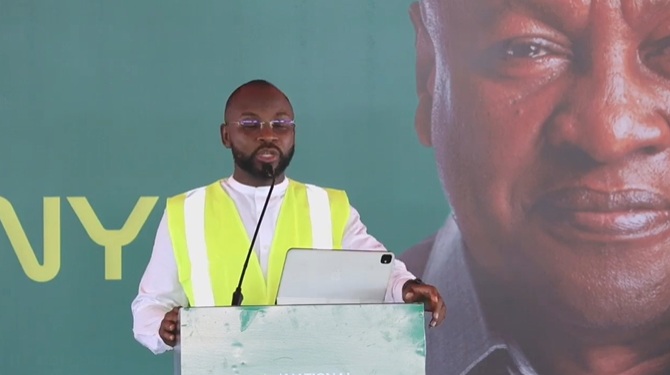
The Chief Executive Officer of the National Youth Authority (NYA), Osman Abdulai Ayariga, has reaffirmed the government's commitment to removing financial barriers to vocational training, stating that the National Apprenticeship Programme (NAP) was designed so that "the willingness to learn can become the power to earn."
Speaking at the maiden National Graduation Ceremony of the NAP at the Forecourt of the State House in Accra on Friday, Mr Ayariga emphasised that the programme was deliberately structured to reach young Ghanaians who often encounter difficulties accessing formal skills training.
"Our priority groups include unemployed and underemployed youth, young school leavers, those unable to progress through formal education, young women, persons with disabilities, and young people from rural and underserved communities," he said. "Our guiding conviction is simple: talent is found everywhere, and opportunity must reach everywhere."
The NYA CEO outlined the comprehensive support package provided to beneficiaries, noting that the government assumes responsibility for apprenticeship training fees payable to accredited Master Craft Persons. Beyond the fees, apprentices are entitled to a monthly stipend and are supported with learning tools, personal protective equipment, and workplace insurance protection.
"These interventions recognise that effective apprenticeship requires more than a place in a workshop: it requires access, protection, quality training and a credible pathway forward," he added.
Mr Ayariga also announced the launch of NAP-Connect, a digital platform designed to bridge the gap between training and the marketplace. The platform will enable graduates to showcase their work, market their services, and connect with prospective clients.
"Picture a young dressmaker in Tamale, an electrician in Ho or a welder in Wa whose skills can be seen and whose services can be found," he said. "This is the future we seek: not simply more graduates, but more young people able to turn competence into customers, income and independent livelihoods."
Addressing the graduands directly, the CEO urged them to uphold integrity and excellence as they enter the workforce. "A skill may open the first door, but character will keep doors open," he advised.
"Let no one persuade you that a workshop is a place of last resort. It can be the place where an enterprise begins, a family’s fortunes change and a community finds new hope."
The ceremony, which celebrated the first cohort of 13,309 graduates from the pilot phase, was attended by President John Dramani Mahama, government officials, traditional leaders, and representatives from the Commission for Technical and Vocational Education and Training. The programme is set to scale up, with the government planning to train at least 50,000 apprentices in 2027.
