
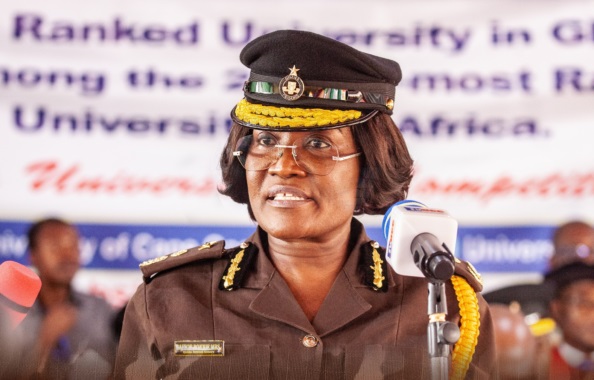
Following the Auditor-General’s recent report on performance on the inmate support programme at the Ghana Prisons Service that identified persistent reintegration challenges in addition to a number of discharged inmates ending up back in prison due to poor rehabilitation, the management of the service has identified funding as the main reason for their inability to execute that mandate successfully.
The mandate of the Ghana Prisons Service is to ensure custody, welfare, rehabilitation, reform and reintegration of inmates across all 45 facilities in Ghana.
But the Ghana Audit Service per the last performance audit identified persistent reintegration challenges in addition to a number of inmates ending back in prison because of rehabilitation and reintegration challenges.
Appearing before Parliament’s Public Accounts Committee on Tuesday (October 20, 2026) to respond to the audit finding, the Director General of the Ghana Prisons Service, Mrs Patience Baffoe-Bonnie said until recently, there was no budget line reforming and integrating inmates in relation to that mandate of the service.
Over the years, we realised that there was no budget heading for reforming and reintegrating. However, there is currently a budget line but it is inadequate, although it is a step in the right direction, Mrs Baffoe-Bonnie said.
She said it based on this reason that the service was proposing more budgetary allocation.
For instance, Mrs Baffoe Bonnie proposed that apart from waiting for donations from individuals and corporate organisations to donate as a corporate social responsibility (CSR), a legislation could be considered to make it a legal requirement for one percent of all CSR budgetary allocations to be directed towards the prisons service so as to secure regular financial support from companies.
“I think a first step to intervening in all prison-related matters is for us to have a law that says going forward every company for your CSR do 1% and then they will comply,” she told the committee.
Mrs Baffoe-Bonnie said the Service’s dependence on voluntary contributions and personal contacts made it difficult to secure regular funding for its rehabilitation programmes.
“At the moment, what is happening is that the service is now going around. Now all my friends because I call them, know I’m going to beg for something. So we need that statutory backing,” she said.
Prison industries
Mrs Baffoe-Bonnie said additional funding would help the Service expand vocational training and prepare inmates to earn a living after their release.
She outlined plans to establish prison-based industries, including facilities at Nsawam to produce security uniforms and furniture such as chairs and tables.
She told the committee that the Service had secured a 30 per cent share of Ghana Education Service contracts for sewing and carpentry but lacked the factories and production capacity to meet the opportunities available.
She said prison-based production would give inmates practical work experience and equip them with skills to support themselves after serving their sentences.
The Minister for the Interior, Muntaka Mohammed-Mubarak, said government resources alone were insufficient to meet the needs of the Prisons Service.
He called on private companies, voluntary organisations and district assemblies to provide additional support to the Service.
Mr Muntaka also advocated arrangements to enable inmates to work and acquire practical skills while serving their sentences to prepare them for life after prison.
