
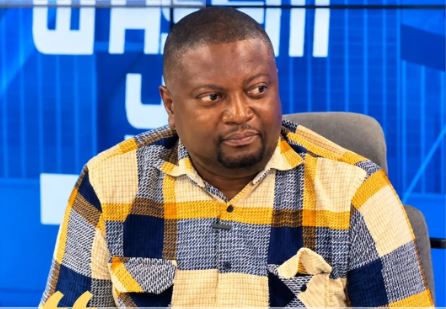
A political science lecturer at the University of Cape Coast (UCC), Professor Jonathan Asante has called for a review of the process for appointing commissioners for the Electoral Commission, suggesting that it was about time Ghana considered electing commissioners or selecting them through the Public Services Commission.
Commenting on this week's two new deputy chairperson appointments for the commission and the varied public reactions to Ms Emelia Afi Agbenyo's appointment for instance, Prof. Asante described the controversy as “a needless pressure” the President has brought upon himself.
It was his view that the President had many other candidates who were not politically exposed to appoint from to fill the vacant position of deputy chairperson of the Electoral Commission.
Prof. Asante was speaking as a panelist on Channel One TV's The Big Issue television discussion programme on Saturday, October 17, 2026.
He said President Mahama had “a thousand and one” politically unexposed candidates who might sympathise with the National Democratic Congress (NDC) without being politically exposed, arguing that the President had many other candidates to choose from among Ghana’s population of about 35 million.
He said if Ms Agbenyo was as politically exposed as her critics claimed, her appointment was inappropriate.
Prof. Asante said the concerns about the appointment were coming from independent and fair-minded organisations such as the Coalition of Domestic Election Observers (CODEO), the Catholic Bishops’ Conference and think tanks, rather than the opposition New Patriotic Party (NPP) alone.
He said seeking the removal of commissioners perceived to be biased towards the NPP through petitions would have been an appropriate course of action, but acknowledged that the process would have been “a Herculean task”.
According to him, such a move would also not have helped the image of the party or the government, adding that the President had therefore taken “the course of least resistance”.
Prof. Asante also criticised the government’s public explanation of the appointment, particularly the suggestion that it was intended to tilt the balance.
He said such an explanation should not have been made publicly.
He questioned the existing arrangement, which involves the Council of State, describing the body as “a very high advisory institution”.
A member of the NDC National Communications Team, Hamza Suhuyini, speaking on the issue on the same TV programme, said the appointment was “well calculated” and “well-reasoned” and added that President Mahama acted on the advice of the Council of State.
According to Mr Suhuyini, Ms Agbenyo was not the only candidate considered for the position and claimed that she underwent a series of interviews and appeared before the Council of State at least twice.
He also argued that balancing partisan affiliations was not alien to Ghana’s democratic practices.
A member of the NPP Communications Team, Kamal-Deen Abdulai, disagreed with the appointment, arguing that it contradicted President Mahama's position while in opposition.
