
The Institute of Economic Affairs (IEA) has called for a principled, comprehensive and nationally owned constitutional reform process to create a constitutional architecture that limits excessive executive power.
It said the reforms must also strengthen Parliament and the Judiciary, deepen local-level democracy, professionalise public institutions through transparent merit-based processes, promote continuity in national development planning and strengthen mechanisms for accountability.
“The task before the nation is to preserve what works, correct what does not and build institutions capable of serving Ghana beyond individual Presidents, governments and political parties.
“The IEA believes that constitutional reform should ultimately produce a stronger democracy, more accountable government and a state better equipped to advance Ghana’s long-term national interests,” it said.
Consultative process
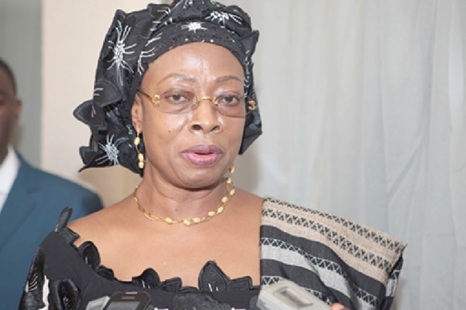
At a press conference in yesterday to state its position on key proposals by the Prof. Henry Prempeh Constitution Review Committee and the government position paper, a fellow of the IEA, Justice Sophia Akuffo stated that “Constitution making must necessarily be consultative and a constitutional reform of this magnitude must allow adequate time for comprehensive public education, informed national debate, public consultation and consensus building and a careful consideration of the implications of each proposed amendment.
She said given that the 1992 Constitution was the product of a consultative process, a similar approach should be adopted for the current review process.
Electing MMDCEs
On the election of Metropolitan, Municipal and District Chief Executives (MMDCEs), Justice Akuffo, who is a former Chief Justice, said the Prempeh Committee proposed a phased approach, linking the election of MMDCEs to the financial and administrative capacity of individual districts.
She noted that the government, however, proposes that all MMDCEs be elected, but that candidates be drawn from five persons nominated by the President and subsequently shortlisted by a vetting committee.
“The IEA supports the election of all MMDCEs but rejects presidential nomination of candidates. In the view of the IEA, all qualified citizens should be free to contest MMDCE elections in a non-partisan process.
“Local-level democracy will be strengthened when citizens, rather than the President, determine who may stand for election to lead in the district,” she stated.
Ministers from Parliament
Justice Akuffo said the IEA supported the Prempeh Committee proposal to bar Members of Parliament (MPs) from serving simultaneously as ministers, deputy ministers or regional ministers.
“A meaningful separation of powers is essential to strengthening Parliament’s independence and its capacity to exercise effective oversight over the Executive. Parliament cannot be expected to provide robust scrutiny of government, while a significant proportion of its members simultaneously depend on presidential appointment for executive office,” she said.
Tenure
On the terms of the President and Members of Parliament from four to five years, she said four years was sufficient for an elected government to implement its programmes and extending the tenure of elected officials should not be undertaken without much more cogent and compelling evidence that the existing four-year mandate was inadequate.
