
The New Patriotic Party’s (NPP) chances of returning to power in 2028 will depend on more than its newly elected national executive, three political scientists have said, warning that the party must overcome the baggage of its 2024 defeat while rebuilding voter confidence.
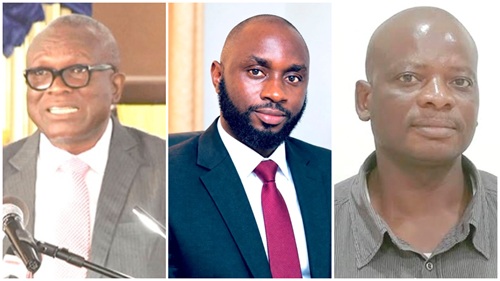
They are a former Head of the Department of Political Science at the University of Ghana, Emeritus Professor Atsu Ayee, a Political Science Lecturer at the University of Education, Winneba, Gilbert A. Aidoo, and the Head of the Political Science Department at the University for Development Studies (UDS), Dr Gbensuglo Alidu Bukari.
They expressed the views in seperate interviews with the Daily Graphic.
While Prof. Ayee asserted that the NPP faces a difficult road ahead because of the legacy of its eight-year administration, Mr Aidoo said the election of John Boadu as National Chairman gave the party an experienced organiser around whom it can rebuild.
Dr Bukari, however, said Mr Boadu’s election could be a double-edged sword, given the divisions exposed by the contest.
The three academics said the NPP would have to unite its rank and file, develop a compelling message and reconnect with young and floating voters if it was to mount an effective challenge to the governing National Democratic Congress (NDC) in 2028.
Experienced hand
Mr Boadu was elected National Chairman as the NPP reorganised its leadership following its defeat in the 2024 general election.
The party also elected new national executives to steer its affairs in opposition, with Justin Kodua Frimpong retaining his position as General Secretary.
Mr Boadu, who has served as the party’s General Secretary and played key roles in its 2016 and 2020 campaigns, brings extensive organisational experience to the position.
Mr Aidoo said that experience gave the NPP an important foundation for rebuilding, particularly because of Mr Boadu’s understanding of the party’s structures and electoral operations.
He said the chairman’s relatively youthful profile could also help the party begin a generational shift and improve its appeal to Generation Z, first-time and floating voters.
Unity test
Dr Bukari said Mr Boadu’s more than three decades of grassroots and national party experience was a major strength, particularly for mobilising the party base.
However, he said the internal contest that produced the new chairman had also exposed potential fractures that could affect the party’s preparations for 2028.
Although Mr Boadu won decisively with 2,888 votes, his closest rival, Boakye Agyarko, secured 2,408 votes, indicating a closely divided delegate base.
“The ability of the new leadership to heal these divisions will be a critical first test for the new chairman,” Dr Bukari said.
He added that while Mr Boadu had one of the most experienced political CVs in the party’s organisational history, experience alone would not be enough to win the 2028 election.
Prof. Ayee said the NPP’s biggest challenge remained the legacy of its time in government.
He cited allegations of impunity, arrogance, mismanagement and corruption, as well as concerns over economic management, as issues that remained fresh in the minds of voters.
He said the party would find it difficult to erase that record during its four years in opposition, although he cautioned against ruling it out completely, since elections were unpredictable.
Mr Aidoo said the NPP must present a credible alternative to the NDC and take advantage of any shortcomings in the government’s performance.
He also identified the association of Dr Mahamudu Bawumia, the party’s flag bearer, with the previous Akufo-Addo administration as a potential challenge to the party’s attempt to project a fresh economic message.
Winning voters
The analysts said the new executives would have to think beyond organisational renewal and develop a message capable of persuading voters to reconsider the NPP.
Prof. Ayee said the performance of the NDC government would also shape the political environment, noting that a major scandal or poor performance could create an opening for the NPP.
The three analysts therefore agree that the new national executives have an important task ahead, but their success will ultimately depend on whether the party can turn organisational renewal into unity, voter confidence and a credible alternative ahead of 2028.
