
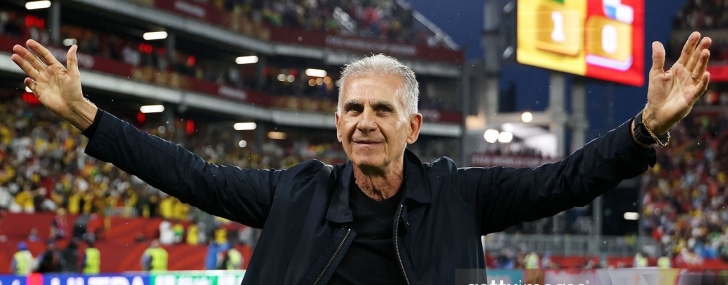
Carlos Queiroz will remain Black Stars head coach after the Ghana Football Association (GFA) agreed a new mandate with the experienced Portuguese, answering calls from President John Mahama and captain Jordan Ayew for continuity following Ghana’s encouraging run to the 2026 FIFA World Cup knockout stage.
The GFA confirmed Queiroz’s retention on Wednesday after talks involving the football governing body and the Ministry of Sports and Recreation, with the 73-year-old now tasked with leading Ghana into the 2027 Africa Cup of Nations qualifying campaign.
His immediate challenge is formidable: an away qualifier against Côte d’Ivoire in Bouaké on September 24, followed five days later by a home fixture against The Gambia in Accra on September 29.
The decision effectively extends a relationship that began only four months ago but gathered significant support after Queiroz guided Ghana into the knockout stage of the FIFA World Cup for the first time in 16 years.
His initial four-month mandate, which covered the World Cup, expired a few weeks ago. But after reviewing his brief tenure and holding discussions with the Sports Ministry, the GFA has chosen continuity rather than another reset of the national team’s technical direction.
“Following discussions with the GFA and the Ministry of Sports and Recreation, it was agreed that Queiroz would embark on a new coaching mandate, commencing with the upcoming international window,” the GFA said.
The GFA believes Queiroz’s extensive international experience, technical expertise and growing knowledge of the Black Stars make him well placed to lead the next phase of Ghana’s rebuilding project.
Significantly, however, Wednesday’s announcement did not disclose the duration or financial terms of the new agreement, leaving unanswered whether the Portuguese has been handed the long-term mandate publicly advocated by some of his most influential supporters.
Ayew led dressing-room push for continuity
Queiroz’s retention comes after a powerful campaign for continuity following Ghana’s Round of 32 exit from the World Cup, where the Black Stars showed enough promise to convince influential voices that another managerial change risked dismantling the progress made during his short spell.
The strongest endorsement came from inside the dressing room.
Captain Jordan Ayew publicly urged the GFA to keep Queiroz immediately after Ghana’s World Cup elimination by Colombia in Kansas City, arguing that allowing him to leave after just four months would interrupt a rebuilding process already beginning to reshape the national team.
“I want Carlos Queiroz to stay. I believe he is the right man to take us to the next level,” Ayew said after the defeat.
“He’s done a great job. To come and achieve what he’s done in this short time says a lot. I hope he stays.”
That was no routine vote of confidence.
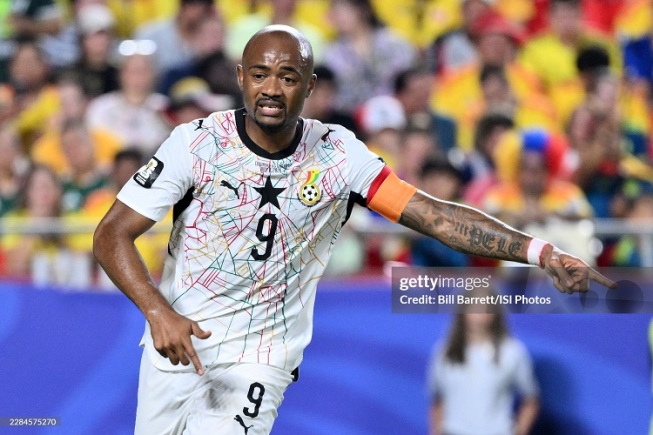
Ayew is Ghana’s most experienced active international and has worked under multiple national-team coaches during a 16-year Black Stars career spanning three World Cups and 124 appearances. His endorsement therefore carried the weight of a senior player who has experienced first-hand the repeated managerial changes that have shaped Ghana’s recent history.
Queiroz had only weeks to impose his methods before the World Cup, yet Ghana progressed from a difficult group and reached the knockout stage for the first time since the celebrated 2010 campaign in South Africa.
Although Colombia ended their run in the Round of 32, the Black Stars emerged from the tournament with renewed competitiveness and enough evidence of a developing structure to strengthen the argument that Queiroz deserved more than a four-month audition.
Mahama backed long-term project
President John Dramani Mahama subsequently added significant political weight to that argument, urging Ghana’s football authorities to persuade Queiroz to remain and take charge on a long-term basis.
Speaking during an inspection tour of the Ho Sports Stadium on July 17, President Mahama argued that tactical continuity would be critical if Ghana were serious about developing a team capable of challenging for major honours.
He believes Queiroz has established a structural foundation that should be strengthened rather than dismantled ahead of the next AFCON and World Cup cycles.
“I’m sure that if we keep this team, and we persuade the coach Carlos Queiroz to continue to work with the team, by the time of the next AFCON and the next World Cup, we’ll have a team that can claim the championship in either of those two competitions,” President Mahama said.
The GFA has now made its choice.
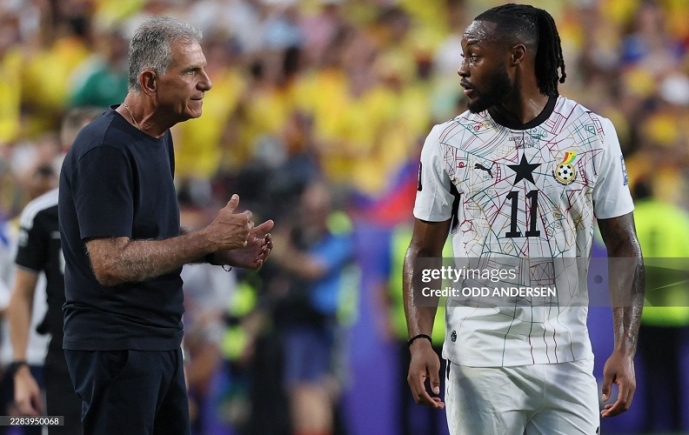
After years in which managerial changes have repeatedly forced the Black Stars back to the starting line, Ghana will enter the next international cycle without another technical reset.
The immediate test comes in Bouaké against Côte d’Ivoire on September 24.
For Queiroz, however, the bigger assignment goes beyond two AFCON qualifiers. Having convinced the GFA, the government and influential figures inside his dressing room that the foundations are worth preserving, he must now turn the promise of Ghana’s World Cup campaign into sustained progress — and ultimately results.
