
Spain’s triumph in the 2026 FIFA World Cup may just have confirmed international football's reluctance to admit that the sport's centre of gravity has shifted back to Madrid, Barcelona and the academies that continue to form the backbone of the national team.
Ferran Torres' extra-time strike settled last Sunday's lopsided World Cup final with a 1-0 victory over Argentina at New York/New Jersey (MetLife) Stadium, but the scoreline barely hinted at Spain's overwhelming superiority in a match they dictated every rhythm of the contest and suffocated the defending champions for 120 relentless minutes before finally finding the breakthrough.
It completed arguably the most successful World Cup campaign of the modern era, as Spain conceded just one goal in eight matches throughout the tournament and stretched their unbeaten run to 38 games. More importantly, they reaffirmed that they are no longer simply champions but the standard bearers of international football.
The dynasty has been years in the making. Spain’s triumph is the culmination of a meticulously built project that has restored La Roja as the game's standard bearers. With the 2030 FIFA World Cup heading to Spanish soil in a co-hosting arrangement with neighbouring Portugal and Morocco, the frightening reality for rival teams is that this Spanish dynasty may only just be beginning, and they already look well positioned to chase a third World Cup title on home soil.
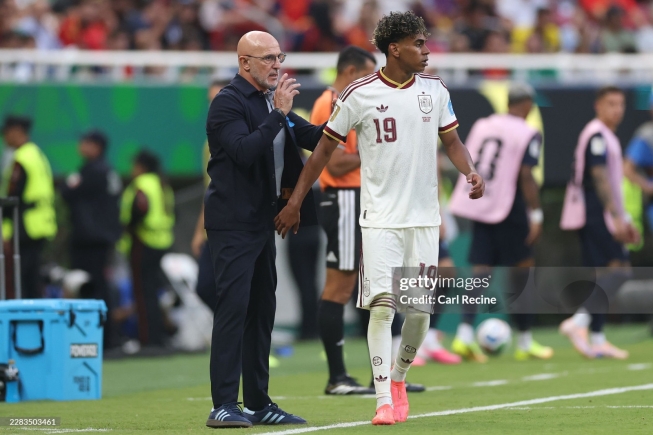
For Coach Luis De La Fuente, the triumph was the crowning achievement of an astonishing three-year reign that has delivered the UEFA Nations League, the European Championship and now the World Cup. Appointed in December 2022 after Spain's disappointing Round of 16 exit at the Qatar tournament, the tactician was hardly the favourite choice of many because he had never previously managed a major club.
De La Fuente deserves his flowers today because he has silenced his critics with one of the most remarkable trophy hauls in the sport -- UEFA Nations League in 2023, European Championship in 2024, and now the FIFA World Cup two years later – perhaps, modern football’s grand slam.
Golden system delivers
Spain’s latest World Cup triumph merely confirmed what the football world has been watching develop in the country over recent years. It is the reward for a footballing ecosystem that continues to produce technically gifted, tactically intelligent footballers while remaining dedicated to a tactical identity built on possession, positional intelligence and collective superiority.
The Spaniards arrived here as European champions and left as world champions, extending a period of sustained and unmatched excellence. The men's side now hold the World Cup, European Championship, Nations League title and Olympic gold medal, while the women's team remain reigning world champions, have won the last two Women's Nations League titles and reached the final of Euro 2025.
Spain have become the first nation to simultaneously hold both the men's and women's World Cup crowns. But the success runs even deeper. Across the last five years, Spain have collected an astonishing 16 European and world titles from Under-17 level through to the senior game, evidence of a footballing structure producing elite players with remarkable consistency rather than relying on one exceptional generation.
This is no cycle but one that former Spain midfielder Juan Mata summed up as a sort of production line for sustained success. "De La Fuente knew most of these players from the academies, and they are growing as a team. This is not only a team for the present, but also a team for the future."
Last Sunday, de la Fuente's side controlled virtually every phase of the contest, as Argentina survived rather than competed in what turned out as one of the most one-sided World Cup finals in history.
However, Spain’s dominance in North America should have been anticipated. They have now gone 38 matches unbeaten, built not on moments of individual inspiration from talented players, including the gifted Lamine Yamal and command performance from their captain Rodri, but through complete control of possession, tempo and space. Unlike previous champions who frequently escaped difficult moments through brilliance, Spain simply denied opponents opportunities to create them in the just-ended tournament.
Their statistics underline the scale of their superiority. Spain conceded just one goal throughout the tournament — the fewest ever by a World Cup-winning side despite playing eight matches in the expanded 48-team tournament. Previous champions Spain (2010), France (1998) and Italy (2006) each conceded two goals across seven matches.
Changing of guard
Last Sunday’s final in New Jersey also marked the symbolic passing of an era, and represented the closing chapter of one of football's greatest international careers. For 39-year-old Argentina captain Messi, whose performances had once again carried his side deep into the tournament, reality finally caught up with the maestro. Spain never allowed the opportunity, leaving modern football’s most decorated star to finish his final major international match with one blocked shot and no touches inside Spain's penalty area.
This time Spain’s young guards like Yamal, 19-year-old Pau Cubarsí, Pedri and Nico Williams illuminated the tournament with moments of sublime quality. Alongside experienced guards like Rodri in midfield, goalkeeper Unai Simón, Cubarsí and Torres, De La Fuente's side possess a core team entering their prime and poised to extend their dominance as they prepare to host the global tournament.
