
Carlos Queiroz was parachuted into Ghana’s 2026 World Cup campaign with barely enough time to reshape the Black Stars.
Now, armed with a long-term mandate, time to build his team and the GFA’s backing, the Portuguese faces a different standard: qualification for the 2027 Africa Cup of Nations is non-negotiable. Ghanaians have already endured the indignity of missing one AFCON for the first time in 20 years.
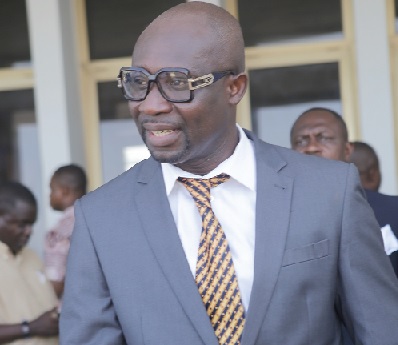
A second successive failure would be intolerable, and former Ghana Football Association (GFA) Vice-President George Afriyie has warned that the mistakes which wrecked the previous campaign must not be repeated.
For Queiroz, the GFA and the players, Ghana must get this campaign right and Ghanaians can scarcely afford another qualifying debacle, as their redemption campaign begins with arguably their toughest Group C assignment — away to neighbours Côte d’Ivoire in Bouaké on September 24 — before they host The Gambia in Accra five days later.
Six matches stand between the Black Stars and a return to the AFCON stage. Somalia complete the four-team group, with the top two after the six-match home-and-away round-robin campaign qualifying for the tournament in Kenya, Uganda and Tanzania next June.
For Mr Afriyie, the equation is straightforward: Ghana must treat the trip to Côte d’Ivoire with the seriousness of a final and ensure that preparation, logistics and player management do not undermine Queiroz before a ball is kicked.
The football administrator believes poor preparation, management deficiencies and late player call-ups contributed to Ghana’s failure to qualify for AFCON 2025 and insists those lessons must shape the latest campaign.
“Our first match against Côte d’Ivoire is very dicey and difficult; we must approach it like the final,” Afriyie told the Graphic Sports. “But for me, I think that we should just prepare well. We must not repeat the mistakes of 2024 that caused us to miss qualification.”
That failure still casts a long shadow. Ghana had been an AFCON fixture for two decades before Otto Addo’s side failed to reach the last tournament, turning what had once appeared almost routine into a reminder that reputation offers no protection in African qualification.
Veteran Portuguese Queiroz, therefore, begins his renewed mandate with little margin for operational failure.
Having guided Ghana at the 2026 FIFA World Cup, the experienced Portuguese now carries the responsibility of ensuring the Black Stars do not miss successive continental championships.
Mr Afriyie believes that responsibility cannot rest on the coach alone. He wants a fully functioning Black Stars Management Committee working alongside the technical team, with player invitations issued early and every logistical requirement settled well before the opening qualifier.
“We must ensure a full Black Stars Management Committee is active and focused on qualification, logistics and player call-up timing, and prepare thoroughly for the qualifiers,” he stressed.
For all the potential danger posed by Côte d’Ivoire, Mr Afriyie sees little justification for Ghana failing to secure one of Group C’s two qualification places.
“Let’s say Côte d’Ivoire is the top team in the group, so let’s take them out,” he said. “But we have no business doing football in Ghana if we can’t beat Gambia and Somalia in picking at least the second spot.”
That assessment puts the pressure squarely on Ghana. Côte d’Ivoire may represent the group’s most formidable obstacle, but with two qualification places available, failure to finish above both The Gambia and Somalia would amount to another major setback for a country accustomed to competing at African football’s top table.
Mr Afriyie has not concealed his reservations about the man charged with preventing that scenario.
He previously questioned Queiroz’s appointment, citing the Portuguese coach’s age, motivation and tactical philosophy.
In particular, he remains unconvinced that Queiroz’s preference for a more defensively structured approach fits Ghana’s traditional attacking identity.
“Before they appointed him, I always made my position clear that he is not my preferred coach and my reasons are simple,” Mr Afriyie said.
“I don’t see how a 73- or 74-year-old can do it in six months; I don’t see his motivation to take Ghana to any place.”
But with Queiroz now reappointed for the qualifying campaign, Mr Afriyie believes the debate over whether he should have the job has run its course.
His position now is that the Portuguese must be given the public and institutional backing necessary to succeed.
