
Ghana is preparing its biggest Tour du Ghana in years, but the 2026 race will hit the road on November 9 with one potentially transformative piece of its international ambition still unresolved — securing a place on the Union Cycliste Internationale (UCI) calendar.
The 11th edition has been expanded into an 11-stage, 2,401.7-kilometre journey from Tamale to Accra, bringing together about 90 cyclists from 15 teams and offering Ghana a potentially powerful combination of elite sport, tourism marketing and international exposure.
However, the UCI calendar status remains a work in progress. Safety managers from cycling's world governing body have reviewed the race plans and given preliminary approval, but organisers are still discussing transport arrangements surrounding the long transfer to Tamale and other logistical requirements before the event can fully realise its international aspirations.
That distinction matters. The UCI recognition would significantly strengthen the Tour du Ghana's competitive standing, improve its attractiveness to international teams, riders and commercial partners and potentially place the event within a broader pathway towards qualification opportunities for the Los Angeles 2028 Olympic Games.
It could also transform the tour from primarily a national sporting event into a more marketable international property capable of projecting Ghana's destinations and culture to audiences beyond cycling.
The race begins in Tamale on November 9 and is scheduled to finish in Accra on November 23 after a demanding 15-day journey across eight regions.
On the theme: “Pedal and Discover Ghana, Culture, Scenery, Adventure,” organisers are attempting to position the tour as much as a moving advertisement for Ghana as a test of sporting endurance.
The route will pass through the Northern, Savannah, Bono East, Bono, Ashanti, Eastern, Volta and Greater Accra regions, exposing riders and accompanying audiences to markedly different landscapes, communities and cultural attractions.
Of the overall 2,401.7km route, 1,406.4km will be competitive racing, with another 995.3km allocated to transport sections between stages.
Participation is also growing. About 90 cyclists representing 15 teams are expected, compared with 12 teams in the previous edition, with organisers confirming entries from Europe, the United States and the United Kingdom.
That international presence adds another layer to the tour's commercial possibilities. At a time when countries increasingly use major sporting events to market destinations, the Tour du Ghana offers an unusual platform: athletes travelling through several regions rather than international attention being concentrated in a single stadium or city.
The challenge will be converting that geographical reach into measurable exposure through broadcasting, digital content, tourism partnerships and sponsorship activation — areas that could ultimately determine whether the expanded tour becomes a sustainable international sports property rather than simply a bigger race.
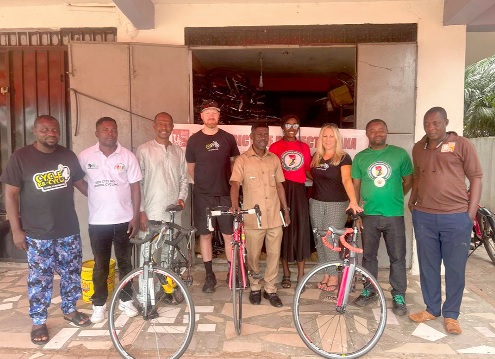
Away from preparations for November's event, the Ghana Cycling Federation (GCF) has also received three road bicycles from UK-based charity Re-Cycle as part of efforts to strengthen cycling development at grassroots level.
The donation, facilitated by the Village Bicycle Project (VBP) Ghana, followed an approach by the GCF General Secretary, Shaaban Mohammed, during his visit to Britain for the 2026 Commonwealth Games in July and August.
The bicycles were handed over at Sowutuom in Accra last Tuesday and are expected to widen access to equipment and create opportunities for more young people to participate in cycling.
The federation has expressed its appreciation to Re-Cycle and VBP Ghana for responding to its request and supporting the development of the sport.
