
It has happened again.
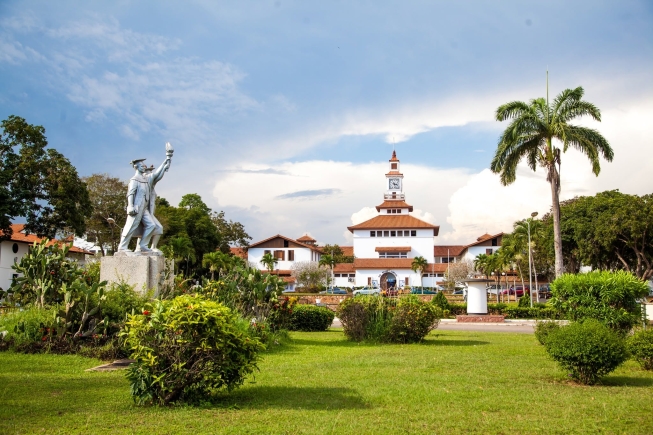
At the time parents and students are preparing to return to campus, the University of Ghana (UG) and the Kwame Nkrumah University of Science and Technology (KNUST) have postponed the reopening of the 2026/2027 academic year indefinitely.
The University of Ghana was scheduled to reopen today, Monday, October 12, 2026, while KNUST was to reopen on October 13.
Both have now told students to stay at home.
Management says a new date will be announced in due course.
The official notices are polite.
The reality on the ground is harsh.
The cause is not academic.
It is administrative.
The Ghana Association of University Administrators (GAUA) is on strike, and without administrators, no university in Ghana can function.
The Daily Graphic is deeply worried.
We have been here too many times before.
When university teachers strike, lecture halls close.
When administrators strike, the whole university collapses — admissions, registration, accommodation, finance, examination processing, and student services all come to a standstill.
The University of Ghana had earlier suspended student registration and warned that a prolonged strike could destabilise the academic calendar.
That warning has now become reality.
What is GAUA asking for?
The dispute, as we understand it, stems from unresolved issues over salary structures, interim market premiums, and conditions of service.
These are not new demands.
They are part of a long-standing negotiation between the government, represented by the Fair Wages and Salaries Commission, the Ghana Tertiary Education Commission, and the university unions.
For years, GAUA has complained that its members — the registrars, senior assistant registrars, accountants, HR managers, and other professionals who keep the universities running — have been treated as second-class in the tertiary education compensation regime.
Their counterparts, faculty members, have received attention while the administrative backbone has been left to agitate.
We do not take sides in the specifics of the pay structure.
That is for the Labour Commission and the negotiating parties to determine.
What we insist on is that students must not be made the sacrificial lambs for the failure of negotiation.
Consider the cost of this postponement.
Over 80,000 freshers and continuing students of UG and KNUST alone are affected.
Parents have paid rent in hostels around Legon in Accra and Ayeduase, Kumasi, respectively.
National Service and graduation timelines for final-year students will be pushed.
The academic calendar, which was only recently stabilised after COVID-19 and the series of UTAG strikes, will again be compressed, affecting the quality of teaching and learning.
We recall how often this cycle repeats.
Government negotiates in bad faith or delays implementation.
Unions issue ultimatums.
Government calls for patience.
Unions declare a strike.
Universities close.
Government returns to the table under pressure, signs a Memorandum of Understanding, pays part of the arrears, and the cycle restarts a year later.
This is not industrial relations. It is institutionalised indiscipline.
The way forward must be decisive and different.
Government must treat this as a national emergency.
The Ministry of Finance, the Ministry of Education, the Fair Wages and Salaries Commission, and GTEC must meet the National Executive Committee of GAUA within 48 hours, with a mandate to make financial commitments.
The Ministry of Employment and Labour Relations must provide active mediation.
University management and Vice-Chancellors in Ghana must speak with one voice.
They cannot sit on the fence as if GAUA is an external body.
GAUA members are their management staff.
Vice-Chancellors must jointly appeal to government to resolve this matter and at the same time put in place contingency measures to minimise disruption.
The directive by UG for students to continue online registration to secure places and qualify for random bed allocation is a good step, but it is not enough if the system is not being managed.
We must fix the structural defect in tertiary education labour relations.
Why should we negotiate conditions of service in a way that disrupts the academic calendar?
Ghana needs a comprehensive, single conditions of service framework for all public university staff — teaching and non-teaching — that is negotiated once every four years and linked to the national budget.
That framework must address market premiums, retention allowances, and career progression in a holistic way.
Without that, we will see UTAG strike in January, GAUA in October, and TEWU-GH in between.
We call on President Mahama’s government, which promised to reset education, to reset this negotiation immediately.
Announce a revised reopening date by next week. Bring students back to campus.
And end this annual ritual of strikes and postponements that are eroding confidence in our public universities.
