

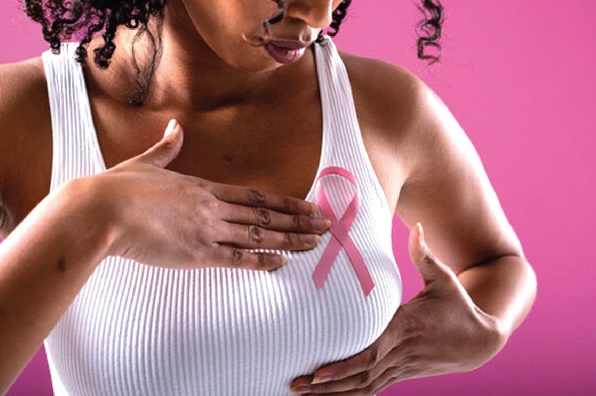
Advances in the diagnosis and treatment of cancer continue to enable doctors to identify the specific type of cancer in patients and tailor treatment accordingly, a radiologist, Dr Afua Amoa-Mensah, has said.
She explained that biopsy and pathology could distinguish between breast cancer types, such as Invasive Ductal Carcinoma and Invasive Lobular Carcinoma and identify markers such as ER, PR and HER2 after a mammogram detects cancer.
This allows treatment to be tailored, unlike the broader approach used in the past.
Dr Amoa-Mensah, who works with the Greater Accra Regional Hospital, explained these in an interview with The Mirror in Accra last Thursday on ‘What’s new in the fight against breast cancer’.
She explained that a biopsy involved taking a sample of tissue from the affected part of the breast and sending it to a pathologist for examination.
The results then help doctors determine the specific type and characteristics of the cancer before selecting treatment.
Mammography
While identifying the type of cancer helps doctors, detecting the disease early remains critical to management.
On this, she said mammography screening were the best, especially compared to checking with just the hands.
“Mammography screening helps doctors identify abnormalities even before they become detectable by touch,” she noted.
She urged women, particularly those aged 40 and above, to take mammography seriously, especially now that the number of mammography machines in the country had increased, albeit not enough.

“Mobile mammography services have also helped extend screening to communities where access to the machines is limited,” she added.
For women below 40, Dr Amoa-Mensah recommended periodic ultrasound on the breasts and also encouraged men to undergo breast screening since the disease could affect them too.
“In October, mammography and ultrasound rates have been significantly discounted, going for around GH₵400 for mammography and GH₵250 for ultrasound at most centres,” she added, urging the public to take advantage.
Breast size does not determine risk
The breast radiology expert dismissed the belief that breast size determines a woman's chances of developing breast cancer or the success of treatment.
She said women do not develop breast cancer because they have large or small breasts.
“Getting breast cancer doesn't depend on how small or how big your breast size is, but on breast density pattern. This means the amount of fibroglandular tissue compared with fatty tissue in the breast. It is assessed through mammography,” she said.
She explained that the denser the breast tissue, the more difficult it could be to detect abnormalities on a mammogram because they may be obscured by the dense tissue.
Dr Amoa-Mensah identified genetic mutations, including BRCA1 and BRCA2, as factors that could increase a person's risk of developing breast cancer.
Help after diagnosis
The member of the Ghana Association of Radiologists said efforts were being made to support patients after they were diagnosed, particularly those identified through screening programmes.
She said patient navigators, including nurses, helped some patients find appropriate health facilities and continue with further management.
They also provide information about medicines covered by the National Health Insurance Scheme (NHIS), where applicable and advise patients on how to access available support.
There are breast cancer survivors and survivor groups who help with the emotional toll.
“There are a lot of survivors also in Ghana. Again, there are survivor groups too that are around, so they are able to join some of these groups for them to know that, yes, they are not alone,” she said.
Stigma and cost challenges
Despite the progress in screening and treatment, Dr Amoa-Mensah said social and financial challenges continued to prevent some women from seeking care.
The doctor recounted hearing about a woman who reportedly avoided seeking treatment because she feared that her diagnosis would affect the chances of her daughters getting married.
“While stigmatisation is a fear, financial difficulties also discourage some women. This is why early detection is key to reducing the financial burden,” she said.
Unusual changes to look out for
Dr Amoa-Mensah therefore urged people not to ignore unusual changes in their breasts.
She mentioned lumps, unusual discharge, blood from the breast, changes in the skin resembling an orange peel, a change in breast size and a lump in the armpit as signs that should be checked at a health facility.
She advised people who noticed such changes to seek medical attention rather than remaining at home or relying on other forms of treatment.
Awareness beyond October
Dr Amoa-Mensah said breast cancer advocacy should continue throughout the year and not be limited to October, which is observed as Breast Cancer Awareness Month.
She acknowledged the Breast Society of Ghana, which brings together breast surgeons, radiologists, nurses, survivors and other health professionals to continue to promote breast cancer awareness.
