
Ghana recorded GH¢209.7 million in financial losses linked to reported cybersecurity incidents between January and September 2026, far exceeding the GH¢22.5 million recorded for the whole of 2025.
The figures presented by the Cyber Security Authority (CSA) as part of its National Cyber Security Awareness Month activities show a sharp increase in reported financial losses, highlighting the growing cost of cybercrime to individuals and businesses.
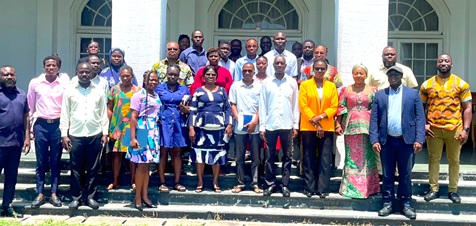
An officer of the Capacity Building and Awareness Creation Department of the CSA, Mary Ama Bawa, who disclosed this at Cape Coast last Monday, said the authority was collaborating with major social media platforms, including Meta, TikTok and Instagram, to identify and remove harmful online content, particularly material involving the sexual exploitation of children.
She said the authority monitored the platforms for intelligence on such content and also acted on reports from affected persons.
"Under the arrangement, the CSA could request the platforms to remove nude images and other exploitative content once the material was identified or reported," Ms Bawa said.
Statistics
In a presentation at the Central Regional Coordinating Council (CRCC) as part of this year’s National Cybersecurity Awareness Month (NCSAM) regional engagements, she said the authority recorded 4,938 cybersecurity incidents from January to September 2026, compared with 4,604 incidents for the whole of 2025.
Online fraud remained the leading reported incident, accounting for 48 per cent of cases recorded between January and September 2026, compared with 47 per cent in 2025.
Cyberbullying also rose significantly, increasing from nine per cent of reported incidents in 2025 to 19 per cent in the first nine months of 2026.
Online blackmail accounted for 20 per cent of reported incidents in 2026, compared with 17 per cent in 2025.
Worrying trend
Mrs Bawa, who led the regional team, said the data painted a worrying picture of rising cyber threats, making a strong case for intensified public education and proactive defence measures.
She noted that the reported cases might not reflect the full scale of the problem because many victims did not report cybersecurity incidents to the appropriate authorities.
Emerging threats
Mrs Bawa identified artificial intelligence-generated deepfake scams, brand impersonation, organised scam centres, automated fraud schemes and child-related online safety violations as emerging cybersecurity threats in 2025.
The authority classified AI-generated deepfake scams and brand impersonation as high-impact threats, while organised scam centres were rated as medium-impact and automated fraud schemes as rising in impact.
She said child-related online safety violations were classified as critical because of the growing threat to children on digital platforms.
She also raised concerns about the safety of children online, identifying cyberbullying, online grooming and sexual extortion as some of the threats confronting young Internet users.
She added that children could be deceived into believing they were chatting with their peers when, in fact, they were interacting with adults seeking to exploit them.
Measures to combat cybercrime
Mrs Bawa disclosed that the CSA was collaborating with major social media platforms, including Meta, TikTok and Instagram, to identify and remove harmful online content, particularly material involving the sexual exploitation of children.
"Under the arrangement, the CSA could request the platforms to remove nude images and other exploitative content once the material was identified or reported", she said.
Mrs Bawa said the authority could also pursue those who posted or shared such content because both actions could constitute offences under the law.
She said the CSA was also working with metropolitan, municipal and district assemblies to build the cybersecurity capacity of critical information infrastructure institutions, including regional coordinating councils, assemblies and banks.
Educate children
The Senior Manager at the Child Online Protection Unit of the CSA, Herald Nelson-Darko, said online child sexual exploitation and abuse was among the fastest-growing forms of violence against children.
He said data attributed to the National Centre for Missing and Exploited Children (NCMEC) showed that 21,901 sexual images involving children and young people had been accessed and uploaded in Ghana.
Mr Nelson-Darko urged parents to discuss Internet use regularly with their children and educate them on how to identify and report suspicious online interactions.
He said parents who were not familiar with technology could still help protect their children through regular communication and by showing an active interest in their online experiences.
