
Stakeholders validate country’s marine spatial planning framework
The Secretary-General of the Fisheries Committee for the West Central Gulf of Guinea (FCWC), Dr Gaston Djihinto, has highlighted the importance of sustainable marine governance to national development.
According to him, the marine and coastal environment was a valuable driver of economic and social growth.
Dr Djihinto said this when he opened a national stakeholders validation of Ghana’s draft Marine Spatial Planning (MSP) framework at Aburi in the Eastern Region.
The three-day national workshop was organised by the FCWC, in collaboration with the Fisheries Commission (FC), under the auspices of the Ministry of Fisheries and Aquaculture (MoFA) from October 20 to October 22, 2025.
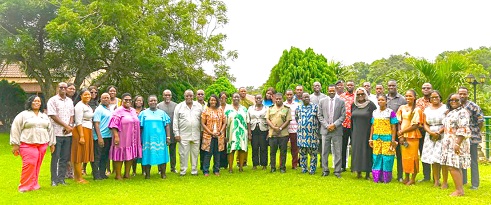
The workshop, which was held on the theme: “Restitution and Validation of the Institutional and Legal Framework and Stakeholder Mapping”, brought together representatives from national institutions, local authorities, academia, civil society and the private sector to validate Ghana’s Marine Spatial Planning Framework.
The MSP provides a framework for coordinating the various uses of Ghana’s marine and coastal space, including fisheries, transport, energy, tourism and conservation, to ensure sustainable development and reduce overlaps among users.
The event formed part of the MarEcoPlan Project, a three-year initiative (2024-2027) jointly implemented by the FCWC and the International Union for Conservation of Nature (IUCN), with funding support from the Global Environment Facility (GEF).
The project aims to strengthen cooperation and promote sustainable management of marine and coastal resources across Ghana, Côte d’Ivoire and Togo.
In the opening session, Dr Djihinto stated that the initiative would support job creation, reduce youth unemployment, and strengthen resilience across coastal communities.
He said by validating this framework, Ghana was taking an important step towards coherent, lawful and sustainable management of its marine spaces.
Collaboration
The MarEcoPlan Project Coordinator, Kossi Ahoedo, underscored the collaborative nature of the process, noting that MSP ensured coordinated use of marine resources by multiple sectors.
“Marine Spatial Planning brings together diverse ocean users, including energy, fisheries, industrial sectors, tourism and recreation, to make informed and sustainable decisions. This validation marks a key milestone in Ghana’s efforts towards a structured and inclusive approach to marine resource management,” he said.
The Executive Director of the Fisheries Commission, Professor Benjamin Campion, in his address, commended stakeholders for their active participation and commitment to the process.
He expressed appreciation for the collaborative efforts being made towards the success of the Marine Spatial Planning process.
He reaffirmed the Fisheries Commission’s commitment to supporting the initiative through to implementation.
Institutions
Institutions represented included the Ministry of Environment, Science, and Technology (MEST), Environmental Protection Agency (EPA), Ghana Maritime Authority (GMA), Land Use and Spatial Planning Authority (LUSPA), and the University of Ghana, among others.
The workshop concluded with the validation of Ghana’s Marine Spatial Planning Framework, marking a significant milestone in the country’s efforts to promote sustainable ocean management and enhance coordination among marine institutions.
The Fisheries Committee for the West Central Gulf of Guinea (FCWC) was established in 2007 to promote cooperation in fisheries management among its six member states, Benin, Côte d’Ivoire, Ghana, Liberia, Nigeria and Togo.
The FCWC supports regional efforts to ensure sustainable fisheries, combat illegal, unreported and unregulated (IUU) fishing, and promote blue economy initiatives.
