
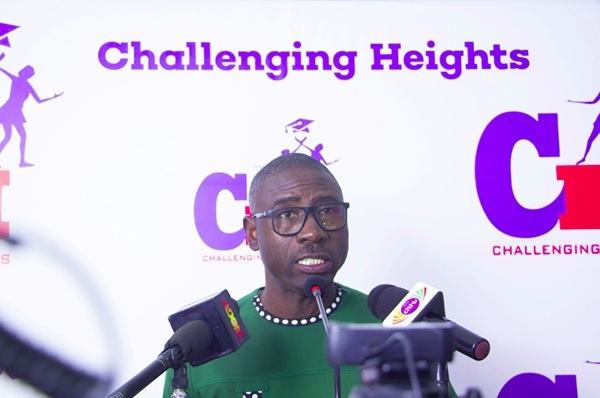
Challenging Heights has welcomed Ghana's elevation to Tier 1 in the United States Department of State's 2026 Trafficking in Persons Report, describing it as an important milestone while calling for renewed action to close the gaps that still leave people vulnerable.
In a statement signed by its Executive Director, Dr James Kofi Annan, the organisation said the upgrade reflected real gains and stronger cooperation, and congratulated all state institutions, agencies, non-governmental organisations and partners whose efforts made it possible.
"Having worked to end child trafficking in Ghana since 2005, Challenging Heights sees this as an important milestone and clear evidence that collaboration works. But recognition must be matched by renewed action to close the gaps that still leave people vulnerable," the statement said.
According to the 2026 report, Ghana investigated 222 trafficking cases, prosecuted 212 alleged traffickers and secured 28 convictions in 2025. Authorities also identified and referred 2,331 trafficking victims to services, compared with 794 in 2024.
Foreign nationals made up 1,469 of the victims identified, outnumbering the 862 Ghanaians. Nigerians were by far the largest group, accounting for 896 victims, or 61 per cent of all foreign nationals identified. Challenging Heights said this mirrored its own experience, noting that since 2025 it had seen cross-border trafficking grow rapidly and had worked with relevant state agencies to rescue and repatriate 230 Nigerians.
The report also noted that the government allocated GH¢3.452 million for direct victim services in 2025, up from GH¢2.85 million in 2024. "Reaching Tier 1 with such limited resources shows what is possible and makes a strong case for greater investment," the organisation said.
The report confirmed, the organisation said, that deceptive job offers, online scams and technology are now traffickers' most preferred means of recruitment. At home, children continue to be exploited in fishing, domestic servitude, street hawking, artisanal mining and agriculture. The report highlighted continued trafficking and forced labour in Lake Volta's fishing industry, where women and girls also face risks of sexual abuse.
Once rescued, the statement said, too many victims have nowhere safe to go. The report identified limited shelter capacity, particularly for adult male victims, leading to reliance on alternative arrangements often without proper safeguards and leaving survivors exposed to further risk. Challenging Heights said its shelters, which are Ghana's largest trafficking shelters with capacities of 250 and 80, continue to provide much-needed space, but no single organisation can meet the national need.
The report also pointed to limited access to formal justice in rural communities, gaps in anti-trafficking training among some judges and prosecutors, and the loss of expertise through police turnover.
Challenging Heights said that over two decades it had supported the rescue of over 3,000 children and young people from trafficking and exploitation, provided transformative support to more than 8,000 people and reached more than 15,280 people through prevention initiatives.
The organisation called for urgent and decisive action from three groups. It urged the Government of Ghana to increase resources for survivor services, including safe shelters for children and adults, healthcare, psychosocial care, legal assistance and long-term reintegration support, backed by a budgetary allocation of at least GH¢20 million.
It called on law enforcement and the justice system to strengthen investigations and prosecutions of trafficking-related cybercrime, fraudulent recruitment and organised networks, and to make the justice delivery system more child-friendly, including through a specialised court to handle trafficking cases.
It also urged civil society, communities and every Ghanaian to expand community-level prevention, particularly in Lake Volta fishing communities and other areas where child labour persists, through public education, accessible reporting and closer collaboration between government and civil society.
"The ranking must not create the impression that trafficking has been defeated; a lot more remains to be done," the statement said, adding that Challenging Heights would continue to support rescue operations, help survivors rebuild their lives, strengthen communities and advocate for systems that prevent exploitation.
