
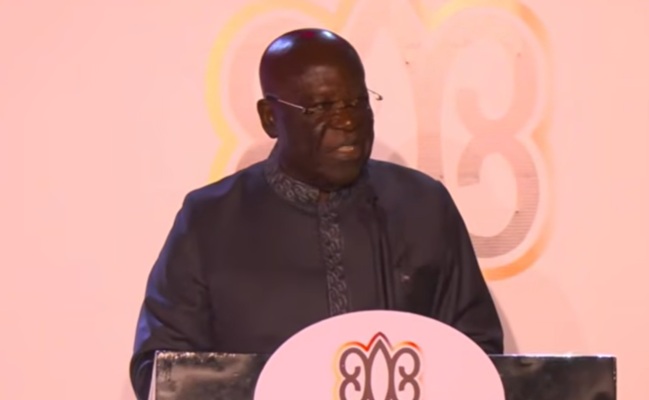
Sir Sam Jonah, Chancellor of the University of Cape Coast, has argued that the question behind General Ignatius Kutu Acheampong's controversial Union Government proposal remains one of the most serious unresolved questions in African governance.
Delivering a lecture in honour of the former Head of State on Friday, November 13, 2026, Sir Sam Jonah said that while Acheampong's method of pursuing Union Government was deeply flawed, the underlying question about Ghana's winner-takes-all political system deserved serious reconsideration.
"The problem he was reaching for had been with us since before independence. Could Ghana organise its politics in a way that gave different communities a stake in government, even when their party lost?" Sir Sam Jonah asked.
He argued that the adversarial, winner-takes-all system Ghana inherited has not served the country well.
"I am not persuaded that liberal democracy, in the pure adversarial, winner-takes-all form we imported, is fit for purpose in most African countries at our present stage of development," he said. "I do not ask for less democracy. Elections, accountability and a free press must stay. I ask for a democracy designed for the society in front of us."
He cited examples from Asia, including Malaysia's standing coalition that brought its Malay, Chinese and Indian communities into government together, and Singapore's Group Representation Constituencies that ensure minority representation.
"Both held regular elections. Neither allowed the contest for the state to become a war between communities. Ladies and gentlemen, that is Union Government by another name," he said.
He also pointed to Afrobarometer's 2024 survey, which found that three in four Ghanaians still believe democracy is the best form of government, but fewer than half were satisfied with the democracy they have.
Sir Sam Jonah acknowledged that the 1978 referendum on Union Government was flawed. "A reform intended to widen participation has to begin by respecting the participation of people who will vote against it," he said, noting that opponents were harassed and the Electoral Commissioner went into hiding.
But he insisted the question Acheampong raised remains valid. "A nation that will not look honestly at its past is like a company that will not audit its books. It may feel comfortable for a while. Trust me, it will not stay solvent," he said.
He concluded by calling for a period of national stability long enough to build. "What Ghana needs, I believe, is a period of stability long enough to build: a generation in which the energy we now spend on capturing the state is spent on developing it."
