


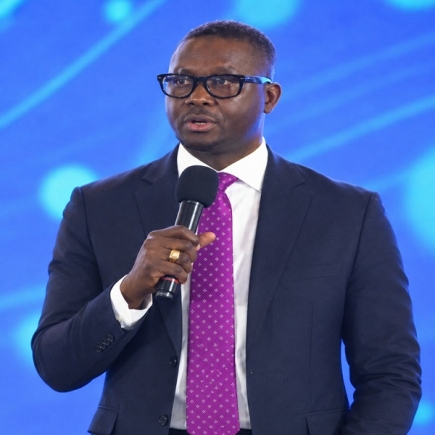
The Director of Fintech and Innovation at the Bank of Ghana (BoG), Elhanan Owureku Asare, has indicated that the responsible development of digital assets could lower cross-border transaction costs, widen access to investment opportunities and create high-quality jobs as the country integrates the emerging sector into its financial system.
Mr Asare was speaking on behalf of the BoG Governor at the first day of the Digital Assets Summit Africa (DASA) 2026 in Accra.
“A safer and well-regulated virtual asset will lower costs for cross-border trade and broaden access to different asset classes that many individuals and small businesses have historically found difficult to access,” he said.
He said the country’s experience with mobile money showed that financial innovation could deliver significant economic benefits when supported by strong institutions and effective regulation.
“In 2020, Ghana recorded about 3 billion mobile money transactions. That's worth approximately GH₵ 560 billion. Five years later, in 2025, the number had risen to almost 10 billion transactions with a total value of approximately GH₵ 4.5 trillion. We have active mobile money accounts being 27 million,” he said.
Summit
The two-day summit had the theme, “From Policy to Prosperity: Scaling Digital Assets for Investment, Jobs and Economic Growth in Africa.”
It convened government officials, regulators, financial institutions, technology companies, investors, entrepreneurs and other industry leaders to advance discussions on the responsible development and adoption of digital assets across the continent.
It was organised by ProMark Elite Ltd, a consultancy and strategic communications company.
The summit also launched the Youth in Digital Finance programme, a certification-led initiative designed to equip young Africans for careers as developers, entrepreneurs, compliance professionals, researchers and policymakers in the digital finance sector.
Regulation
Mr Asare said the passage of the Virtual Asset Service Providers Act, 2025 (Act 1154) had provided the legal foundation for regulating the sector, with the next step being its safe integration into Ghana’s financial architecture.
The act establishes a framework for the registration, licensing and supervision of virtual asset service providers.
“To the industry, the message is very simple. Build compliance into your business model from the onset, not as an afterthought when regulators come calling. Communicate transparently with your customers and market responsibly,” he said.
Mr Asare said the next phase of digital finance would increasingly involve tokenisation, stablecoins, digital asset custody and other technologies that could interact with the banking, payments and capital market systems.
He added that a properly developed digital asset industry could create jobs for cybersecurity specialists and other professionals.
Opportunities
For his part, the Chief Executive Officer (CEO) of ProMark Elite Ltd, Peter Frimpong Manso, urged stakeholders to move the digital-assets conversation beyond regulation and into practical opportunities for African businesses, innovators and young people.
He said Africa had already demonstrated its ability to adopt financial technology through mobile money and should now build on that experience as blockchain technology, stablecoins and other digital financial tools develop.
Mr Manso added that the summit had received 144 applications from innovators across Africa for the Startup World Cup regional competition, with 10 startups selected to compete for the opportunity to represent Africa at the global finale in San Francisco.
The eventual global winner, he said, would receive a $1million investment prize.
The CEO said the initiative was intended to ensure that young Africans were not left on the sidelines as the future of finance was being shaped.