
What if I told you that there are tiny pieces of plastic in your breakfast, your bottle of water, and even the air you breathe?
As a final-year Biochemistry and Molecular Biology student at the University of Health and Allied Sciences (UHAS), I have come to appreciate how research is uncovering the hidden things that affect our environment, and one of these unseen concerns is microplastics.
It sounds unbelievable, but these tiny particles called microplastics have become part of our everyday lives.
They are so small, making them invisible to the naked eye, yet they can be found almost everywhere, from the deepest parts of the ocean to the food on our dinner table.
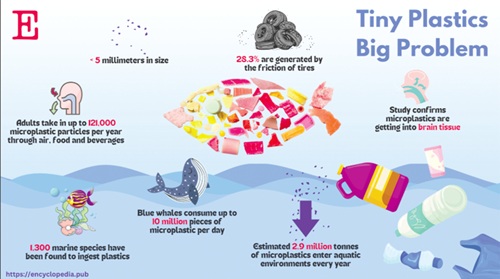
Microplastics are formed from the build-up and breakdown of larger plastics such as bottles, shopping bags and food containers, forming less than 5 millimetres of plastics.
Every year, millions of tonnes of plastic waste end up in the environment, making it easier for these particles to spread through oceans, rivers and the air.
Scientists have discovered microplastics in drinking water, seafood, table salt and vegetables.
This means that, without realising it, we may be taking little amounts of microplastics during our daily lives.
While this may sound disturbing, researchers are still trying to understand what it means for our health.
Some studies suggest that these particles may affect the body in various ways, but there is still much to learn.
What is clear, however, is that the reduction of plastic pollution is good for both humans and the planet.
The good news is that everyone can help.
Carrying a reusable water bottle, using reusable shopping bags, cutting down on single-use plastics, and recycling properly are actions that can make a real difference.
No person can solve the plastic pollution problem alone, but millions of small changes can make a great impact.
The next time you pick a plastic bottle or unwrap your snack, take a moment to think about where the plastics might end up if not disposed of properly.
Microplastics remind us that plastics do not have to be visible to make an impact.
The tiny plastics hidden in our food, water, and air are a reminder that our daily choices matter.
Reducing plastic pollution and making informed decisions today can help improve human health and ensure a safe environment for future generations.
Student, University of Health and Allied Sciences.
