
Many people are concerned about their belly size and shape for aesthetic reasons and often aim for a flat stomach.
However, your belly shape can reveal important information about your diet and overall health.
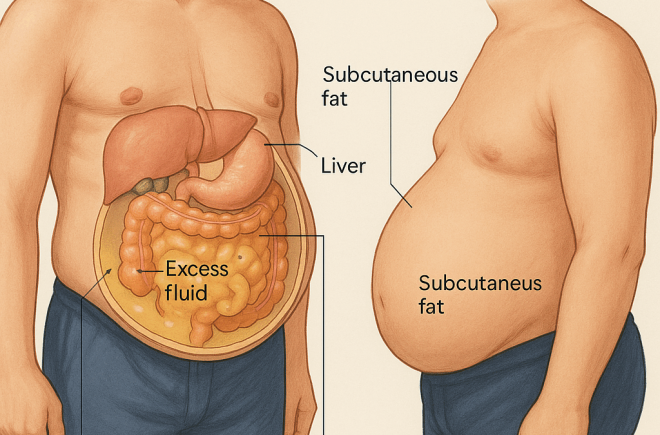
There are two main types of fat in the abdominal area.
One lies just under the skin, while the other (known as visceral fat) surrounds internal organs.
The presence of visceral fat in appropriate amounts is not harmful and is physiologically necessary, as it provides cushioning and support for vital internal organs.
However, excess visceral fat is strongly linked to conditions such as heart disease, hypertension, and diabetes.
Belly fat comprises both subcutaneous fat and visceral fat.
This means that a protruding belly is not just about appearance, but also about long-term health risks.
Different belly shapes
An obese belly or centrally enlarged belly develops when energy intake exceeds energy expenditure over time.
Diets high in sugary drinks, refined carbohydrates, and ultra-processed foods provide excess energy but little nutritional value, leading to fat build-up around the abdomen.
An alcohol belly occurs with excessive alcohol intake.
Alcohol is high in calories and affects how the body burns fat, making it easier for fat to be stored around the stomach.
A bloated belly may appear swollen, especially after eating, and is often linked to digestive issues and foods that cause gas or irritation in the gut.
This type of belly is usually temporary.
A stress and hormonal belly is linked to long-term stress, poor sleep and hormonal changes.
These factors can increase hormones that promote fat storage around the abdomen.
Why People Store Fat Differently
Fat distribution is not the same for everyone.
Genetics, hormones, age, and sex all influence where fat is stored in the body.
This is why some people tend to gain weight around the stomach, while others may store fat in the hips or thighs, etc.
Hormonal changes, especially in women, can also increase the likelihood of abdominal fat gain.
This means that even with similar diets, individuals may have different body shapes.
Being physically active is important.
However, exercise alone is not enough to reduce belly fat and does not specifically target fat in one area of the body.
Diet plays a major role.
Eating more fruits, vegetables, whole grains, legumes and lean proteins can help reduce belly fat over time.
Reducing sugary drinks, refined carbohydrates, alcohol and highly processed foods is also important. Good sleep and stress management further support better results.
Setting Realistic Expectations
Reducing belly fat takes time and consistency. It does not happen overnight.
Research shows that noticeable changes may begin after about eight to 12 weeks of consistent healthy eating and lifestyle changes.
More significant results often take several months or longer.
Quick fixes and extreme diets are not effective and may even be harmful.
Sustainable change requires patience and commitment.
When It is not just about diet
Not all protruding bellies are caused by excess fat or poor diet. Some medical conditions can also cause the abdomen to enlarge.
For example, fibroids, which are non-cancerous growths in the uterus, can increase abdominal size in women.
Ascites, which is a buildup of fluid in the abdomen, often linked to liver damage, can also cause swelling.
In such cases, diet and lifestyle changes alone will not solve the problem.
Medical care is necessary to address the underlying cause.
A balanced approach to better health
Your belly shape can provide useful clues about your lifestyle and health.
Healthy eating, regular physical activity, good sleep and stress management can improve outcomes over time.
At the same time, it is important to recognise when a protruding belly may be due to a medical condition and seek appropriate care.
Sustainable change requires patience, consistency and a balanced approach.
The writer are with Department of Dietetics
University of Ghana
