
For children in five farming communities in the Sikpan Electoral Area of the Nanumba North Municipality of the Northern Region, access to education is often dictated not by the school calendar but by the weather.
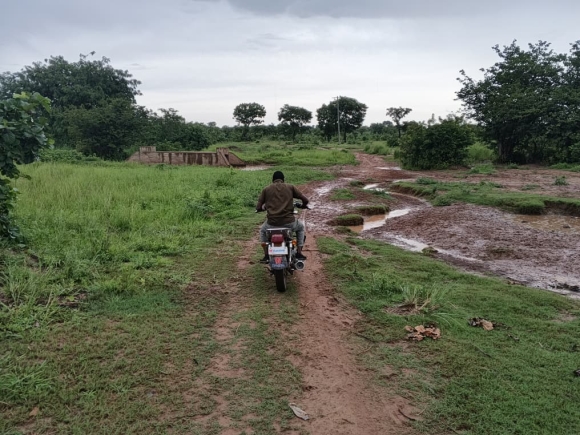
Every year, when the rains intensify between July and August, streams that flow through Okpanjani, Sikpan, Nyamayamani, Elinyando, and Nangbashieni overflow their banks, submerging the narrow farm tracks that serve as the only access routes to the communities.
The flooding effectively cuts off the settlements from the rest of the municipality, disrupting education, healthcare delivery, economic activities, and social life for months.
Residents say the challenges confronting the area are deeply interconnected. Poor roads hinder access to schools and health facilities; the absence of a health centre places lives at risk. Inadequate educational infrastructure affects learning outcomes. At the same time, a stalled rural electrification project continues to hamper economic development.
Education interrupted by the rains
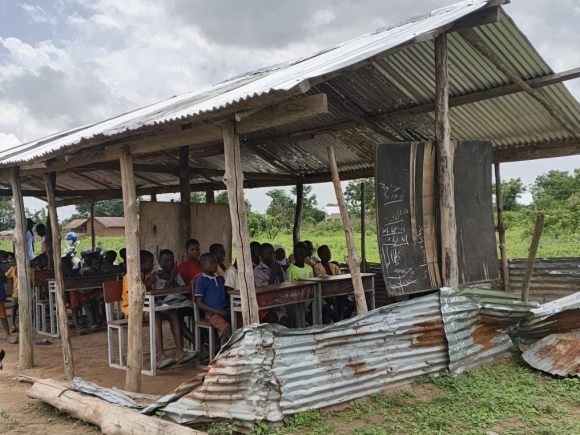
At the heart of the educational challenges is the Okpanjani E.P. Basic School, which serves about 200 pupils with six teachers.
The school operates under a makeshift shed divided into three classrooms, exposing pupils and teachers to harsh weather conditions throughout the year.
Residents say the situation worsens during the rainy season when flooded roads and streams prevent both teachers and pupils from reaching the school.
The Assembly Member for the Sikpan Electoral Area, Mr Ngmalbini Baasun Richard, told Graphic Online that academic activities in the area are significantly disrupted during the second half of the year.
"Children and teachers here effectively have schooling from January to June. From July to December, many are unable to attend because the farm tracks become flooded and difficult to use," he said.
He added that the lack of a permanent classroom block, furniture, and adequate teaching and learning materials had contributed to absenteeism, school dropouts, and poor academic performance.
Many parents fear their children are being denied the quality education available to their counterparts in other parts of the municipality.
The Headteacher of Okpanjani E.P. Primary School, Alhassan Abubakari, said that although the school was established in 1998, it had yet to receive a permanent classroom structure.
According to him, repeated appeals to authorities and stakeholders over the years have yielded little response.
He explained that pupils initially studied under trees until community members, with support from teachers, mobilised resources to construct the current temporary shed.
However, he said the structure remains inadequate and unsuitable for effective teaching and learning, particularly during periods of heavy rainfall and strong winds.
Mr Abubakari appealed to the Nanumba North Municipal Assembly, the area's Member of Parliament, and benevolent organisations to support the construction of a permanent school block.
Roads become death traps
Beyond education, residents say poor road infrastructure has become a matter of life and death.
The five communities depend largely on farm tracks that become inaccessible during the rainy season, forcing residents to cross swollen streams to access health facilities, markets, and other essential services.
According to Mr Richard, at least four people lost their lives between 2022 and 2025 while attempting to cross streams in the area.
The victims, he said, included two pregnant women and a child.
He described the deaths as tragic reminders of the risks residents face whenever they seek healthcare or attempt to travel outside their communities during the rainy season.
With the rains already intensifying, residents fear they could once again be cut off from emergency services for months.
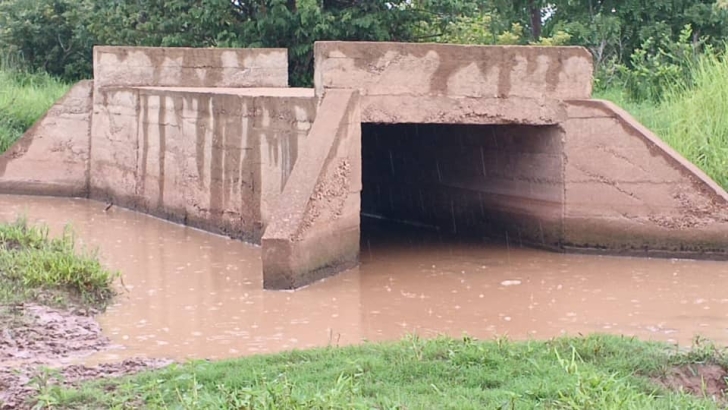
In an effort to address the problem, construction of culverts commenced during the period leading to the 2024 general election.
However, residents say work stalled shortly after the election, leaving the structures incomplete.
Mr Richard expressed concern over the abandonment of the project, noting that repeated appeals to the relevant authorities had yet to yield results.
The stalled works, he said, have deepened frustration among residents who believe the completion of the culverts would significantly improve accessibility and reduce the risks associated with crossing flooded streams.
No health facility
Healthcare access remains another major challenge.
The entire Sikpan Electoral Area lacks a Community-based Health Planning and Services (CHPS) compound, compelling residents to travel long distances over poor roads to seek medical attention.
During emergencies, particularly labour-related cases involving pregnant women, families are often left with limited options.
Residents say the absence of a nearby health facility has contributed to avoidable suffering and preventable deaths over the years.
For many expectant mothers, the onset of the rainy season is accompanied by anxiety as transportation to health facilities becomes increasingly difficult.
Community members believe the establishment of a CHPS compound would significantly improve healthcare delivery and reduce the dangers associated with travelling long distances for treatment.
Rural electrification project stalled
Residents are equally concerned about an electricity project that has remained incomplete despite work commencing in 2023.
Although electricity poles have been erected in parts of the electoral area, the project has stalled for several years without any indication of when it will be completed.
Mr Richard said some of the materials earmarked for the project had been left exposed to the weather, while others had reportedly been stolen.
He questioned the efficient use of public resources, noting that substantial funds had already been invested in the initiative.
The absence of electricity, residents say, continues to limit economic opportunities and social development.
Without power, small businesses struggle to expand, access to information and communication technology remains limited, and essential services such as grinding mills cannot operate efficiently.
Students are also unable to study effectively at night and have little access to digital learning resources.
Calls for urgent intervention
Community leaders and residents have appealed to the Nanumba North Municipal Assembly, the area's Member of Parliament, and the central government to prioritise the development needs of the five communities.
They argue that despite their significant contributions to food production and the local economy, they continue to lack basic social amenities.
As another rainy season intensifies, residents of Okpanjani, Sikpan, Nyamayamani, Elinyando, and Nangbashieni say they are once again preparing for months of isolation.
Their demands, they say, are modest but urgent: completion of roads and culverts, construction of a CHPS compound, provision of a permanent school block, and connection to the national electricity grid.
Until these interventions are realised, they fear future generations will continue to be trapped in a cycle of deprivation and exclusion.
Assembly's response
Responding to the concerns, the Nanumba North Municipal Chief Executive, Abdul Samed Hamza, acknowledged the infrastructure deficits affecting several communities across the municipality.
He explained that the municipality comprises about 249 communities, many of which continue to face development challenges.
Mr Hamza said resource constraints remained a major obstacle to addressing all infrastructure needs simultaneously and appealed to corporate organisations, non-governmental organisations, and central government to support development efforts in the area.
He also encouraged communities to revive the spirit of communal labour to complement government interventions.
The MCE assured residents that the Assembly remained committed to equitable distribution of development projects and pledged to continue lobbying for support to address the needs of the affected communities.
He expressed optimism that each of the five communities would benefit from at least one development intervention aimed at improving living conditions and enhancing access to essential services.
