
Cabinet has approved an infrastructure programme of about $331 million to expand access in senior high schools (SHSs) in order to end the double track system.
The effort comes under the STARR-J programme supported by the World Bank with the ultimate objective to improve quality across the education sector.
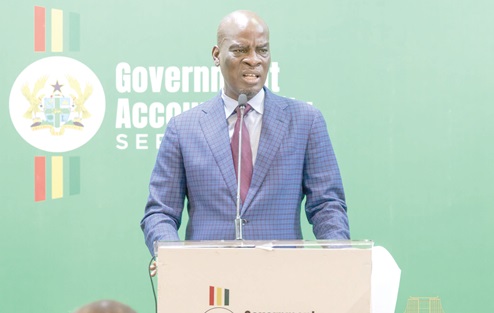
The Minister of Education, Haruna Iddrisu, who announced this in Accra yesterday, said the programme would cover about 210 senior high, technical and vocational schools nationwide, with 150 of them, made up of 112 SHSs and 38 technical and vocational schools, earmarked for rehabilitation.
Under the plan, he said, 30 Category C schools would be upgraded to Category B, and 20 Category B schools to Category A, with a further Ghana Education Trust Fund (GETFund) allocation planned for Category A schools from 2027.
Speaking at the Government Accountability Series, a platform on which ministers account to the public for their sector's performance, Mr Iddrisu also addressed the delayed release of BECE results, saying he did not interfere with the work of assessment bodies such as WAEC but had been informed the results could be released by the end of July.
He said a technical committee reviewing the Computerised School Selection and Placement System (CSSPS) had been set up to examine whether the placement process was merit-based, and announced that school choices would now only be finalised after results were declared.
Teachers
Touching on teachers welfare, the minister said the government intended to construct 50,000 accommodation units nationwide under a housing initiative for teachers to be driven by the District Assemblies Common Fund, and supported with collateral from a pension scheme, in addition to an existing 20 per cent rural allowance for teachers posted to rural areas.
He said the removal of a cap on the GETFund Act had freed resources for free SHS feeding, with GH¢3.4 billion of a GH¢9.6 billion annual sector budget now dedicated to feeding.
He warned that any school found converting classrooms into food storage space would face consequences, including possible audit action against public officers involved.
Mr Iddrisu further disclosed that government had distributed 12.2 million sanitary pads to 2.5 million female students nationwide, and that GH¢100 million had been allocated by GETFund to support free education for learners with special needs, following a 2020 policy commitment and a subsequent amendment to the GETFund Act.
He said the feeding grant for students with special needs had been increased from GH¢8 to GH¢15.
On tertiary education, the minister said Cabinet had given in-principle approval for the establishment of a dedicated TVET Fund, with the Ministers of Finance, Education and Energy tasked to work out its funding structure.
He also confirmed that the University of Engineering and Agricultural Sciences would take off in October with an initial admission of 800 students, and that the National Defence University Bill, 2026, had been passed by Parliament and was awaiting presidential assent.
Curriculum
Mr Iddrisu announced that the ministry would this week receive a revised basic education curriculum, covering kindergarten through junior high school, for onward transmission to the President.
He said the revised curriculum, developed by the National Council for Curriculum and Assessment, would introduce coding, electronics and artificial intelligence into basic schooling for the first time, alongside expanded technical and vocational education (TVET), and a stronger emphasis on civic and ethical values.
The minister said Ghana had historically spent more on secondary education than on foundational basic education, a pattern he described as a wrong the government intends to correct by redirecting more resources to basic education, where he said literacy, numeracy and problem-solving skills were formed.
