
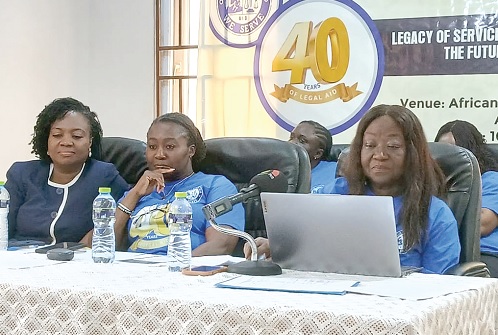
16 Days of Activism Against GBV: FIDA-Ghana cautions on handling domestic violence
The President of the International Federation of Women Lawyers (FIDA-Ghana), Gloria Ofori-Boadu, has cautioned religious leaders, family members and community elders to be careful in how they handle domestic violence cases.
She explained that their interventions often encouraged survivors to go home and settle it, even when the matter was a serious crime that required prosecution.
Speaking at the launch of FIDA-Ghana’s 40 years of legal aid services and the commemoration of the 16 Days of Activism Against Gender-Based Violence, Ms Ofori-Boadu emphasised that domestic violence and gender-based abuse were serious human rights violations that must not be trivialised.
"Women and children are disproportionately affected and cultural pressures for reconciliation often endanger survivors further," she said.
Systematic challenges
Subsequently, the Vice-President of FIDA-Ghana, Serwaa Acheampong, highlighted the systemic challenges survivors face, including difficulty accessing medical evidence for court cases despite provisions in the Domestic Violence Act.
She explained that hospitals often demand payment, which prevents survivors from obtaining the necessary documentation to pursue their cases effectively.
“The Domestic Violence Fund and support structures are also under-resourced and centralised in Accra, making it hard for rural survivors to benefit,” Ms Acheampong added.
“We are advocating for these resources to be expanded and made accessible nationwide so survivors can receive immediate assistance,” she added.
On her part, the Acting Executive Director of FIDA-Ghana, Susan Aryeetey, described the organisation’s core work in mediation and legal aid, noting that matrimonial issues, child custody, maintenance, inheritance and estate matters form the bulk of cases reported.
"FIDA offers mediation where possible, while cases involving physical or sexual violence are referred directly to the police and courts. Clients are coached on how to present their cases, with about 75 per cent successfully obtaining the relief they seek.
"Special attention is given to women and girls with disabilities, many of whom previously could not report abuse due to mobility and communication barriers. Community paralegal programmes and sign language training are employed, " she said.
Ms Aryeetey stated that FIDA had empowered many survivors to report cases and even become advocates in their own communities.
Consequently, the Regional President of FIDA-Africa, Afua Eyeson Laoye, commended FIDA-Ghana’s leadership in fighting GBV and announced that membership has grown from 74 to 222 lawyers through a recent recruitment drive.
