
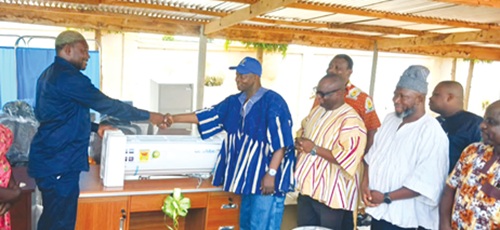
BasicNeeds-Ghana, a non-profit organisation, has presented equipment worth GH¢700,000 to 42 health facilities across six regions to improve counselling spaces for pregnant women, girls and newly delivered mothers.
The facilities, located in the Northern, Upper East, Upper West, Savannah, North East and Bono regions, would use the equipment to provide mental health and psychosocial support, particularly to women and girls affected by HIV/TB and survivors of gender-based violence.
The equipment included air conditioners, ceiling fans, cubicle curtains, office tables, chairs, among other items.
The beneficiary facilities comprise 14 district hospitals and 28 sub-district and community health facilities, with the majority being the Ghana Health Service facilities and the rest belonging to the Christian Health Association of Ghana (CHAG).
The intervention forms part of a project titled “Strengthening Community Health Systems to Enhance Integrated People-Centred HIV, TB, SRH and MHPSS for Vulnerable Women and Adolescents in Ghana.”
Funded by Expertise France under its L’Initiative programme, the project is being implemented in partnership with the Christian Health Association of Ghana (CHAG), the Centre for People’s Empowerment and Rights Initiatives (CPRI), the Mental Health Society of Ghana (MEHSOG), the Ghana Health Service and the Ghana Mental Health Authority.
Mental health challenges
Speaking at the presentation ceremony in Tamale, the Executive Director of BasicNeeds Ghana, Dr Peter Badimak Yaro, said mental health challenges negatively affected sexual, reproductive, maternal and newborn, child and adolescent health outcomes.
He said the project was designed to integrate mental health and psychosocial support into HIV/TB and sexual and reproductive health services, particularly during the perinatal and postpartum periods, while addressing inequalities in access to healthcare among vulnerable women and girls.
He indicated that 1,304 healthcare workers, including 782 females, had received training to integrate mental health and psychosocial support into antenatal and postnatal care and HIV/TB treatment.
Dr Yaro said the health workers had also been trained to use validated screening measures to identify mental health needs, provide counselling to those who screened positive and make referrals for additional or specialist care where necessary.
He added that a total of 17,799 pregnant women, girls and new mothers who had been delivered of babies had so far been screened under the project, with 7,261 identified as requiring brief psychosocial intervention.
He said BasicNeeds-Ghana had also undertaken health facility and community-level awareness campaigns on perinatal mental health, HIV/TB voluntary testing and “know your status” initiatives.
He said the organisation worked with the Health Promotion Division of the Ghana Health Service to produce posters, which were printed and distributed widely in the target health facilities and communities.
Appeal
Dr Yaro expressed optimism that selected facilities would serve as models for further expansion and scale-up.
He appealed to the government to give greater priority to mental health, saying investment in the sector remained inadequate.
Dr Yaro said BasicNeeds-Ghana had continued to engage the Global Fund to advocate the inclusion of mental health and psychosocial support in the HIV/TB response.
He added that the organisation had been involved in the drafting and formal launch of Ghana’s national Maternal Mental Health Policy and was committed to supporting its implementation.
Commendation
For his part, the Director-General of the Ghana Health Service, Prof. Samuel Akoriyea Kaba, commended BasicNeeds-Ghana and its partners for initiating the project to improve the mental health and psychosocial wellbeing of women.
He said the provision of office tables, chairs, ceiling fans, air conditioners and other equipment would help create a more conducive environment for counselling at the beneficiary facilities.
He said the Ghana Health Service remained committed to providing mental healthcare as part of its services.
