
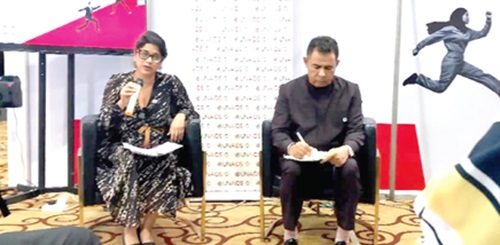
ICASA 2025: Don’t use laws to criminalise vulnerable populations - African leaders urged
African leaders have been advised against using laws to discriminate, criminalise and shame vulnerable populations, including people living with HIV.
Rather, they should protect the human rights of such marginalised people, which is absolutely critical to health services, including HIV prevention and treatment services.
The Deputy Executive Director of UNAIDS, Angeli Achrekar, who gave the advice, further urged leaders of the continent to let communities lead the HIV response, pointing out that one of the most successful backbones of the entire HIV response had been that of community leadership not only in being recipients of care but in delivering the care, leading the care and monitoring the care.
Ms Achrekar gave the advice during a media briefing organised by UNAIDS at the 23rd International Conference on AIDS and STIs in Africa (ICASA), which is currently ongoing in Accra.
Ghana is, for the first time, hosting the largest conference on AIDS and STIs in Africa, bringing together scientists, policymakers, communities and researchers united in the fight for an HIV-free continent.
The conference is organised by the Society for AIDS in Africa and the theme for this year is: "Africa in action: catalysing Integrated sustainable responses to end AIDS, TB and Malaria".
The Director for Programme Coordination Partnership at the UNAIDS, Dr Simaga Fodé, was present at the media briefing.
Expectation
The UNAIDS Deputy Executive Director said that beyond ICASA 2025, the organisation expected African leaders to invest in health sovereignty, fund their own responses, commit real budgets rather than promises and prioritise the right interventions in the HIV response.
She pointed out that this year had witnessed disruptions in the HIV response like had never happened before not only with the abrupt halting of funding from some governments but had also witnessed a decline of foreign assistance in the HIV response, adding that these had led to massive disruptions such as the collapse of prevention services for people, especially adolescent girls and young women in key populations.
She said, despite the disruptions, there was extreme hope as they had seen more countries, especially in Africa, increase their own investment in the HIV response throughout the year to respond to those disruptions of services.
"We have seen countries stepping up to ensure that their people maintain essential life-saving services and antiretrovirals during this disruption.
We've seen countries of the world invest over $11.34 billion in the response to HIV, TB and malaria.
That's extraordinary, that even in this very difficult time of funding cuts around the world, countries are stepping up and committing to the HIV response with significant funding," she said.
Ms Achrekar commended the President, John Dramani Mahama, for being the first leader on the continent to move quickly with a sustainability roadmap when the disruptions started.
Highlighting the fact that AIDS was not over, Ms Achrekar said of the 40.8 million people who were living with HIV, there were nine million of them in need of life-saving treatment, and it was important to reach out to those people.
