
When the Church speaks - Faith communication as Ghana's moral voice
In an age of noise, where truth competes with trends and morality is often drowned by materialism, one question becomes urgent: When the Church speaks, does the nation still listen?
Throughout Ghana’s history, the Church has been a moral anchor. Shaping hearts, policies, and communities through missions, education, health care and advocacy.
The message has always been clear: a nation built on Godly values stands firm. Yet today, the power of that message depends not only on what the Church says, but how it communicates.
Faith communication is a deliberate, Spirit-led sharing of God’s truth through word and witness.
It is a vital voice of the Church for holistic national transformation.
It is not just for publicity; it is a ministry of meaning.
It calls on the Church to speak with clarity, humility and relevance in ways that touch both heart and conscience.
Moral voice
When the Church embraces her voice of truth and deploys it effectively, it becomes more than a religious institution.
It becomes a moral voice for justice, peace and integrity.
From the pulpit to the press, from the chapel to cyberspace, the Church’s message must echo truth wrapped in compassion, fulfilling the charge of Ephesians 4:15: “Speaking the truth in love, we will grow to become in every respect the mature body of him who is the head, that is, Christ.”
A watchman’s call
In Ezekiel 3:17–19, God appoints the prophet as a watchman to the people of Israel, to warn them, speak truth, and prevent moral decay.
That same divine responsibility rests upon the modern Church: “Son of man, I have made you a watchman for the house of Israel; so, hear the word I speak and give them warning from me…” (Ezekiel 3:17–19).
In this generation, faith communicators are the new watchmen.
Tasked to sound the alarm, awaken conscience, and guard the truth when society drifts from righteousness and to remind the nation of Christlike standards.
Silence, in such times, is a failure of our public theology and a neglect of our prophetic duty; Silence is not neutrality; it is neglect of divine duty.
For the Church to effectively fulfil its divine mandate as a watchman, it must stand righteous and above reproach.
Moral authority is born not from titles or traditions, but from integrity and righteousness.
When the Church embodies the truth it proclaims, its voice carries weight, its witness commands respect, and its message brings conviction to the nation.
The Church cannot call society to righteousness while walking in compromise.
To sound the alarm with credibility, it must first live by the truth it preaches, which is pure, transparent, and Spirit-led.
Voices in action
Today’s Ghana faces challenges that go beyond socio-economics and politics. Our deepest crisis is moral.
A loss of truth, empathy, and responsibility.
The Church’s voice must respond to this moral deficit by positive proclamations of honesty, service and righteousness.
Through storytelling, community engagement and digital evangelism, faith communication can rekindle public trust and encourage national unity.
It can show that the Church is not silent in the face of corruption, inequality, or despair, but rather, actively proclaiming a message of hope and transformation.
Reclaiming the narrative
Church public relations is not merely about managing an image; it is about faithfully witnessing the gospel narrative and nurturing compassionate relationships that reflect Christ’s love.
It is a ministry of presence, helping society to appreciate God at work in everyday life, in the Church, and in the nation.
Ghana needs voices of hope. Leaders who speak truth in love, modelling humility and churches that communicate faith through credible action.
The Church must be intentional about engaging the media, forming partnerships, and telling its story with integrity and excellence.
When the Church speaks with moral clarity and spiritual authority, not in arrogance but authenticity, it strengthens the nation’s moral fabric.
It reminds us that righteousness still exalts a nation (Proverbs 14:34), and that every word, when guided by the Holy Spirit, has the power to heal a people and restore a nation’s soul.
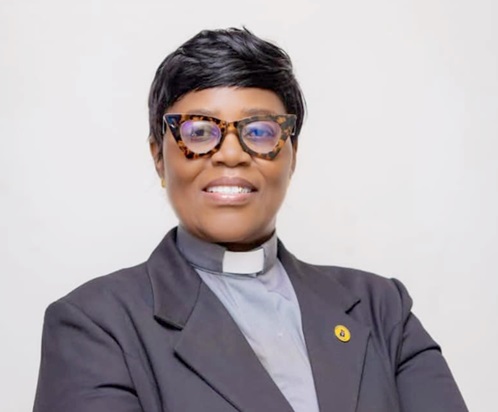
The writer is the Director, Public Relations – The Methodist Church Ghana
