
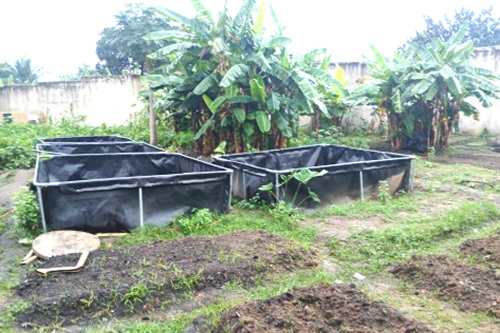
Eastern Region SHSs, Koforidua Prisons embrace Feed Ghana initiative
Heads of senior high schools (SHSs) and government institutions, as well as a correction centre in the Eastern Region, have expressed readiness to undertake farming activities to feed students and inmates.
That, according to them, is in response to the government’s Feed Ghana initiative, which will help address food shortages in the SHSs.
Some of the senior high schools are the Koforidua Senior High Technical School (Koforidua SECTECH), Ghana Senior High School (GHANASS), Pentecost Senior High School (PENSEC) and the Oyoko Methodist Senior High School (OMESS).
The rest are the Koforidua Prisons, the correction centre, the New Juaben South Municipality and the New Juaben North Municipality, among others.
Readiness
Their readiness to cultivate crops such as maize, cassava, plantain and oil palm to feed the students and the inmates is because of large stretches of arable land within their premises.

Gordon Nana Asubonteng (right), Deputy National Coordinator of the Feed Ghana initiative, with Samuel Adongo (left), MCE for New Juaben North, at GHANASS SHS to inspect their farm
Additionally, raising livestock such as goats and sheep, as well as fowls, among others, is also being considered.
The heads made this known when the Deputy Coordinator of the Feed Ghana Project at the Ministry of Food and Agriculture, Dr Gordon Nana Asubonteng Frimpong, visited the schools, as well as the correction centre, last week Wednesday to find out their readiness to sign onto the Feed Ghana initiative.
Sufficient food
Earlier, Dr Asubonteng explained the rationale of the initiative, which he indicated would make available sufficient food to feed the students and the inmates.
Stressing that his outfit had already visited many of the SHSs in eight regions, he stated that he was satisfied with what he had seen in the Eastern Region's SHSs and the institutions, as well as the correctional centre, in respect of food cultivation.
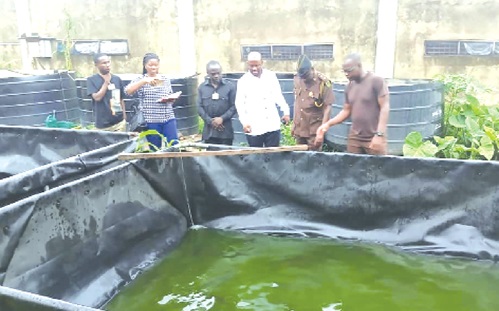
The Koforidua Prisons fishing farming site being inspected by Dr Gordon Nana Asubonteng (arrowed), the Deputy National Coordinator of the Feed Ghana initiative
He said the project was good because it served as a training ground for students to go into agriculture, which would be for their own benefit in the future.
Dr Asubonteng said the initiative would operate mainly on farms at the school premises, focusing on the main food crops, such as maize, sorghum, soya beans, cassava, plantain, onions, tomatoes and yams, among others.
He said the initiative was aimed at boosting local food production, creating jobs and reducing the country's reliance on imported food.
He urged heads of senior high schools in the region to cultivate crops on their compounds to primarily help address the frequent shortages of food in the schools.
Dr Asubonteng stated that growing vegetables such as tomatoes, onions, garden eggs and okro in schools would go a long way to help cut food costs, while improving diets.
The broader goal, he indicated, would be to help the country return to a culture of self-reliance and build a stronger food system that works for every Ghanaian, from farms in rural areas to families living in urban centres.
Encroachment
At the Koforidua SECTECH, the Assistant Headmistress in charge of Academics, Matilda Omane Agyekum, said the school had a large tract of land to cultivate crops needed to feed the students.
She added that it had become necessary for the students to eat what they grow, which would lessen the financial burden on the school.
"We can get cassava, palm nuts, plantain and other crops from our compound here, so there will be no need for the government to bring in money for that.

Dr Gordon Nana Asubonteng (2nd from left), Deputy National Coordinator of the Feed Ghana initiative; Samuel Adongo (3rd from left), Municipal Chief Executive for New Juaben North, with school heads and students
"Students will be happy because there will be a variety of food to eat," she stated.
Mrs Agyekum asked those currently encroaching on the school's farmlands to immediately move out to pave the way for the students to start the cultivation of food crops.
The Assistant Headmistress in charge of Domestic at the Pentecost Senior High School, Mary Animwaa Annor, said the Feed Ghana initiative would enable the students to learn and know that they should eat what they grow, but not to feed on what others grow.
She, however, stated that it was disheartening that some parents would consider the engagement of their children and wards on the school's farms as a form of punishment.
Mrs Annor said parents would, therefore, have to understand the essence of the initiative.
Fish farming
At the Koforidua Prisons, the Officer in charge, Chief Superintendent Francis Agyirey Kwakye, said his outfit was already into fish farming, rearing catfish, and had been engaging in the cultivation of vegetables such as okro and cereals such as maize over the past two years.
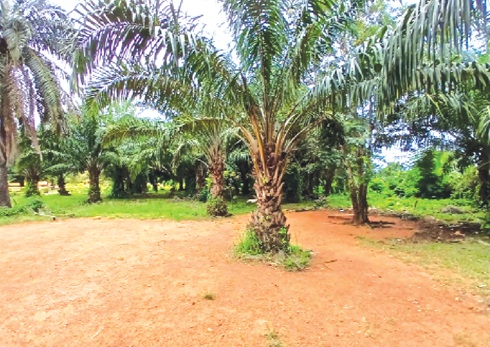
Oil Palm farm at the Koforidua Technical Senior High School
He said attaching a farm to the correctional centre was a good vision for taking care of the inmates.
Chief Superintendent Kwakye said he was happy that the government had recently increased the feeding cost of inmates from GH₡1.80 to GH₡5.00 per inmate, indicating that it would go a long way to provide food for the inmates at all times.
"If we vigorously go into agriculture, it will help alleviate hunger and diseases among the inmates to improve their well-being.
"We have some logistics challenges, such as tractors, farmlands and inputs, but now that the government is willing to support us, we will also go to all lengths to ensure the success of the Feed Ghana initiative," Chief Superintendent Kwakye said.
Good step
The Municipal Chief Executive (MCE) for New Juaben North, Samuel Adongo, stated that the decision taken by the government to reintroduce farming in senior high schools was a step in the right direction.
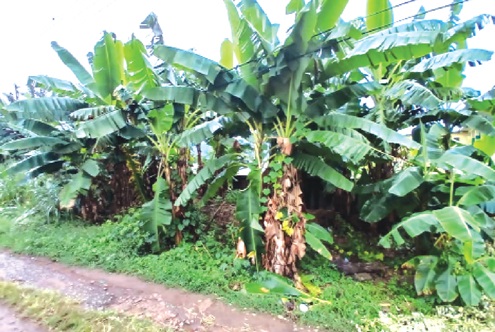
Plantain farm at the Ghana Senior High School in Koforidua
He indicated that the initiative would enable the schools to produce enough to feed their own students so that there would not be shortages of food at the SHS level.
Mr Adongo was of the view that returning farming to the senior high schools and other government institutions would help resolve some of the challenges associated with food shortages in schools.
