
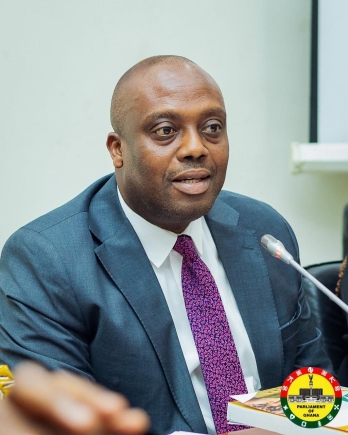
The Deputy Minister of Finance, Thomas Nyarko Ampem, has assured Ghanaians that the government will implement measures to sustain the recent gains recorded in the economy and prevent a return to the fiscal challenges experienced in previous years.
He explained that some of the measures that had helped stabilise the economy since 2025 were tighter expenditure controls, strengthened revenue mobilisation efforts and prudent financial management.
He stressed that reforms, including the mandatory requirement for commitment authorisation from the Ministry of Finance before contracts were awarded, had also significantly reduced the problem of unfunded projects.
Appearing before the Parliamentary Committee on Economy and Development in Accra on on Tuesday (June 9, 2026) Mr Ampem expressed confidence that the current administration would continue to reinforce fiscal and monetary policies to tame inflation, promote growth and safeguard the progress achieved so far.
“We are aggressively pursuing revenue mobilisation, and we are directing expenditure to the right areas that will give us the growth that we require.
“The government would do everything possible to sustain the gains that we have made,” he said.
Committee sitting
The deputy minister appeared at the committee’s public sitting with other officials from the Ministry of Finance (MoF) and its agencies such as the Chairman of the National Development Planning Commission (NDPC), Dr Nii Moi Thompson; Government Statistician, Dr Alhassan Iddrisu; a Director at MoF, Samuel Danquah Arkhurst; Director, Policy Coordination Monitoring & Evaluation at the MoF, Kwasi Adu; and a Deputy Controller and Account General, Emelia Boatemah Osei Derkyi.
The deliberations focused on the 2024 National Annual Progress Report of the National Development Planning Commission.
The report was 23rd in the series of Annual Progress Reports (APRs) and the third on the assessment of progress made in the implementation of policies outlined in the Agenda for Jobs II: Creating Prosperity and Equal Opportunity for All (2022–2025).
It was prepared from the assessment of the status of indicators and targets, which were adopted for monitoring the progress of key policy and programme interventions undertaken in line with the policy framework in 2024.
Fiscal discipline
In responding to questions from members of the committee, Mr Ampem stated that although government revenue had exceeded its target in 2024, expenditure remained the main challenge due to the award of numerous projects without secured funding.
He explained that the absence of effective commitment controls had led to contracts being awarded without the knowledge of the Ministry of Finance, resulting in unexpected payment obligations and several stalled projects across the country.
He said the amendment of the Public Procurement Act, which made commitment authorisation from the Ministry of Finance mandatory before contracts could be awarded, had significantly reduced the problem of unfunded projects.
The deputy minister stressed that while short-term Treasury bill rates recorded marginal declines in 2024, the 365-day rate increased slightly due to heightened domestic borrowing as the country relied on the local market to finance budget deficits amid limited external financing.
“We have constrained expenditure, aggressively pursued revenue mobilisation and directed spending to priority areas that will drive growth.
We will do everything possible to sustain the gains that we have made and ensure that the challenges witnessed in previous years do not recur,” he added.
Over spending
Responding to a question on why the government overspent on flagship programmes during the year under review, the deputy minister stated that it was difficult to justify expenditure beyond the limits approved by Parliament.
He explained that, to maintain fiscal credibility, government spending should remain within the ceilings authorised by Parliament. Where additional funding is required, the appropriate procedure is to seek parliamentary approval through a supplementary budget.
"If for any reason you need more money, there is an opportunity to present a supplementary budget so that the allocations can be adjusted and the necessary approval obtained to spend," he said.
The deputy minister stated that exceeding allocations for a specific budget line was difficult to defend.
He, however, added that the previous administration may have considered the flagship programmes a priority and therefore channelled additional resources to them.
Committee oversight
The Chairman of the Economy and Development Committee and Member of Parliament for Amenfi West, Eric Afful, explained that the NDPC was constitutionally mandated to prepare development programmes aligned with the President’s four-year term and monitor their implementation through annual assessments.
He stated that the committee had been scrutinising the 2024 Annual Progress Reports of various ministries and had invited the Ministry of Finance and its agencies to account for their performance against established targets.
Mr Afful added that the committee would examine the ministry’s achievements and assess any variances between the planned objectives and the outcomes recorded during the year under review.
