
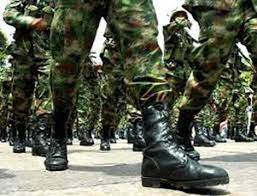
Every year, Parliament approves the Ministry of Defence's budget as part of the national budget process, with public funds allocated for personnel, logistics, training, infrastructure, equipment and the operational readiness of the Ghana Armed Forces.
While sensitive operational details remain classified for national security reasons, the ministry is required to present its budget estimates to Parliament for scrutiny and approval. This makes the use of defence resources a legitimate matter of public accountability.
It was against this background that a security analyst, Dr Emmanuel Sowatey called on Ghanaians to take greater interest in how the country's defence budget is managed, saying stronger public scrutiny of military spending is necessary to promote accountability and the prudent use of public resources.
He said accountability in the defence sector should not rest with state institutions alone but should also involve citizens, the media and civil society because decisions on defence spending had direct implications for national security, troop preparedness and the country's defence capabilities.
Dr Sowatey made the call during a discussion on Accra-based Joy FM on Wednesday, July 22, 2026, after the release of the Government Defence Integrity Index (GDI) 2025 by Transparency International Defence and Security.
The report assessed Ghana's defence governance systems and awarded the country 33 out of 100, placing it in Band D, which indicates a high risk of corruption.
The assessment does not measure actual cases of corruption. Rather, it examines the strength of safeguards intended to reduce corruption risks in political decision-making, financial management, personnel management, military operations and procurement.
Public oversight
Dr Sowatey said public discussion on the report should go beyond Ghana's rating and concentrate on ways to strengthen oversight of the defence sector.
He explained that weak financial controls in military expenditure could affect the availability of equipment, troop welfare and operational readiness, with consequences for national security.
According to him, defence spending should not be viewed merely as the allocation of funds but as an investment in the country's ability to equip, train and maintain a capable military.
"When you have a military budgeting process or military expenditure that is vulnerable to corruption, that's very serious because it has implications at the strategic, operational and tactical levels," he said.
He added that every cedi allocated to the military should be used to provide the equipment, training and logistical support required by personnel to perform their duties effectively.
Dr Sowatey said the issue had become more pressing as countries across West Africa continued to contend with evolving security threats.
He also called for greater public understanding of security governance, particularly among young people and media practitioners, saying informed citizens were better placed to ask questions about defence policies, budgets and expenditure.
"We need security sector literacy because that will then let you ask the right questions about how resources are being used and how those resources further the spirit and the letter of the defence policy," he said.
He encouraged young people to take greater interest in defence and security matters, saying technology, artificial intelligence and social media had created new opportunities for wider public participation in national discussions.
Parliament
Dr Sowatey also urged Parliament to sustain scrutiny of defence spending regardless of which political party was in government.
He said oversight of the defence sector should be guided by the national interest rather than partisan considerations.
"We should get to a place where we don't only have those genuine questions when you're in opposition, but we also have them when you're in government," he said.
He added that Parliament would strengthen accountability by maintaining consistent oversight of defence expenditure.
Assessment
The Head of Research at Transparency International Defence and Security, Dr Michael Ofori-Mensah, explained that the GDI was designed to identify areas where defence institutions had adequate safeguards against corruption risks and areas requiring reforms.
He said the index did not measure corruption that had already occurred but assessed the likelihood of corruption based on existing governance systems.
"The GDI does not measure the amount of corruption that has actually occurred. It's about risk, assessing the risk," he said.
Dr Ofori-Mensah said Ghana performed relatively better in political governance and oversight structures, formal procurement systems and opportunities for civil society engagement.
He said the country's main challenge was the gap between the safeguards provided under existing systems and their implementation.
"The issue is not that Ghana has no safeguards. The issue is that there is a wide gap between formal systems and effective implementation," he said.
According to the report, Ghana scored 27 out of 100 for financial transparency and four out of 100 for operational risk, making those areas among the weakest in the assessment.
Engagement
The Executive Director of Transparency International Ghana, Ms Mary Awelana Adda, said the organisation had begun engaging stakeholders following the publication of the report.
She said discussions were underway with the Ministry of Defence, the Ghana Armed Forces, Parliament, and other oversight institutions to address the issues identified in the assessment.
According to Ms Adda, the engagements are intended to strengthen accountability and promote greater public understanding of defence governance.
"TI Ghana therefore comes to this discussion with a simple conviction, and that conviction is the fact that when defence institutions are transparent, we are accountable and subject to effective democratic oversight," she said.
She added that the discussions would cover procurement, personnel management and access to information, while encouraging oversight institutions and the public to play a more active role in promoting accountability.
